A Wooden Dog’s Grand Adventure: Rackham’s Poor Cecco
Arthur Rackham’s illustrated edition of Margery Williams Bianco’s Poor Cecco represents a distinctive and cherished work in the artist’s later career, joining the celebrated author of The Velveteen Rabbit in a tale of toy adventure that ranks among the most beloved children’s books of the 1920s. Published in 1925 by Chatto & Windus in London and George H. Doran Company in New York, this volume emerged from the imaginative partnership of two masters of the toy story genre.
The narrative follows the rollicking adventures of Poor Cecco, a “loose-jointed thing like a dog” who resides in a bustling toy cupboard populated by a wonderfully diverse cast of characters. There is Bulka the rag puppy, Tubby the battered toy puppy, a wooden lion enamored of a lamb on wheels, an Andersenian Money-Pig, two rather sniffy dolls, a Harlequin given to exclaiming “Hey Presto,” and an engine and Express Cart pressed into service for transport. When Cecco awakens one morning with his tail broken—the result of an ill-advised attempt to use it as a lever—he decides to escape before the others can subject him to their dreaded hospital games. Together with Bulka, he ventures out into a world entirely unknown to them, embarking on a picaresque journey that leads to the discovery of Jensina, a fiercely independent wooden doll who has made her home in an ash dump, and culminates in a clever scheme involving the postal service to return her to the safety of the toy cupboard.
Rackham’s illustrations for the volume comprise seven mounted color plates and twenty-four black-and-white drawings interspersed throughout the text. The original watercolors reveal Rackham’s mature style at its most engaging, capturing both the whimsy of the toy characters and the subtle humor of their interactions. One original watercolor, “Poor Cecco Goes Into Business,” depicts the wooden dog taking the place of a blind beggar’s canine companion—a scene of such charm that, as the text notes, “No one had ever seen a wooden dog that wagged its tail; it was as good as going to the circus, and the pennies rattled down”. Another surviving original, “Jensina and the Rubbish Heap,” portrays the indomitable doll amidst her unconventional dwelling, rendered with Rackham’s characteristic delicacy and attention to atmospheric detail.
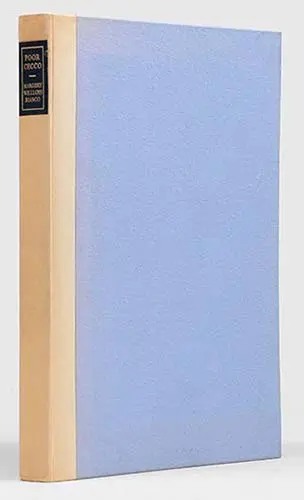
The book’s publication history is notable for its unusual limited edition. While a trade edition appeared in both England and America, the deluxe issue—limited to just 105 numbered copies—was produced only in New York and featured a distinctive binding of parchment-backed light blue paper boards with a navy blue lettering label on the spine. Remarkably, this limited edition, now considered the rarest of all Rackham limited editions, was signed not by the illustrator but by the author Margery Williams Bianco herself. The story and illustrations first appeared serially in Good Housekeeping magazine beginning in May 1925, preceding the book’s publication.
Poor Cecco holds a unique place in Rackham’s bibliography as one of the few contemporary children’s books he illustrated, standing alongside his interpretations of literary classics. The collaboration with Bianco—whose The Velveteen Rabbit had already achieved lasting fame—resulted in a work that one critic has called “a masterpiece,” distinguished by its “winning combination of drama and comedy” and its affectionate portrayal of the toys’ “shortcomings and precarious existence”. For collectors and admirers of Rackham’s art, Poor Cecco remains a treasured volume—a testament to the enduring magic that arises when a master illustrator brings the secret life of toys into vivid, unforgettable being.
Recommended for collectors:
- The Velveteen Rabbit (1922) by Margery Williams – Another poignant toy-themed classic exploring love and transformation.
- The Wind in the Willows (1931), illustrated by Arthur Rackham – A lushly illustrated version of a beloved tale featuring friendship and nature.
- The Little Wooden Doll (1925) by Margery Williams – A similarly emotional tale from the same author, also focused on the inner lives of toys.
Art Gallery: Arthur Rackham – Poor Cecco
![Arthur Rackham - Poor Cecco [rackham-cecco01] (art, illustrations)](https://www.nocloo.com/wp-content/plugins/justified-image-grid/timthumb.php?src=https%3A%2F%2Fwww.nocloo.com%2Fart%2Frackham-cecco%2Frackham-cecco01.jpg&h=280&q=90&f=.jpg "Arthur Rackham - Illustrations for Poor Cecco 1925")
![Arthur Rackham - Poor Cecco [rackham-cecco02] (art, illustrations)](https://www.nocloo.com/wp-content/plugins/justified-image-grid/timthumb.php?src=https%3A%2F%2Fwww.nocloo.com%2Fart%2Frackham-cecco%2Frackham-cecco02.jpg&h=280&q=90&f=.jpg "Arthur Rackham - Illustrations for Poor Cecco 1925")
![Arthur Rackham - Poor Cecco [rackham-cecco03] (art, illustrations)](https://www.nocloo.com/wp-content/plugins/justified-image-grid/timthumb.php?src=https%3A%2F%2Fwww.nocloo.com%2Fart%2Frackham-cecco%2Frackham-cecco03.jpg&h=280&q=90&f=.jpg "Arthur Rackham - Illustrations for Poor Cecco 1925")
![Arthur Rackham - Poor Cecco [rackham-cecco04] (art, illustrations)](https://www.nocloo.com/wp-content/plugins/justified-image-grid/timthumb.php?src=https%3A%2F%2Fwww.nocloo.com%2Fart%2Frackham-cecco%2Frackham-cecco04.jpg&h=280&q=90&f=.jpg "Arthur Rackham - Illustrations for Poor Cecco 1925")
![Arthur Rackham - Poor Cecco [rackham-cecco05] (art, illustrations)](https://www.nocloo.com/wp-content/plugins/justified-image-grid/timthumb.php?src=https%3A%2F%2Fwww.nocloo.com%2Fart%2Frackham-cecco%2Frackham-cecco05.jpg&h=280&q=90&f=.jpg "Arthur Rackham - Illustrations for Poor Cecco 1925")
![Arthur Rackham - Poor Cecco [rackham-cecco06] (art, illustrations)](https://www.nocloo.com/wp-content/plugins/justified-image-grid/timthumb.php?src=https%3A%2F%2Fwww.nocloo.com%2Fart%2Frackham-cecco%2Frackham-cecco06.jpg&h=280&q=90&f=.jpg "Arthur Rackham - Illustrations for Poor Cecco 1925")
![Arthur Rackham - Poor Cecco [rackham-cecco07] (art, illustrations)](https://www.nocloo.com/wp-content/plugins/justified-image-grid/timthumb.php?src=https%3A%2F%2Fwww.nocloo.com%2Fart%2Frackham-cecco%2Frackham-cecco07.jpg&h=280&q=90&f=.jpg "Arthur Rackham - Illustrations for Poor Cecco 1925")