A Soldier’s ABC: L. Frank Baum’s The Army Alphabet
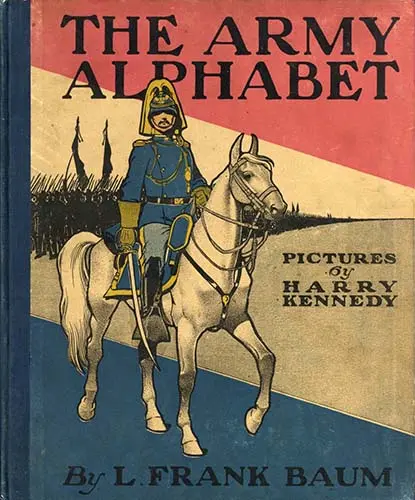
Before Oz, before Dorothy and the Yellow Brick Road, L. Frank Baum was a man with many ideas—and in 1900, the same year The Wonderful Wizard of Oz first appeared, he published two delightful little books that could not have been more different from his famous fantasy. One was The Army Alphabet, a playful journey through the letters of the alphabet using the colorful world of turn-of-the-century military life, illustrated by the talented Harry Kennedy.
The book was published in Chicago and New York by the George M. Hill Company, the same publisher that brought Oz to the world . It was a large, handsome volume, measuring approximately 32 centimeters in height—an impressive size for a child’s alphabet book . Printed on one side of each leaf, the book contained thirty unnumbered leaves, each featuring Kennedy’s vibrant color illustrations alongside Baum’s witty verses . The title page itself was illustrated in colors, setting the stage for the visual treat within .
Adding to the book’s artisanal quality, the text was “illumined and hand lettered” by Charles J. Costello, giving each page the feel of a medieval manuscript rendered in a distinctly American idiom . The result was a book that felt both educational and luxurious—a gift book designed to delight as much as to instruct.
Harry Kennedy, the illustrator, brought Baum’s verses to life with a style that balanced whimsy and precision. His soldiers were not fearsome warriors but cheerful, often comical figures, rendered in rich colors and with an eye for the charming details of military regalia. Each letter of the alphabet was paired with a military term—A for Army, B for Bugle, C for Captain—and Kennedy’s illustrations captured the spirit of each with humor and warmth. The overall effect was one of playful patriotism, a celebration of military life stripped of its harsher realities and transformed into a grand, colorful pageant for young readers.
Baum’s verses were characteristically lighthearted and rhythmic. He had a gift for turning the mundane into the magical, and The Army Alphabet showed that even a drill ground or a mess hall could become the stuff of childhood wonder. The book was intended, as were many alphabet books of the era, to teach letters while entertaining—but Baum’s wit elevated it beyond mere pedagogy.
The Army Alphabet was published alongside a companion volume, The Navy Alphabet, forming a matched set that allowed young readers to explore both land and sea branches of the American military . Both books were issued in original publisher’s cloth-backed pictorial boards, with colorful cover illustrations that invited children to open and explore .
Today, first editions of The Army Alphabet are rare and highly prized by collectors. The book’s fragility—the delicate boards, the tipped-in color plates—means that surviving copies in good condition are increasingly scarce. At auction, the book has been known to sell for significant sums, a testament to its enduring appeal among collectors of Baum, of alphabet books, and of Golden Age illustration .
For those who know Baum only through Oz, The Army Alphabet offers a fascinating glimpse of a different facet of his creative genius. It is a book of its time—a product of the Spanish-American War era when military service held a romanticized place in the American imagination—yet it retains a charm that transcends its historical moment. In the hands of Harry Kennedy, Baum’s soldiers march not toward battle but toward the hearts of children, letter by letter, page by page.
And perhaps that is the true magic of The Army Alphabet: it reminds us that even the most ordinary subjects—a soldier’s uniform, a bugle call, a captain’s salute—can become, in the hands of a gifted storyteller and artist, something worth remembering. Before Dorothy followed the Yellow Brick Road, she might well have learned her ABCs with the help of a cheerful private and a kindly corporal. In the world of L. Frank Baum, even the alphabet was an adventure.
Recommended for Collectors
- The Navy Alphabet (1900) by L. Frank Baum – Companion volume with nautical themes
Art Gallery: Harry Kennedy – L. Frank Baum’s Army Alphabet 1900
![Harry Kennedy - L. Frank Baum Army Alphabet [kennedy-baum-alphabet01] (art, illustrations)](https://www.nocloo.com/wp-content/plugins/justified-image-grid/timthumb.php?src=https%3A%2F%2Fwww.nocloo.com%2Fart%2Fkennedy-alphabet%2Fkennedy-baum-alphabet01.jpg&h=280&q=90&f=.jpg)
![Harry Kennedy - L. Frank Baum Army Alphabet [kennedy-baum-alphabet02] (art, illustrations)](https://www.nocloo.com/wp-content/plugins/justified-image-grid/timthumb.php?src=https%3A%2F%2Fwww.nocloo.com%2Fart%2Fkennedy-alphabet%2Fkennedy-baum-alphabet02.jpg&h=280&q=90&f=.jpg)
![Harry Kennedy - L. Frank Baum Army Alphabet [kennedy-baum-alphabet03] (art, illustrations)](https://www.nocloo.com/wp-content/plugins/justified-image-grid/timthumb.php?src=https%3A%2F%2Fwww.nocloo.com%2Fart%2Fkennedy-alphabet%2Fkennedy-baum-alphabet03.jpg&h=280&q=90&f=.jpg)
![Harry Kennedy - L. Frank Baum Army Alphabet [kennedy-baum-alphabet04] (art, illustrations)](https://www.nocloo.com/wp-content/plugins/justified-image-grid/timthumb.php?src=https%3A%2F%2Fwww.nocloo.com%2Fart%2Fkennedy-alphabet%2Fkennedy-baum-alphabet04.jpg&h=280&q=90&f=.jpg)
![Harry Kennedy - L. Frank Baum Army Alphabet [kennedy-baum-alphabet05] (art, illustrations)](https://www.nocloo.com/wp-content/plugins/justified-image-grid/timthumb.php?src=https%3A%2F%2Fwww.nocloo.com%2Fart%2Fkennedy-alphabet%2Fkennedy-baum-alphabet05.jpg&h=280&q=90&f=.jpg)
![Harry Kennedy - L. Frank Baum Army Alphabet [kennedy-baum-alphabet06] (art, illustrations)](https://www.nocloo.com/wp-content/plugins/justified-image-grid/timthumb.php?src=https%3A%2F%2Fwww.nocloo.com%2Fart%2Fkennedy-alphabet%2Fkennedy-baum-alphabet06.jpg&h=280&q=90&f=.jpg)
![Harry Kennedy - L. Frank Baum Army Alphabet [kennedy-baum-alphabet07] (art, illustrations)](https://www.nocloo.com/wp-content/plugins/justified-image-grid/timthumb.php?src=https%3A%2F%2Fwww.nocloo.com%2Fart%2Fkennedy-alphabet%2Fkennedy-baum-alphabet07.jpg&h=280&q=90&f=.jpg)
![Harry Kennedy - L. Frank Baum Army Alphabet [kennedy-baum-alphabet08] (art, illustrations)](https://www.nocloo.com/wp-content/plugins/justified-image-grid/timthumb.php?src=https%3A%2F%2Fwww.nocloo.com%2Fart%2Fkennedy-alphabet%2Fkennedy-baum-alphabet08.jpg&h=280&q=90&f=.jpg)
![Harry Kennedy - L. Frank Baum Army Alphabet [kennedy-baum-alphabet09] (art, illustrations)](https://www.nocloo.com/wp-content/plugins/justified-image-grid/timthumb.php?src=https%3A%2F%2Fwww.nocloo.com%2Fart%2Fkennedy-alphabet%2Fkennedy-baum-alphabet09.jpg&h=280&q=90&f=.jpg)
![Harry Kennedy - L. Frank Baum Army Alphabet [kennedy-baum-alphabet10] (art, illustrations)](https://www.nocloo.com/wp-content/plugins/justified-image-grid/timthumb.php?src=https%3A%2F%2Fwww.nocloo.com%2Fart%2Fkennedy-alphabet%2Fkennedy-baum-alphabet10.jpg&h=280&q=90&f=.jpg)
![Harry Kennedy - L. Frank Baum Army Alphabet [kennedy-baum-alphabet11] (art, illustrations)](https://www.nocloo.com/wp-content/plugins/justified-image-grid/timthumb.php?src=https%3A%2F%2Fwww.nocloo.com%2Fart%2Fkennedy-alphabet%2Fkennedy-baum-alphabet11.jpg&h=280&q=90&f=.jpg)
![Harry Kennedy - L. Frank Baum Army Alphabet [kennedy-baum-alphabet12] (art, illustrations)](https://www.nocloo.com/wp-content/plugins/justified-image-grid/timthumb.php?src=https%3A%2F%2Fwww.nocloo.com%2Fart%2Fkennedy-alphabet%2Fkennedy-baum-alphabet12.jpg&h=280&q=90&f=.jpg)
![Harry Kennedy - L. Frank Baum Army Alphabet [kennedy-baum-alphabet13] (art, illustrations)](https://www.nocloo.com/wp-content/plugins/justified-image-grid/timthumb.php?src=https%3A%2F%2Fwww.nocloo.com%2Fart%2Fkennedy-alphabet%2Fkennedy-baum-alphabet13.jpg&h=280&q=90&f=.jpg)
![Harry Kennedy - L. Frank Baum Army Alphabet [kennedy-baum-alphabet14] (art, illustrations)](https://www.nocloo.com/wp-content/plugins/justified-image-grid/timthumb.php?src=https%3A%2F%2Fwww.nocloo.com%2Fart%2Fkennedy-alphabet%2Fkennedy-baum-alphabet14.jpg&h=280&q=90&f=.jpg)
![Harry Kennedy - L. Frank Baum Army Alphabet [kennedy-baum-alphabet15] (art, illustrations)](https://www.nocloo.com/wp-content/plugins/justified-image-grid/timthumb.php?src=https%3A%2F%2Fwww.nocloo.com%2Fart%2Fkennedy-alphabet%2Fkennedy-baum-alphabet15.jpg&h=280&q=90&f=.jpg)
![Harry Kennedy - L. Frank Baum Army Alphabet [kennedy-baum-alphabet16] (art, illustrations)](https://www.nocloo.com/wp-content/plugins/justified-image-grid/timthumb.php?src=https%3A%2F%2Fwww.nocloo.com%2Fart%2Fkennedy-alphabet%2Fkennedy-baum-alphabet16.jpg&h=280&q=90&f=.jpg)
![Harry Kennedy - L. Frank Baum Army Alphabet [kennedy-baum-alphabet17] (art, illustrations)](https://www.nocloo.com/wp-content/plugins/justified-image-grid/timthumb.php?src=https%3A%2F%2Fwww.nocloo.com%2Fart%2Fkennedy-alphabet%2Fkennedy-baum-alphabet17.jpg&h=280&q=90&f=.jpg)
![Harry Kennedy - L. Frank Baum Army Alphabet [kennedy-baum-alphabet18] (art, illustrations)](https://www.nocloo.com/wp-content/plugins/justified-image-grid/timthumb.php?src=https%3A%2F%2Fwww.nocloo.com%2Fart%2Fkennedy-alphabet%2Fkennedy-baum-alphabet18.jpg&h=280&q=90&f=.jpg)
![Harry Kennedy - L. Frank Baum Army Alphabet [kennedy-baum-alphabet19] (art, illustrations)](https://www.nocloo.com/wp-content/plugins/justified-image-grid/timthumb.php?src=https%3A%2F%2Fwww.nocloo.com%2Fart%2Fkennedy-alphabet%2Fkennedy-baum-alphabet19.jpg&h=280&q=90&f=.jpg)
![Harry Kennedy - L. Frank Baum Army Alphabet [kennedy-baum-alphabet20] (art, illustrations)](https://www.nocloo.com/wp-content/plugins/justified-image-grid/timthumb.php?src=https%3A%2F%2Fwww.nocloo.com%2Fart%2Fkennedy-alphabet%2Fkennedy-baum-alphabet20.jpg&h=280&q=90&f=.jpg)
![Harry Kennedy - L. Frank Baum Army Alphabet [kennedy-baum-alphabet21] (art, illustrations)](https://www.nocloo.com/wp-content/plugins/justified-image-grid/timthumb.php?src=https%3A%2F%2Fwww.nocloo.com%2Fart%2Fkennedy-alphabet%2Fkennedy-baum-alphabet21.jpg&h=280&q=90&f=.jpg)
![Harry Kennedy - L. Frank Baum Army Alphabet [kennedy-baum-alphabet22] (art, illustrations)](https://www.nocloo.com/wp-content/plugins/justified-image-grid/timthumb.php?src=https%3A%2F%2Fwww.nocloo.com%2Fart%2Fkennedy-alphabet%2Fkennedy-baum-alphabet22.jpg&h=280&q=90&f=.jpg)
![Harry Kennedy - L. Frank Baum Army Alphabet [kennedy-baum-alphabet23] (art, illustrations)](https://www.nocloo.com/wp-content/plugins/justified-image-grid/timthumb.php?src=https%3A%2F%2Fwww.nocloo.com%2Fart%2Fkennedy-alphabet%2Fkennedy-baum-alphabet23.jpg&h=280&q=90&f=.jpg)
![Harry Kennedy - L. Frank Baum Army Alphabet [kennedy-baum-alphabet24] (art, illustrations)](https://www.nocloo.com/wp-content/plugins/justified-image-grid/timthumb.php?src=https%3A%2F%2Fwww.nocloo.com%2Fart%2Fkennedy-alphabet%2Fkennedy-baum-alphabet24.jpg&h=280&q=90&f=.jpg)
![Harry Kennedy - L. Frank Baum Army Alphabet [kennedy-baum-alphabet25] (art, illustrations)](https://www.nocloo.com/wp-content/plugins/justified-image-grid/timthumb.php?src=https%3A%2F%2Fwww.nocloo.com%2Fart%2Fkennedy-alphabet%2Fkennedy-baum-alphabet25.jpg&h=280&q=90&f=.jpg)
![Harry Kennedy - L. Frank Baum Army Alphabet [kennedy-baum-alphabet26] (art, illustrations)](https://www.nocloo.com/wp-content/plugins/justified-image-grid/timthumb.php?src=https%3A%2F%2Fwww.nocloo.com%2Fart%2Fkennedy-alphabet%2Fkennedy-baum-alphabet26.jpg&h=280&q=90&f=.jpg)
![Harry Kennedy - L. Frank Baum Army Alphabet [kennedy-baum-alphabet27] (art, illustrations)](https://www.nocloo.com/wp-content/plugins/justified-image-grid/timthumb.php?src=https%3A%2F%2Fwww.nocloo.com%2Fart%2Fkennedy-alphabet%2Fkennedy-baum-alphabet27.jpg&h=280&q=90&f=.jpg)
![Harry Kennedy - L. Frank Baum Army Alphabet [kennedy-baum-alphabet28] (art, illustrations)](https://www.nocloo.com/wp-content/plugins/justified-image-grid/timthumb.php?src=https%3A%2F%2Fwww.nocloo.com%2Fart%2Fkennedy-alphabet%2Fkennedy-baum-alphabet28.jpg&h=280&q=90&f=.jpg)