Hiroya Oku: A Maverick Mangaka Pushing Boundaries

Hiroya Oku stands as one of the most distinctive and technically innovative creators in modern manga, a figure whose career is defined by a fearless pursuit of controversial themes, photorealistic art, and a profound influence on the industry’s digital evolution. Born in 1967 in Saitama Prefecture, Japan, Oku’s path was unconventional. He initially pursued a career in engineering before a pivotal moment watching the anime film “Royal Space Force: The Wings of Honnêamise” inspired him to switch tracks and enter the manga industry as an assistant.
Early Career and Establishing a Signature Style
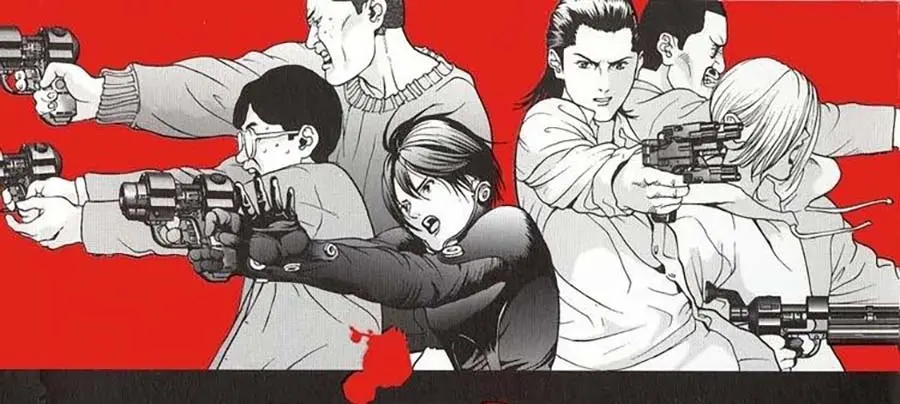
Oku’s early work in the 1990s, like “Hen,” hinted at his taste for the unconventional, but it was the 1997 one-shot “CYBER 7” that truly marked his arrival. This story, featuring a salaryman turned into a superhero by a sentient toilet, perfectly encapsulated Oku’s unique blend of crude humor, shocking violence, and sharp social satire. This tonal cocktail would become his trademark. His first major serialization, Gantz, launched in 2000 in Weekly Young Jump, would catapult him to fame and notoriety. A brutal, nihilistic, and sexually explicit survival game where deceased people are forced to hunt aliens, Gantz was a phenomenon. It repulsed and fascinated in equal measure, pushing the boundaries of acceptability in a mainstream manga magazine with its graphic content and morally ambiguous characters.
The Digital Pioneer and Artistic Innovation
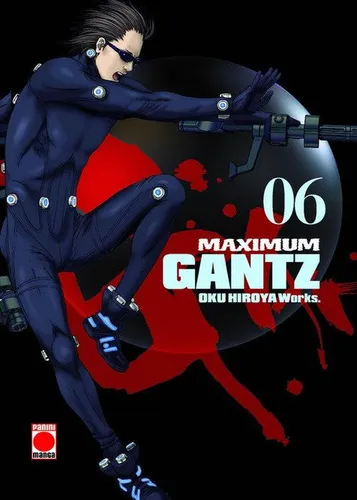
Beyond his provocative narratives, Oku’s most significant technical contribution is his pioneering use of digital tools. Dissatisfied with the limitations of traditional manga backgrounds, he embraced 3D computer graphics (CG) in the early 2000s, a time when the technique was often derided as clunky or soulless. Oku, however, perfected a seamless fusion. He would render complex urban landscapes, vehicles, and creatures in 3D, then trace and integrate them into his hand-drawn character art, achieving a unique, hyper-detailed, and cinematic aesthetic. This “Oku style” allowed for incredibly dynamic perspectives and a sense of scale previously difficult to achieve consistently. His workflow, heavily reliant on software like Poser and later Blender, influenced a generation of artists to see digital tools not as a cheat, but as a legitimate means to expand manga’s visual language. His 2014 series Inuyashiki, featuring an elderly man reborn as a mechanized weapon, further showcased this polished fusion, with its depictions of a CG-rendered, yet emotionally resonant, Tokyo.
Influence, Interactions, and Legacy
Hiroya Oku’s influence on other mangaka is multifaceted. His success with Gantz demonstrated a massive market for grim, high-stakes sci-fi thrillers with adult themes, paving the way for works like Darwin’s Game and Alice in Borderland. His digital methodology was adopted and adapted by artists seeking similar visual impact; Tsutomu Nihei, known for his own elaborate architectural sci-fi, acknowledged a mutual respect in their approach to world-building, though their styles differ vastly. Oku has also engaged in public “rivalries” that highlight his place in the industry. His most famous is with One-Punch Man artist Yusuke Murata. What began as a friendly competition in illustration speed on social media evolved into Murata directly challenging Oku by drawing a stunningly detailed fan-illustration of a Gantz character, a gesture Oku praised. This cross-pollination of techniques between two masters—Oku’s digital precision and Murata’s traditional virtuosity—symbolizes the evolving art form.
Conversely, Oku’s own influences are clear. The biomechanical horror of Yoshikazu Yasuhiko’s designs and the gritty, philosophical sci-fi of Akira creator Katsuhiro Otomo are foundational to his work. The sense of existential dread and social alienation in Gantz also owes a debt to the earlier horror manga of Hideshi Hino and the apocalyptic visions of Go Nagai.
A Controversial but Enduring Figure
Hiroya Oku remains a polarizing figure. Critics argue his work is needlessly gratuitous, while fans and scholars praise his uncompromising vision and technical genius. His current serialization, Gigant, continues to explore his perennial themes of power, media, and human frailty. Regardless of critique, his legacy is secure. Hiroya Oku did not just create popular manga; he forced the medium to confront its own taboos and demonstrated a revolutionary path for its production. He stands as a true maverick—a mangaka who used the tools of the digital age to ask uncomfortable, visceral questions about life, death, and what lies in the gritty spaces between, forever altering the landscape of contemporary manga in the process.
Hiroya Oku – Bibliography
Hen (変) / “Strange” (1988-1997)
Serialized in Weekly Young Jump Comics.
Oku’s debut manga, a darkly comedic and sexually charged story about adolescence, relationships, and social taboos.
- First Series (1989-1994): 13 volumes
- Second Series (1995-1997): 8 volumes.
01 Zero One (1999–2000)
Serialized in Weekly Young Jump. Three volumes.
A science-fiction action manga involving androids and political intrigue, serving as a conceptual bridge toward Oku’s later large-scale SF narratives.
Gantz (2000–2013)
Serialized in Weekly Young Jump. Thirty-seven volumes.
Oku’s most famous work, blending ultraviolence, science fiction, and existential philosophy. The series follows deceased individuals forced into lethal alien-hunting missions, and became a landmark title of early-2000s seinen manga.
Me-Teru no Kimochi (2006-2007)
Serialized in Weekly Young Jump. Three volumes.
about a shut-in or hikikomori falling in love with his young stepmother after the death of his father.
Inuyashiki (2014–2017)
Serialized in Evening. Ten volumes.
A mature science-fiction drama contrasting two people granted immense power, focusing on morality, aging, and the value of human life. Widely praised for its emotional depth and social commentary.
Gigant (2017–2021)
Serialized in Big Comic Superior. Ten volumes.
A surreal blend of romance, celebrity culture, eroticism, and kaiju-style spectacle, featuring a giant woman defending Tokyo while navigating fame and intimacy.
Gantz E(2000–present)
A historical spin-off of Gantz with art by Jin Kagetsu.