Yusuke Murata: The Virtuoso of Visual Dynamism
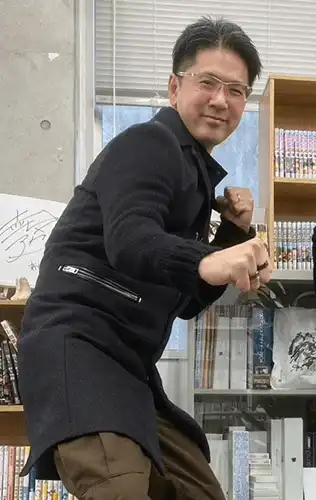
Born on July 4, 1978, in the city of Tokigawa, Saitama, Japan, Yusuke Murata has ascended to a unique and almost mythic status within the manga world. He is celebrated not merely as a storyteller, but as a peerless draftsman whose photorealistic detail, cinematic staging, and explosive sense of motion have redefined the artistic ceiling of the medium. His journey began with a triumph that foreshadowed his exceptional talent; while still in high school, he submitted his one-shot Partner to Weekly Shōnen Jump and won the coveted 122nd Hop Step Award in 1995. This was followed by winning the coveted Tezuka Award for Blanche in 1998, immediately marking him as a prodigy with a dazzling future. Unlike many artists who toil for years as assistants, Murata’s technical prowess was evident from the outset, leading to a swift serialization.
Murata’s first major hit came with Eyeshield 21 (2002-2009), created in collaboration with writer Riichiro Inagaki. The series, a high-octane comedy about American football, became a phenomenon in a country where the sport was niche. Its success was built on Murata’s unparalleled ability to translate complex, full-body athletic motion into clear, thrilling sequential art. He mastered the depiction of speed, impact, and the specific physiques of athletes, making every play visceral and comprehensible. Eyeshield 21 was a masterclass in sports manga illustration, but it was merely the prelude to the work that would cement his legendary status.
In a move that surprised the industry, after concluding Eyeshield 21, Murata chose not to launch an original series. Instead, he partnered with webcomic artist ONE in 2012 to create a digital manga remake of ONE’s crudely drawn but brilliantly conceived superhero satire, One-Punch Man. This partnership proved to be alchemical. ONE’s subversive storytelling and clever character writing met Murata’s astronomical artistic ambition. The result is a work that exists in a category of its own. Murata’s pages for One-Punch Man are routinely breathtaking, featuring city-shattering battles rendered with a level of detail, dynamic perspective, and intricate destruction that rivals and often surpasses high-budget animated film. His ability to shift seamlessly from exaggerated comedy to awe-inspiring, hyper-detailed spectacle within the same chapter is a testament to his complete artistic control.
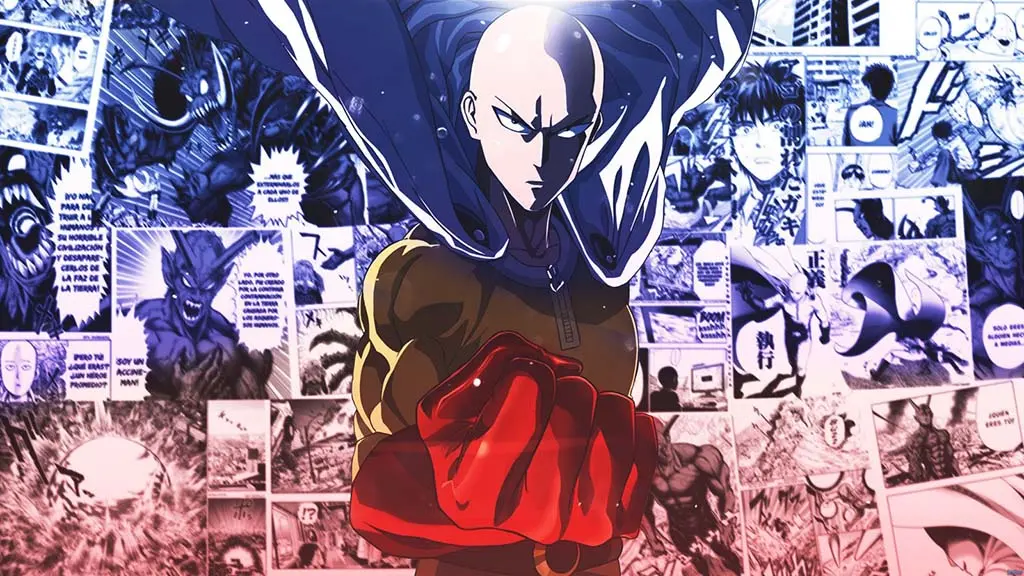
Yusuke Murata’s influence on other mangaka is profound, though it operates differently from narrative innovators like Eiichiro Oda or Masashi Kishimoto. His influence is primarily technical and aspirational. He is the artist’s artist, a benchmark for sheer illustrative quality. In an era of increasing digital art, Murata’s work—often beginning with traditional pencil drawings of staggering complexity—serves as a living testament to the power of foundational drawing skills, anatomy, and perspective. He has raised the bar for what is considered possible in the rendering of action, forcing both peers and the next generation to hone their craft to higher levels.
This influence is visible in the work of artists who prioritize cinematic realism and intricate choreography. Gege Akutami (Jujutsu Kaisen) has cited Murata’s sense of motion and impact as an inspiration, evident in the fluid, destructive battles of that series. The detailed mechanical and architectural destruction in Hajime Isayama’s Attack on Titan shares a lineage with Murata’s meticulous approach to rubble and ruin. Beyond manga, his influence extends globally to illustrators and comic artists in the West, who analyze his panels for lessons in lighting, texture, and kinetic energy. Furthermore, Murata is a pioneer in leveraging digital platforms; his tendency to release extra, animated-like “motion manga” pages and streams of his drawing process on YouTube has inspired a new, more direct and interactive relationship between manga artists and their fans.
Murata’s biography is also one of relentless, almost obsessive dedication to craft. He is known for his intense work ethic, often redrawing pages to perfection and pushing deadlines to achieve a visual ideal. This pursuit of excellence has made each new chapter of One-Punch Man a major event, anticipated not just for the story, but for the guaranteed artistic spectacle. While he has yet to launch a major solo-authored work, his collaborations have proven that he is a team player of the highest order, using his unparalleled skill to elevate another creator’s vision to unimaginable heights.
Yusuke Murata stands as a virtuoso whose primary language is visual. He has expanded the vocabulary of manga art itself, proving that the page can contain cinematic scope, photographic detail, and a palpable sense of physics. In an industry built on storytelling, Murata reminds the world that the drawing itself, in the hands of a master, can be the most powerful story of all. His legacy is not a genre or a trope, but a relentless standard of artistic excellence that continues to inspire awe and ambition in everyone who picks up a pen.
Yusuke Murata – Bibliography
- Eyeshield 21 (2002–2009)
- Illustrator, story by Riichiro Inagaki. Serialized in Weekly Shōnen Jump.
- A sports manga about high school American football, known for its fast-paced, dynamic action and detailed artwork. Spanned 37 volumes.
- One-Punch Man (2012–present)
- Illustrator, story by ONE (original webcomic). Serialized in Tonari no Young Jump.
- A superhero/action manga featuring Saitama, a hero who defeats any opponent with a single punch. Known for cinematic fight sequences and expressive art. Over 28 volumes and ongoing.
- NG Life (2006–2007)
- Writer and illustrator. Serialized in Jump SQ.
- A romantic comedy with fantasy elements, spanning 2 volumes. Explores themes of reincarnation and love.
- Robot × LaserBeam (2017–2018)
- Writer and illustrator. Serialized in Weekly Shōnen Jump.
- A golf-themed sports manga focusing on high school student Team and his journey in competitive golf. Ran for 6 volumes.
- Early one-shots and short works
- Forza! Hidemaru (1995)
- Kick Off! (1996)
- Samui Yoru no Monogatari (2001)
- MADO: Jōnetsu no Tenkei (date varies)
These one-shots often appeared in Weekly Shōnen Jump and show Murata’s early experimentation with action, sports, and supernatural themes.