Eiichiro Oda: The King of Pirates and His Unrivaled Legacy
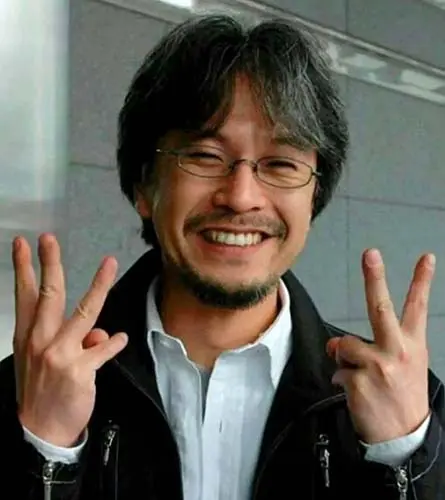
In the annals of creative achievement, there are artists who craft stories, and then there are those who build entire universes—living, breathing ecosystems of history, culture, and humanity that span generations. Eiichiro Oda, the creator of the monolithic manga and anime series One Piece, belongs resoundingly to the latter category. His biography is not merely the story of a successful manga artist; it is a modern odyssey of imagination, an unparalleled chronicle of discipline, and a testament to the enduring power of a single, unwavering dream. To understand Oda is to understand the creation of a contemporary mythos that has captured the heart of the planet.
Eiichiro Oda ((尾田 栄一郎 Oda Eiichirō), born on January 1, 1975, in Kumamoto, Japan, Oda’s origin story feels like the first panel of his own epic. He announced his intention to become a manga artist at the age of four, not out of mere childhood fancy, but as a strategic decision to avoid what he saw as the mundane confines of a “real job.” This early declaration was fueled by a voracious consumption of pop culture. The boundless adventure and transformative power-ups of Akira Toriyama’s Dragon Ball left an indelible mark, as did the sprawling crews and emotional crescendos of classic anime like Vicky the Viking. By his mid-teens, Oda was no longer just a fan; he was an apprentice in relentless training. He would sketch constantly, studying the mechanics of storytelling and humor. His dedication bore early fruit when, at 17, he won the coveted Tezuka Award for his one-shot Wanted! This prize was his ticket into the industry, leading him to the grueling yet formative trenches of a manga assistant on successful series like Rurouni Kenshin. Here, under deadline hell, he honed his craft, learned the brutal pace of weekly serialization, and began to solidify the whimsical, elastic art style that would become his signature.
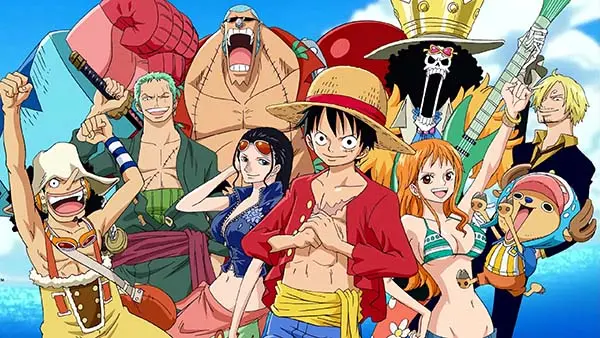
The true launch of his voyage came in 1996-97 with the one-shot Romance Dawn. In these pages, the core tenets of One Piece crystallized: a rubber-limbed, straw-hatted boy named Monkey D. Luffy, possessed of a laughable dream (to become the Pirate King) and an unbreakable spirit. When One Piece proper began serialization in Weekly Shōnen Jump on July 22, 1997, it entered a crowded field. Yet, it quickly distinguished itself not through cynicism or grit, but through its unabashed sincerity and staggering scale of imagination. Oda’s genius was in marrying a classic, easy-to-grasp quest narrative with a world of incomprehensible depth. The premise was simple: find the legendary treasure “One Piece.” The world in which that search took place, however, was anything but.
Oda’s approach to world-building is nothing short of cartographic and historical. He designed a globe—the world of One Piece—with its own logic, ocean currents (the Grand Line, the Calm Belt), celestial mechanics, and a deep, often dark, political history. Islands are not mere backdrops but unique cultural ecosystems with their own lore, conflicts, and aesthetic: the desert kingdom of Alabasta, the floating judicial fortress of Enies Lobby, the frozen pirate haven of Drum Island, the anachronistic samurai nation of Wano Country. This is not set-dressing; it is the stage for complex explorations of inherited will, historical oppression, and the corrupting nature of absolute power. The World Government and the Celestial Dragons stand as clear metaphors for imperial overreach and aristocratic tyranny, against which Luffy and his Straw Hat Pirates inevitably rebel. Oda masterfully weaves goofy comedy—often derived from his characters’ bizarre abilities and personalities—with moments of profound tragedy and social commentary. He makes readers care deeply about the fate of a boat (the Going Merry) and feel the weight of a 800-year-old void in history.
Central to the saga’s soul are its themes. Freedom is the paramount ideal, but Oda defines it not as libertine anarchy, but as the freedom to dream, to protect one’s friends, and to live authentically without oppression. Found family is the engine of the narrative; the Straw Hats are a crew of glorious outcasts, each bearing deep personal trauma, who find salvation and purpose not in a bloodline, but in a shared journey. The passing of dreams and will from one generation to the next forms the philosophical backbone, turning a pirate saga into a meditation on legacy. Luffy’s straw hat, passed to him from the legendary pirate “Red-Haired” Shanks, is the series’ most potent symbol of this trust.
To sustain this ever-expanding universe for over a quarter-century requires a metabolism of creativity and work ethic that borders on the supernatural—a key chapter in Oda’s biography. He is renowned for a schedule that would break most mortals: sleeping only from 2 AM to 5 AM during intense production weeks, surviving on short naps. He communicates this schedule not as a complaint, but as a necessary sacrifice for the story. His life is famously dedicated to his craft, with limited outside hobbies, as he views the completion of One Piece as his life’s race. This devotion is mirrored in his relationship with his audience. Oda maintains a sacred pact with his fans, whom he calls his “nakama” (comrades). He has repeatedly stated he will not take extended breaks because he does not want to worry those waiting for the story. This sense of responsibility, paired with a mischievous, childlike humor evident in his author notes and SBS (question-and-answer) columns, has fostered a unique bond of mutual respect.
The results of this symbiosis between creator and creation are statistics that defy belief: Over 520 million copies in print worldwide, making it the best-selling comic series by a single author in history. A manga that has dominated Shōnen Jump for decades, consistently at the top of reader polls. An anime adaptation with over 1,100 episodes. Video games, movies, and a merchandise empire spanning the globe. Perhaps the ultimate testament to its transcendent appeal came in 2023 with Netflix’s live-action adaptation. In an industry graveyard of failed anime-to-live-action translations, One Piece broke the curse, becoming a global smash hit. This success was attributed largely to Oda’s unprecedented level of creative control; he served as an executive producer who could veto anything that betrayed the spirit of his work. It proved that the core tenets of adventure, friendship, and dreaming big were universal languages.
Oda’s influence on the manga industry and fellow creators is as monumental as his own work. For an entire generation of mangaka, One Piece is the towering standard-bearer of Weekly Shōnen Jump and the modern adventure epic. His immediate juniors and contemporaries openly cite his impact. Masashi Kishimoto (Naruto) and Tite Kubo (Bleach), who alongside Oda formed the iconic “Big Three” of the 2000s, shared a rivalry and mutual respect. Kishimoto often noted how Oda’s intricate foreshadowing and vast world-building inspired him to deepen his own planning for Naruto. Similarly, Hiro Mashima (Fairy Tail, Edens Zero) has a style and penchant for large, chaotic casts and guild structures that directly channel Oda’s energetic spirit.
Beyond his peers, Oda’s influence permeates the DNA of subsequent hit series. Kohei Horikoshi (My Hero Academia) regularly expresses his profound admiration, and his series reflects this in its large cast of uniquely “quirky” heroes and its central theme of inheriting a legacy, much like Luffy inheriting the will of previous pirates. Yuki Tabata (Black Clover) mirrors Oda’s relentless pacing and commitment to classic, determined shōnen protagonists. Perhaps the most telling sign of influence is the trend of long-form, meticulously plotted world-building in battle shōnen, a model Oda perfected. Creators now often approach their series with a “Oda-esque” long-game mindset, planting seeds for plot points hundreds of chapters later.
Eiichiro Oda’s legacy extends beyond his pen. He is renowned for a work ethic bordering on the superhuman, famously sleeping just three hours a night during deadlines, a testament to his devotion to his story and fans. This dedication has made him a revered, almost mythical figure within the industry. More than any single technique, Oda’s greatest gift to manga is his proof of the power of unwavering consistency and a perfectly executed core vision. For over 25 years, he has maintained an exceptional level of quality, scale, and emotional weight, a feat that has earned him the universal title of “Oda-sensei.” He didn’t just create a successful manga; he built a modern mythology, a shared adventure for millions, and in doing so, inspired those who follow him to dream just as big. The world of One Piece is a testament to a single, relentless imagination, and its king, Eiichiro Oda, reigns as one of storytelling’s most influential and enduring monarchs.
Eiichiro Oda – Bibliography
- Wanted! (one-shot) (1992)
- Publisher: Shueisha, Weekly Shōnen Jump
- Oda’s professional debut one-shot, a short pirate adventure that foreshadows themes and humor later developed in One Piece.
- God’s Gift for the Future (God’s Gift ~Shuugyou-hen~) (one-shot) (1993)
- Publisher: Shueisha, Weekly Shōnen Jump
- A short story combining action and comedy, demonstrating Oda’s early storytelling style.
- Romance Dawn (one-shot, 1996) (Publisher: Shueisha, Weekly Shōnen Jump)
- Two versions of this one-shot exist; it introduced Monkey D. Luffy and key concepts that evolved into One Piece.
- One Piece (1997–present)
- Publisher: Shueisha, Weekly Shōnen Jump
- Oda’s signature series and one of the most successful manga of all time. Follows Monkey D. Luffy and the Straw Hat Pirates in their quest for the ultimate treasure, the “One Piece.” Known for imaginative world-building, humor, and epic story arcs. n 106+ volumes (ongoing).
- One Piece: Episode of … / Special Volumes (Various years)
- Publisher: Shueisha
- Spin-offs, adaptations, and special chapters expanding on specific arcs, characters, or retellings of major events in the One Piece world.
- Cross Epoch (collaboration with Akira Toriyama) (2006)
- Publisher: Shueisha, Weekly Shōnen Jump
- A crossover one-shot blending Oda’s and Toriyama’s worlds, showcasing both artists’ humor and adventure storytelling.
- Other Early One-Shots
- Monsters (1994)
- Kaiju (1994)
- God’s Gift ~Shuugyou-hen~ (1993)
These early works show Oda experimenting with action, humor, and adventure themes that would define his career.