Tite Kubo: The Architect of Style and Supernatural Spectacle
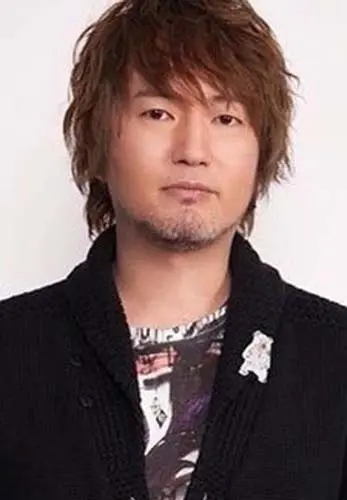
Tite Kubo, born Noriaki Kubo on June 26, 1977, in Hiroshima Prefecture, Japan, is a manga artist whose name became synonymous with stylistic cool and a foundational pillar of the global manga boom of the 2000s. His career is a testament to the power of a singular artistic vision, where aesthetic sensibility, iconic character design, and a penchant for the supernatural coalesced into one of the most recognizable and influential shōnen properties of all time: Bleach.
From a young age, Kubo was drawn to art and manga, citing influences ranging from the character designs of Saint Seiya (which inspired his love for armored warriors and dramatic poses) to the supernatural comedies of Tsukasa Hojo (City Hunter) and the stylish, monster-of-the-week format of Yu Yu Hakusho. This blend of cool urban aesthetics and spiritual warfare would later form the bedrock of his own work. After a pivotal moment in high school where he decided to pursue manga professionally, he submitted work to Shonen Jump and debuted in 1996 with the one-shot Ultra Unholy Hearted Machine, a precursor showcasing his sharp, fashion-conscious art. His first serialized work, Zombiepowder., about a band of hunters seeking magical rings, ran briefly in 1999-2000 but was canceled after four volumes. Despite its commercial setback, it served as a crucial incubator for the visual and thematic elements—the trench coats, the oversized weapons, the blend of the gritty and the spiritual—that would soon explode into popularity.
That explosion came in 2001 with the debut of Bleach in Weekly Shonen Jump. The story of Ichigo Kurosaki, a teenager who gains the powers of a Soul Reaper (Shinigami), began as a tightly focused urban fantasy with a unique hook: a massive, kitchen-knife-shaped sword used to combat lost spirits called Hollows. Kubo’s genius, however, lay in his boundless stylistic expansion. He built a sprawling cosmology—the Soul Society, the Hollow realm of Hueco Mundo, the Quincy homeland—each with distinct architectures, uniforms, and hierarchies that served as perfect canvases for his design fetish. Bleach was never merely a battle manga; it was a fashion show of the afterlife. His character designs, often inspired by punk, goth, and high-fashion aesthetics, became iconic. The swords (Zanpakutō) themselves were characters, with intricate release commands and evolved forms that fueled merchandise and fan speculation for over a decade. Kubo prioritized the “rule of cool,” often letting striking imagery, double-page spreads of dramatic silhouettes, and poetic attack names carry as much narrative weight as plot mechanics. This focus made Bleach a visual powerhouse, though its narrative sometimes buckled under the weight of its own expanding universe.
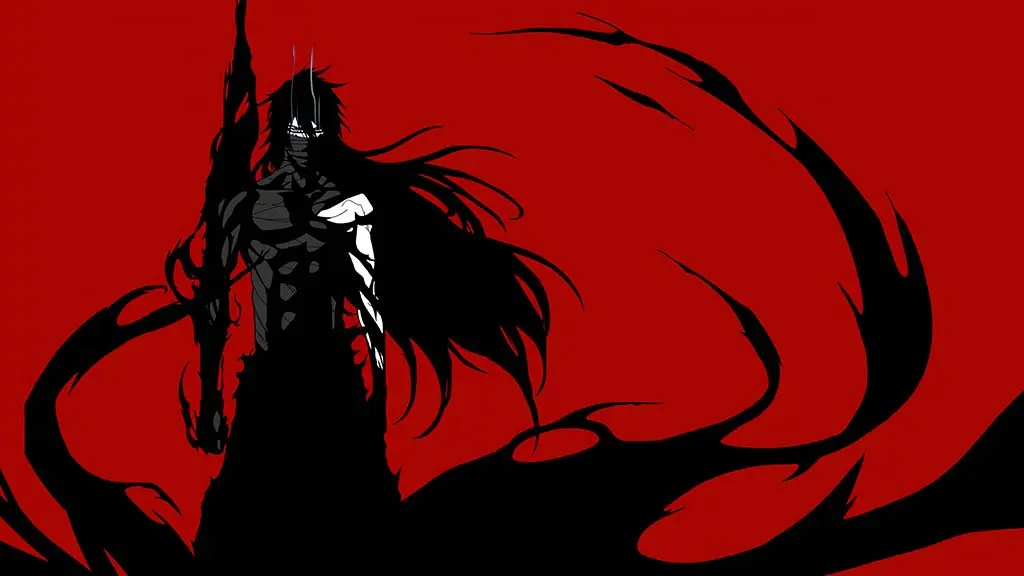
Kubo’s influence on the manga industry and global pop culture is immense. Alongside Eiichiro Oda (One Piece) and Masashi Kishimoto (Naruto), Kubo formed the legendary “Big Three” of Weekly Shonen Jump in the 2000s, a trio that defined an era and drove manga’s unprecedented international penetration. Bleach‘s specific legacy is its masterclass in style and presentation. It proved that a manga could achieve stratospheric success based heavily on the sheer cool factor of its characters, weapons, and transformations. This directly influenced the next generation of mangaka. The emphasis on named, technique-based power systems with clear visual cues is evident in Jujutsu Kaisen’s cursed techniques and domains. The modern, stylish approach to supernatural battles seen in series like Chainsaw Man and Jujutsu Kaisen owes a debt to Kubo’s fusion of urban grit with otherworldly spectacle. His impact extends beyond manga into anime, where Bleach‘s adaptation further cemented its iconic status, and into global fashion and tattoo culture, where his bold, black-and-white imagery and symbolic calligraphy became ubiquitous.
However, Kubo’s career has also been marked by well-documented struggles with the punishing schedule of weekly serialization, which affected his health and, by his own admission, his ability to execute his story exactly as planned. The final arc of Bleach faced criticism for its pacing, yet its recent, brilliantly animated adaptation, Thousand-Year Blood War, has been hailed as a masterpiece, revitalizing the series and affirming the enduring power of his core concepts and designs. Beyond Bleach, Kubo has contributed celebrated character designs for video games like Brave Souls and continues to work in a more measured pace.
Tite Kubo’s life is one of a singular stylist who weaponized cool. In an era defined by the “Big Three” alongside Eiichiro Oda and Masashi Kishimoto, Kubo carved his own distinct path not through dense lore or vast world-building, but through the relentless, awe-inspiring power of image and attitude. He proved that in the world of shōnen battles, the sharp cut of a coat, the whispered name of a sword, and the stark beauty of a black-and-white panel could carry as much weight as any energy blast. His legacy is a generation of creators and fans who understand that true power, in manga, is often inseparable from style.
Tite Kubo – Bibliography
- Ultra Unholy Hearted Machine (one-shot) (1996)
- Publisher: Shueisha
- Kubo’s early one-shot work, showing his interest in supernatural themes and stylish character design.
- Zombiepowder. (1999–2000)
- Publisher: Shueisha, Weekly Shōnen Jump
- A short-lived action manga about a violent, post-apocalyptic world. Despite its cancellation, it gained a cult following. 4 volumes.
- Bleach (2001–2016)
- Publisher: Shueisha, Weekly Shōnen Jump
- Kubo’s signature series and one of the best-known shōnen manga of the 2000s. Follows Ichigo Kurosaki, a teenager who becomes a Soul Reaper. Known for its minimalist art, fashion-forward character designs, and expansive supernatural lore. 74 volumes.
- Burn the Witch (2020–present (irregular))
- Publisher: Shueisha
- A fantasy series set in the same universe as Bleach, focusing on witches in London’s Reverse London. Originally released as a one-shot, later expanded. 1 volume.
- Notable One-Shots and Short Works
- Bad Shield United (2003)
- All Star Weekend (2003)
These one-shots further demonstrate Kubo’s storytelling style and visual flair.