J. R. R. Tolkien: The Collector’s Guide to First Editions, Rare and Collectible Books
Into Middle-earth: Journeys Through J. R. R. Tolkien’s Worlds
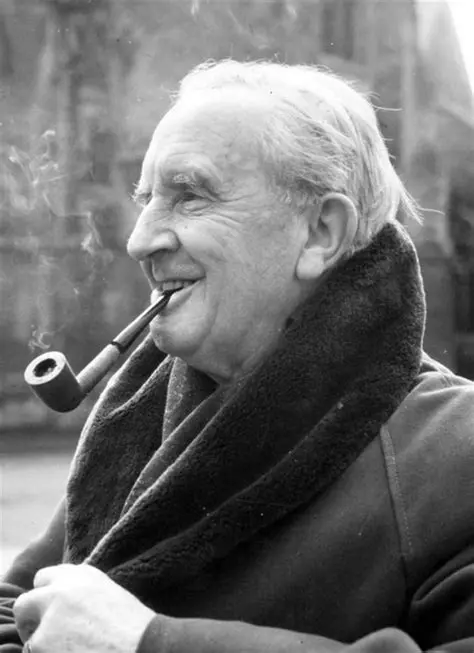
The Scholar and the Seeds of Middle-earth (1892-1937)
John Ronald Reuel Tolkien (1892–1973) was born in 1892 in Bloemfontein, South Africa, but his formative years were spent in the English countryside of the West Midlands and Worcestershire after his father’s death. This landscape, with its mills, forests, and quiet villages, would later become the essential visual template for the Shire. Tragedy struck again with the death of his mother when he was twelve, an event that deepened his Catholic faith and left him and his brother in the care of a guardian. Tolkien’s academic brilliance was evident early on; he excelled in classics and, at King Edward’s School, discovered his passion for philology—the study of language in its historical development. This passion would become the central engine of his creative life.
His studies at Oxford were interrupted by the First World War, where he served as a signals officer in the Battle of the Somme. The trauma of industrial warfare and the loss of nearly all his close friends profoundly affected him, fostering a deep-seated pessimism about mechanization and a romantic idealization of pastoral life. After the war, he embarked on an academic career, becoming the Rawlinson and Bosworth Professor of Anglo-Saxon at Oxford in 1925. It was in the lecture halls and common rooms of Oxford that his legendarium began to take shape. He started by creating languages for their own aesthetic pleasure, notably Elvish tongues like Quenya and Sindarin. As he often stated, “The invention of languages is the foundation. The ‘stories’ were made rather to provide a world for the languages than the reverse.” The first major expression of this world was The Silmarillion, a collection of myths and legends about the Elder Days, which he worked on for decades but would not publish in his lifetime. The catalyst for his popular fame came in the 1930s when, while grading exam papers, he famously wrote on a blank sheet, “In a hole in the ground there lived a hobbit.”
The Unexpected Hobbit and the Epic of the Ring (1937-1955)
The publication of The Hobbit in 1937 was an immediate critical and popular success. A children’s story born from the tales he told his own children, it introduced the world to Bilbo Baggins, the reluctant adventurer, and the world of Middle-earth. Its success prompted his publisher, Stanley Unwin, to ask for a sequel. What followed was not another children’s book but a monumental effort that would consume the next sixteen years of Tolkien’s life. The Lord of the Rings grew from a simple sequel into a profound and dark epic, deeply informed by his academic expertise, his Catholic worldview, and his experiences of war and loss.
The writing process was arduous and frequently interrupted by his academic duties and the Second World War. The novel, published in three volumes between 1954 and 1955 due to post-war paper shortages, was a massive artistic gamble. It was not a straightforward good-versus-evil narrative but a complex work with its own poetry, historical depth, and linguistic consistency. Initial critical reception was mixed; some hailed it as a masterpiece, while others dismissed it as juvenile escapism. However, its popularity among the public, particularly in the 1960s with the release of unauthorized paperback editions in the United States, grew into a cultural phenomenon. It spoke to a generation seeking alternatives to modern industrial society, cementing its status as one of the best-selling novels ever written.
The Posthumous Guardian of the Legendarium (1955-1973 and Beyond)
After the publication of The Lord of the Rings, Tolkien spent his remaining years as a semi-reluctant celebrity, overwhelmed by fan mail and the growing cult status of his work. He largely retreated to academic life and continued to refine the vast history of Middle-earth, the Silmarillion, but found it impossible to bring its complex mythology to a publishable state that satisfied him. He died in 1973, leaving his son, Christopher Tolkien, as his literary executor. This act ensured the careful and scholarly stewardship of Tolkien’s legacy.
Christopher Tolkien devoted the next 45 years of his life to organizing, editing, and publishing his father’s massive body of notes and unfinished manuscripts. Beginning with The Silmarillion in 1977, he oversaw the publication of the 12-volume The History of Middle-earth series, which detailed the evolution of the legends from their earliest forms. This painstaking work transformed J.R.R. Tolkien from the author of two famous books into the creator of the most detailed and comprehensive imaginary world in literary history. It revealed the staggering depth of his creation, from its cosmogony and annals to its genealogies and linguistic rules.
The Architect of Modern Fantasy: Influence and Legacy
Tolkien’s influence on literature and popular culture is immeasurable. He is, quite simply, the architect of modern commercial fantasy. Before him, fantasy existed in scattered myths, fairy tales, and the works of authors like William Morris and Lord Dunsany. After him, the genre was fundamentally defined by the “Tolkienian” model: a fully realized secondary world with its own history, languages, and maps, often centered on a grand quest against a Dark Lord. Every multi-volume epic fantasy series, from Robert Jordan’s The Wheel of Time to George R.R. Martin’s A Song of Ice and Fire, exists in the long shadow of Middle-earth. Martin’s work, for instance, is a conscious dialogue with Tolkien’s tropes, applying a more cynical and politically gritty lens to the epic form.
His legacy extends far beyond literature. The fantasy role-playing game industry, most notably Dungeons & Dragons, is built entirely upon Tolkienesque archetypes of elves, dwarves, halflings, and orcs. The billion-dollar film industry devoted to fantasy, culminating in Peter Jackson’s Oscar-winning The Lord of the Rings film trilogy, proved that his world had mainstream visual and narrative power on a global scale. More profoundly, Tolkien restored the epic and the mythic to 20th-century literature, arguing for the value of “faerie stories” not as escapism but as a legitimate and meaningful form of storytelling that could convey fundamental truths about courage, sacrifice, and the enduring struggle against shadow. For creating a modern mythology that continues to captivate millions, J.R.R. Tolkien’s legacy is as enduring as the world he built.
J. R. R. Tolkien – First Editions Identification Guide
A Complete Bibliography of J. R. R. Tolkien: Novels, Rare Books & First Editions
| Year | Title | Publisher | First edition/printing identification points |
|---|---|---|---|
| 1949 | FARMER GILES OF HAM | London: George Allen & Unwin Ltd, MCMXLIX | Boards. First published in 1949 on © page. |
| 1976 | THE FATHER CHRISTMAS LETTERS | London: George Allen & Unwin Ltd, [1976] | Boards. First published in 1976 on page [48]. Note: Issued without dust jacket. |
| 1967 | SMITH OF WOOTTON MAJOR | London: George Allen & Unwin Ltd, [1967] | First published in 1967 on © page. Note: Issued without dust jacket. |
| 1966 | THE TOLKIEN READER | New York: Ballantine Books, [1966] | Wrappers. First Edition: September, 1966 on © page. A Ballantine Book U7038 (95¢) |
| 1964 | TREE AND LEAF | London: George Allen & Unwin Ltd, [1964] | Boards. First published... 1964 on © page. Includes essay "On Fairy Stories, "short story "Leaf by Niggle," and an introductory note. |
| 1975 | TREE AND LEAF/SMITH OF WOOTTON MAJOR/THE HOMECOMING OFBEORHTNOTH BEORHTHELM'S SON | [London]: Unwin Books, [1975] | Wrappers. Unwin Books Edition 1975 on © page. Note: "The Homecoming of Beorhtnoth Beorhthelm's Son, "a verse play, is first collected here in a Book solely by Tolkien; fiction is reprinted from earlier books. |
| 1968 | THE LORD OF THE RINGS | London: George Allen and Unwin Ltd, [1968] | Wrappers. First published in one volume 1968 on © page. Reprint. Collects THE FELLOWSHIP OF THE RING, THE TWO TOWERS, and THE RETURN OF THE KING. Lacks index and appendices, save for "A Part of the Tale of Aragorn and Arwen." Note: A Canadian variant was probably produced during the same print run. This issue bears the imprint Thomas Nelson and Sons (Canada) Ltd on the title page, includes the following statement on the © page: George Allen & Unwin Ltd have authorized this edition for sale in Canada by Thomas Nelson & Sons (Canada) Ltd, page [1080] is blank, and the publisher's spine imprint reads NELSON. ALSO: London: George Allen and Unwin Ltd, [1969]. This India paper edition first published 1969 on © page. First hardcover one-volume edition. Follows second edition text and includes the six appendices and index. |
| 1954 | THE FELLOWSHIP OF THE RING | London: George Allen & Unwin Ltd, 1954 | First English edition. "First published in 1954" stated on © page. ALSO: First US edition. Houghton Mifflin, NY 1954. Year "1954" on title page and "First published in the United States 1954" stated on © page. DJ, in the tenth line of the back flap blurb, the "d" in "Frodo" is clipped/cut at the top. The bottom of Tolkien's photo on the rear panel is trimmed straight. The error was fixed in subsequent impression and the bottom of Tolkien's photo on the rear panel is trimmed in a "V" shape, not straight. ALSO: New York: Ballantine Books, [1965]. Wrappers. First Printing: October, 1965 on © page. Ballantine Books U7040 (95¢). [Second edition.] Revised text. Adds new author's "foreword." ALSO: London: George Allen & Unwin Ltd, [1966]. 16-line printing history on © page with line 16 reading: Second Edition 1966. First hardcover printing of the second edition. Minor variations in foreword, otherwise follows the 1965 Ballantine text. Collected later as part of one of THE LORD OF THE RINGS |
| 1937 | THE HOBBIT OR THERE AND BACK AGAIN | London: George Allen & Unwin Ltd, [1937] | First English edition. "First Published in 1937" stated on © page. Note: All examined copies of first printing dust jacket misprint "Dodgeson"for "Dodgson" on rear flap. ALSO: First American edition. NY: Houghton Mifflin, 1938. Three states, priority as listed:
DJ price: $2.50 ALSO: London: George Allen and Unwin Ltd, [1951]. Second edition [fifth impression]. Revised text. ALSO: London: Unwin Books, [1966]. Wrappers. 16-line printing history on © page with line 16 reading: Third edition (sixteenth impression) 1966. Additional textual revisions. ALSO: [London]: Longmans, [1966]. Boards. First published 1937/Second edition (fifth impression) 1951/Third edition (sixteenth impression) published in the Heritage of Literature Series in 1966 by arrangement with Messrs. George Allen & Unwin Ltd. on © page. First hardcover printing of the third edition. Note: Whitaker's Cumulative Book List cites June 1966 as month of publication for both Allen and Unwin and Longmans editions. Possibly published simultaneously but the Longmans edition may precede. The British Library received the Longmans edition on 6 June 1966 and the Allen and Unwin edition on 11 July 1966. |
| 1955 | THE RETURN OF THE KING | London: George Allen & Unwin Ltd, 1955 | First English edition. "First published in 1955" stated on © page. ALSO: First US edition. Houghton Mifflin, Boston, 1956. Dated "1954" on title page. DJ price $5.00. The $ sign has two uprights (as oppose to one) and the "5" is printed in larger font size than the "00", thus the printed price is uneven. ALSO: New York: Ace Books, Inc., [1965]. Wrappers. No statement of printing on © page. Ace Science Fiction Classic A-6 (75¢). Abridged. Does not contain appendices. Text follows the 1955 Allen & Unwin edition. ALSO: New York: Ballantine Books, [1965]. Wrappers. First printing: December, 1965 on © page. Ballantine Books U7042 (95¢). [Second edition.]. Revised text; adds index. ALSO: London: George Allen & Unwin Ltd, [1966]. 12-line printing history on © page with line 12 reading: Second Edition 1966. First hardcover printing of the second edition. Follows the 1965 Ballantine text. Collected later as part three of THE LORD OF THE RINGS. THE SILMARILLION. International publication date was 19 September 1977. Three editions, simultaneous publication but priority of printing probably as indicated:
|
| 1954 | THE TWO TOWERS | London: George Allen & Unwin Ltd, 1954 | First English edition. "First published in 1954" stated on © page. ALSO: First US edition. Dated "1954" on title page and "Copyright, 1954, by J.R.R. Tolkien" on © page. DJ has a small defect, a tiny nick in the "r" of "Towers" on the front panel. ALSO: New York: Ballantine Books, [1965]. Wrappers. First Printing: November, 1965 on © page. Ballantine Books U7041 (95¢). [Second edition.] Revised text. ALSO: London: George Allen & Unwin Ltd, [1966]. 13-line printing history on © page with line 13 reading: Second Edition 1966. First hardcover printing of second edition. Follows the 1965 Ballantine text. Collected later as part two of THE LORD OF THE RINGS. |
J. R. R. Tolkien – First Printing Dust Jackets Identification Guide
Gallery of First state Dust Jackets of Tolkien’s works.


Reference:
- L. W. Currey, Science Fiction and Fantasy Authors: A Bibliography of First Printings of Their Fiction and Selected Nonfiction.