John Wyndham: The Collector’s Guide to First Editions, Rare and Collectible Books
Early Years and Apprenticeship: The Pulp Writer (1903-1945)
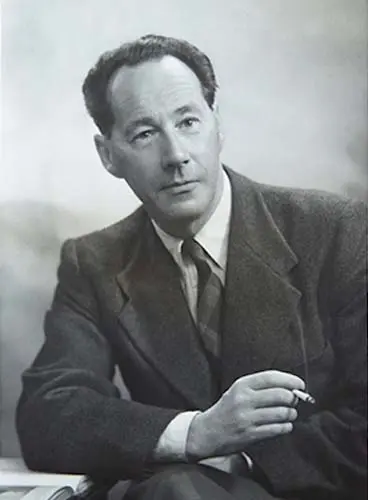
John Wyndham Parkes Lucas Beynon Harris was born in 1903 in Warwickshire, England, into a middle-class family that fractured when his parents separated. This early experience of instability, coupled with an education across various boarding schools, may have planted the seeds for his later fictional explorations of societal collapse. Before finding his literary voice, Wyndham embarked on a remarkably diverse career path that included farming, law, advertising, and commercial art. These professions provided him with a broad, observational understanding of British society that would later inform the grounded nature of his catastrophes.
In the 1930s, he began his writing career in earnest, contributing stories to American pulp science fiction magazines under pseudonyms like John Beynon. These early works—titles such as “The Lost Machine” (1932)—were largely conventional space operas and planetary adventures, typical of the pulp era. They demonstrated competence but showed little sign of the distinctive style and themes that would later define his work. This period was one of literary apprenticeship, abruptly interrupted by the Second World War. His service as a censor and in the Royal Corps of Signals exposed him to the bureaucratic machinery of a nation in crisis and the terrifying potential of modern warfare, experiences that would fundamentally reshape his approach to writing.
The Birth of a Voice: Post-War Masterpieces (1946-1960)
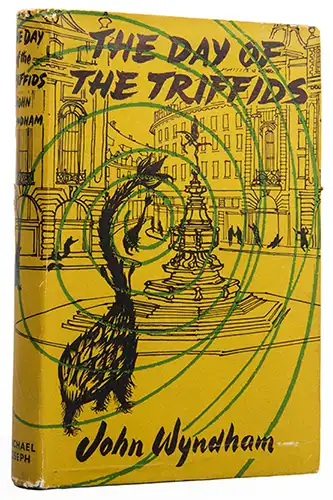
The end of the war marked a dramatic transformation in Wyndham’s writing. He emerged with a new pen name—John Wyndham—and a fully formed authorial vision. Shedding the conventions of interplanetary romance, he turned his focus inward onto a familiar, contemporary England. His genius was to take the existential fears of the nascent Cold War—nuclear annihilation, biological tampering, alien invasion—and ground them in the quiet, orderly world of middle-class Britain. This new approach exploded onto the scene with The Day of the Triffids in 1951. The novel was a revelation. Its catastrophe is not a single explosive event but a creeping, insidious process, beginning with a mysterious cosmic event that blinds most of the population, followed by the rise of the Triffids, a deadly product of human hubris.
This novel established the “Wyndham formula,” which he refined over the next decade. The Kraken Wakes (1953) depicted an unnerving, non-anthropomorphic alien invasion that unfolds through escalating oceanic and climatic disasters. The Chrysalids (1955), arguably his masterpiece, is a powerful post-nuclear parable set in a future society obsessed with genetic purity, exploring themes of intolerance, otherness, and evolution. The Midwich Cuckoos (1957) introduced the terrifying concept of alien children born into a sleepy English village, probing anxieties about the generation gap and the loss of control. These works perfected what critic Brian Aldiss later termed the “cosy catastrophe,” a subgenre where a global disaster is witnessed from a relatively safe perspective, focusing on the practical and ethical challenges of rebuilding society.
Later Works and Consolidation of a Legacy (1961-1969)
The 1960s saw Wyndham continue to produce thoughtful, if less frequent, novels that explored new variations on his core themes. Trouble with Lichen (1960) moved away from outright catastrophe to a “what if” scenario, examining the profound societal implications of a lichen that dramatically extends human lifespan. The novel delves into themes of gender, power, and the consequences of disrupting the natural order, demonstrating his ability to use science fiction for sharp social commentary. Chocky (1968), originally a short story expanded into a novel, returned to the theme of alien intelligence influencing a child, but with a more benevolent and philosophical tone than the threatening children of The Midwich Cuckoos.
This period was less about revolutionary innovation and more about the consolidation of his reputation. His earlier novels had become staples of British bookshelves, and he was now an established, respected figure in the literary landscape. His work began to be adapted for other media, most notably with the 1960 film Village of the Damned, based on The Midwich Cuckoos, which brought his unsettling vision to a wider international audience. During this time, his writing maintained its characteristic clarity and focus on character, even as the science fiction genre around him began to shift towards the more experimental and psychedelic styles of the New Wave.
Enduring Influence and Literary Legacy
John Wyndham’s legacy is profound and multifaceted. He is credited with creating and perfecting the “cosy catastrophe,” a narrative framework that has influenced countless subsequent works, from John Christopher’s The Death of Grass to modern films and television series like 28 Days Later and The Walking Dead. His specific influence on British science fiction is immeasurable; he provided a crucial bridge between the social speculation of H.G. Wells and the grounded, television-driven narratives of shows like Doctor Who.
His greatest achievement, however, was legitimizing science fiction for a mainstream audience. By writing in a clear, accessible, and understated literary style, and by setting his stories in a recognizable, contemporary world, he brought the genre out of the pulp magazine ghetto and onto the bookshelves of ordinary readers. He proved that science fiction could be a vehicle for serious philosophical inquiry into human nature, societal fragility, and resilience. Wyndham’s novels remain in print and continue to be widely read because the anxieties they explore—about technological hubris, societal collapse, and the Other—are, tragically, forever contemporary. For capturing the specific unease of the twentieth century and showing how the end of the world could begin in a quiet English village, John Wyndham remains a foundational and endlessly relevant voice in literature.
John Wyndham – First Editions Identification Guide
A Complete Bibliography of John Wyndham: Novels, Rare Books & First Editions
| Year | Title | Publisher | First edition/printing identification points |
|---|---|---|---|
| 1973 | THE BEST OF JOHN WYNDHAM | London: Sphere Books Limited, [1973] | Wrappers. First published in Great Britain ... 1973 on © page. Sphere 0 7221 9369 6 (40p). John Wyndham, pseudonym. Reissued without introduction and bibliography as THE MAN FROM BEYOND AND OTHER STORIES. |
| 1955 | THE CHRYSALIDS | London; Michael Joseph, [1955] | Boards. First published ... 1955 on © page. John Wyndham, pseudonym. Issued earlier in the U.S. with textual differences as RE-BIRTH. |
| 1961 | CONSIDER HER WAYS & OTHERS | London; Michael Joseph, [1961] | Boards. First published ...1961 on © page. John Wyndham .pseudonym. |
| 1935 | FOUL PLAY SUSPECTED | London; George Newnes, Limited., [1935] | No statement of printing on © page. John Beynon, pseudonym. |
| 1961 | THE INFINITE MOMENT | New York: Ballantine Books, [1961] | Wrappers. No statement of printing on © page. Ballantine Books 546 (35¢). John Wyndham, pseudonym. |
| 1964 | THE JOHN WYNDHAM OMNIBUS | London: Michael Joseph, [1964] | Boards. First published ... 1964 on © page. Reprint. Collects THE DAY OF THE TRIFFIDS, THE KRAKEN WAKES, and THE CHRYSALIDS. John Wyndham, pseudonym. |
| 1953 | THE KRAKEN WAKES | London: Michael Joseph, [1953] | Boards. First published ... 1953 on © page. John Wyndham, pseudonym. Issued later with textual changes in the U.S. as OUT OF THE DEEPS. |
| 1945-46 | LOVE IN TIME | [London: Utopian Publications Ltd.], n.d. [ca. 1945-1946] | Wrappers. No statement of printing,. Cover title. Printed in Eire on page 36. Johnson Harris, pseudonym. |
| 1975 | THE MAN FROM BEYOND AND OTHER STORIES | London: Michael Joseph, [1975] | Boards. This edition first published in Great Britain ... 1975 on © page. John Wyndham, pseudonym. Reissue of THE BEST OF JOHN WYNDHAM. Drops introduction by Leslie Flood and bibliography. |
| 1957 | THE MIDWICH CUCKOOS | London: Michael Joseph, [1957] | Boards. First published... 1957 on © page. John Wyndham, pseudonym. ALSO: New York: Ballantine Books, [1953]. No statement of printing on © page. Textual changes. Reissued following this text as VILLAGE OF THE DAMNED. |
| 1936 | PLANET PLANE | London: Newnes, [1936] | No statement of printing on © page. John Beynon, pseudonym. Revised as STOWAWAY TO MARS. |
| 1952 | REVOLT OF THE TRIFFIDS | Atew York: Popular Library, [1952] | Wrappers. March, 1952 on © page.Popular Library 411 (25¢). John Wyndham, pseudonym. Reissue of THE DAY OF THE TRIFFIDS. |
| 1956 | THE SEEDS OF TIME | London; Michael Joseph, [1956] | Boards. First published ... 1956 on © page. John Wyndham, pseudonym. |
| 1973 | SLEEPERS OF MARS | London: Hodder Paperbacks Ltd., [1973] | Wrappers. First published in this form ... 1973 on © page. Coronet Science Fiction 17326 2 (30p). |
| 1953 | STOWAWAYTO MARS | London; Nova Publications Ltd., [1953] | Wrappers. No statement of printing on © page. Nova Science Fiction Novels No. 1 (1'6). John Beynon, pseudonym. Revised text. Originally published as PLANET PLANE. |
| 1956 | TALES OF GOOSEFLESH AND LAUGHTER | New York: Ballantine Books, [1956] | Wrappers. No statement of printing on © page. John Wyndham, pseudonym.. |
| 1960 | VILLAGE OF THE DAMNED | New York: Ballantine Books, [1960] | Wrappers. No statement of printing on © page. Ballantine Books 453K (35¢). John Wyndham, pseudonym. Reissue of THE MIDWICH CUCKOOS. Note: Follows the 1958 Ballantine Books text. |
| 1973 | WANDERERS OF TIME | London; Hodder Paperbacks Ltd., [1973] | Wrappers. First published in this form ... 1973 on © page. Coronet Science Fiction 173068 (30p). |
| 1968 | CHOCKY | New York: Ballantine Books, [1968] | Wrappers. First Printing: February, 1968 on © page. A Ballantine Science Fiction Original U6119 (75¢). John Wyndham,pseudonym. ALSO: London: Michael Joseph, [1968]. Boards. First published in Great Britain ... 1968 on © page. First hardcover edition. |
| 1954 | JIZZLE | London; Dennis Dobson, [1954] | Boards. First published in Great Britain in MCMLIV on © page. John Wyndham, pseudonym. Note: Two states of the dust jacket, priority as listed:
|
| 1953 | OUT OF THE DEEPS | New York: Ballantine Books, [1953] | Two issues, no priority:
|
| 1959 | THE OUTWARD URGE | London: Michael Joseph [1959] | Boards. First published ... 1959 on © page. John Wyndham and Lucas Parkes, pseudonyms. ALSO: London: The Science Fiction Book Club, 1961. Boards. No statement of printing on © page. Adds "The Emptiness of Space : A.D. 2194." |
| 1955 | RE-BIRTH | New York: Balltantine Books, [1955] | Two issues, no priority:
|
| 1935 | THE SECRET PEOPLE | London: George Newnes, Limited, [1935] | Three bindings, no priority established:
|
| 1960 | TROUBLE WITH LICHEN | London; Michael Joseph, [1960] | Boards. First published ... 1960 on © page. John Wyndham, pseudonym. ALSO: New York: Ballantine Books, [1960], Wrappers. No statement of printing on © page. Ballantine Science Fiction 449 K (350). Textual differences. ALSO: New York: Walker and Company, [1969], Boards. Published in the United States of America in 1969 ... on © page. First U.S. hardcover edition. Follows the 1960 Ballantine Books text. |
| 1951 | THE DAY OF THE TRIFFIDS | Garden City: Doubleday & Company, Inc., 1951 | First edition so stated on © page. John Wyndham, pseudonym. Reissued as REVOLT OF THE TRIFFIDS. ALSO: London: Michael Joseph, [1951]. First published ... 1951 on © page. Textual differences. |
John Wyndham – First Printing Dust Jackets Identification Guide
Gallery of First state Dust Jackets of Wyndham’s works.


Reference:
- L. W. Currey, Science Fiction and Fantasy Authors: A Bibliography of First Printings of Their Fiction and Selected Nonfiction.