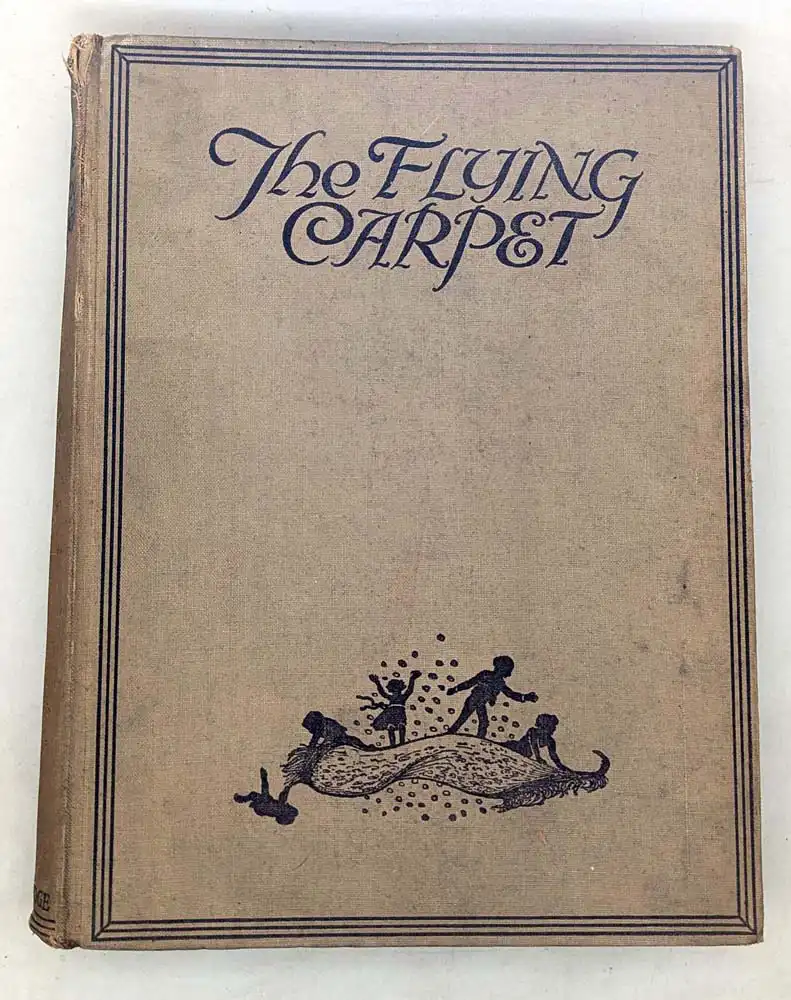
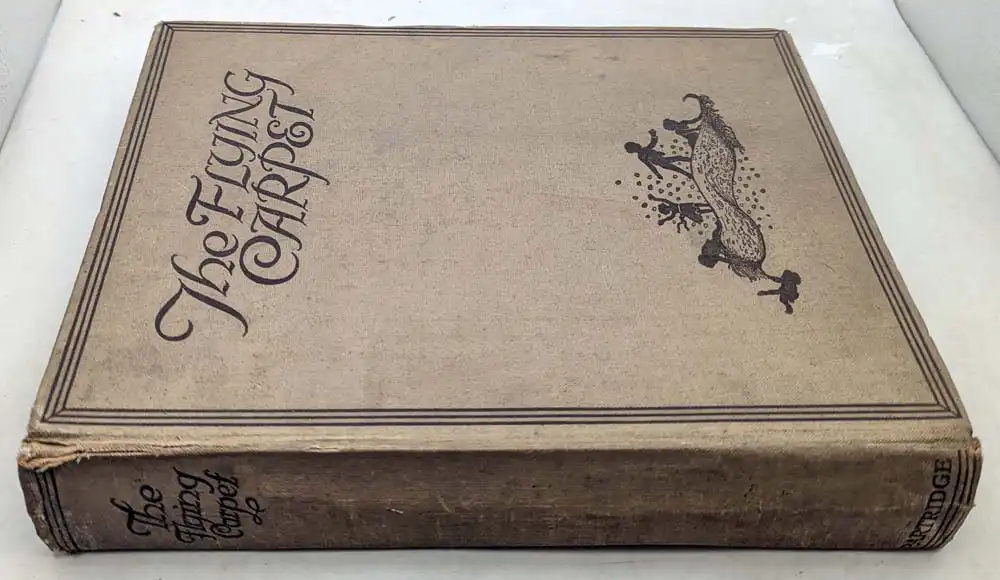
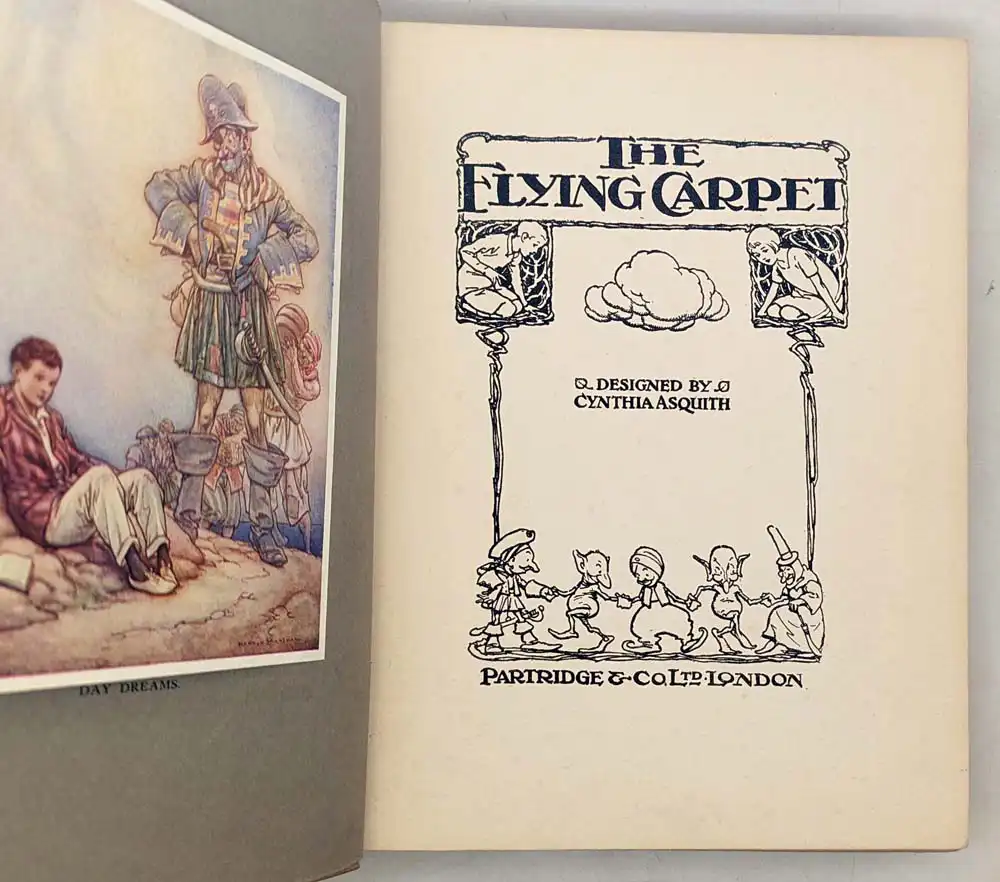
Cynthia Asquith’s The Flying Carpet is a delightful anthology of short stories that transports readers into a world where magic brushes gently against the ordinary. Published in 1925, this collection brings together contributions from multiple authors, each tale woven with whimsy and a touch of early twentieth-century enchantment. The book opens with “A Popular Personage at Home,” a charming narrative told from the perspective of a loyal dog named Wessex, whose quiet observations of his human companions are filled with warmth and gentle dignity. Following this is Adelaide Phillpotts’ “Thomas Henry Titt,” the story of a young boy whose simple yet profound wish to see the sea is fulfilled through a mystical, candlelit dream that blurs the line between reality and imagination.
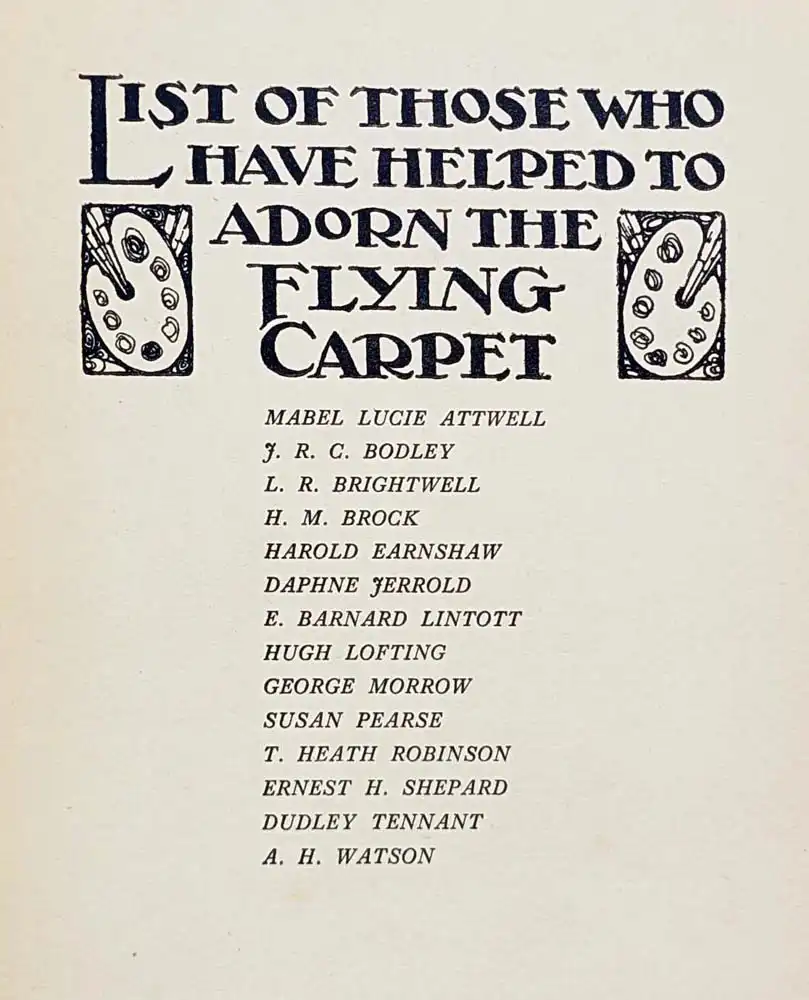
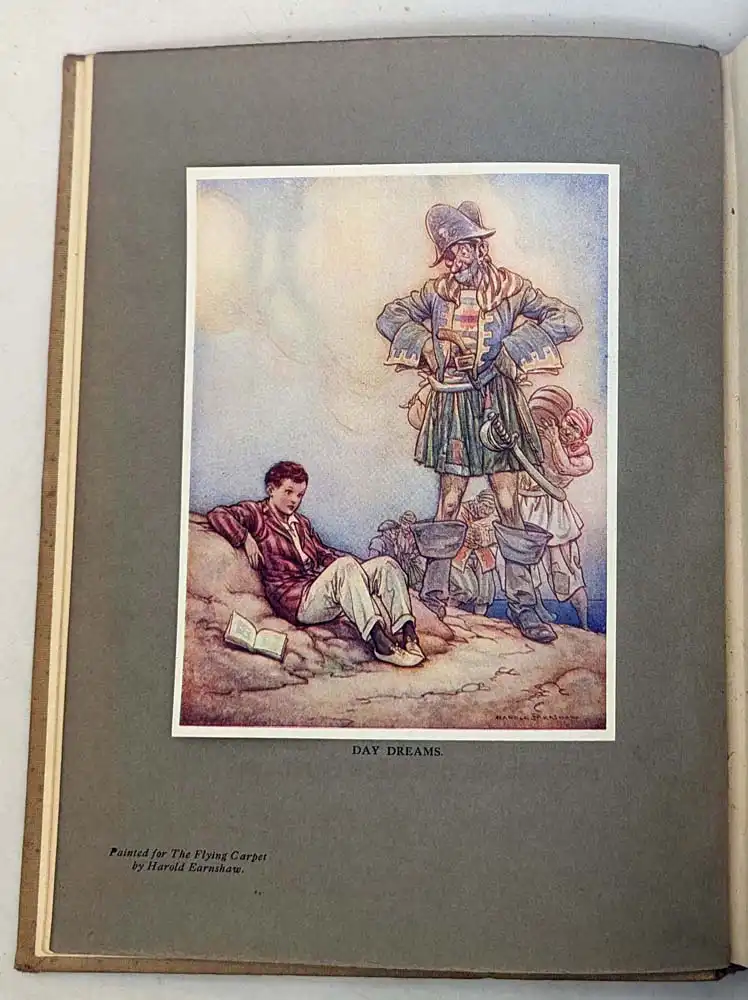
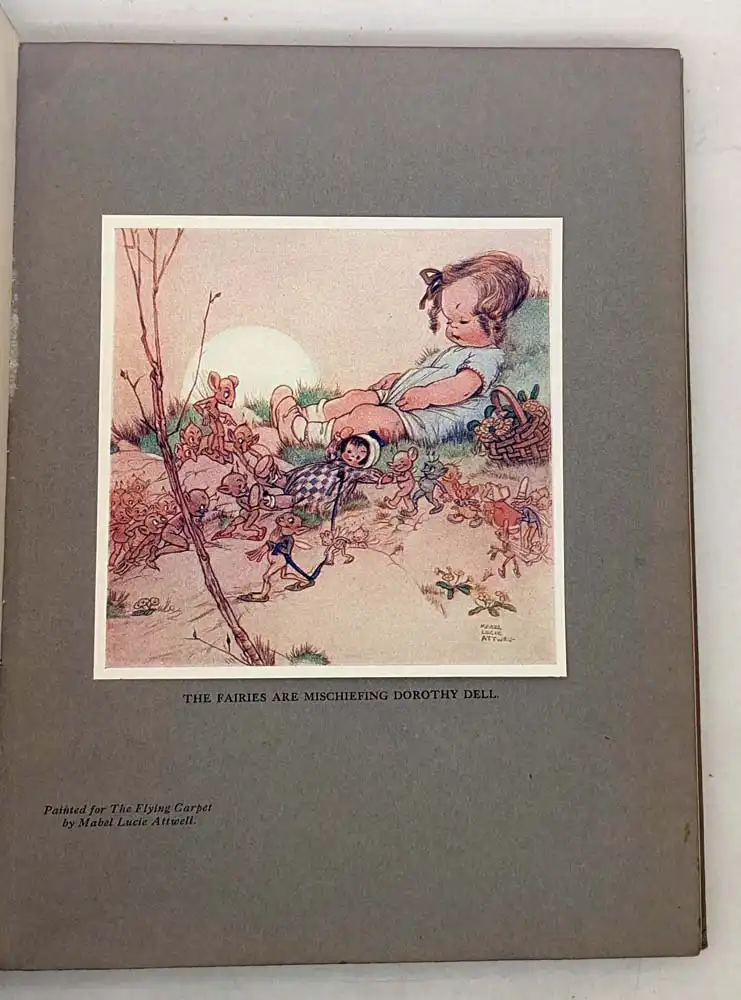
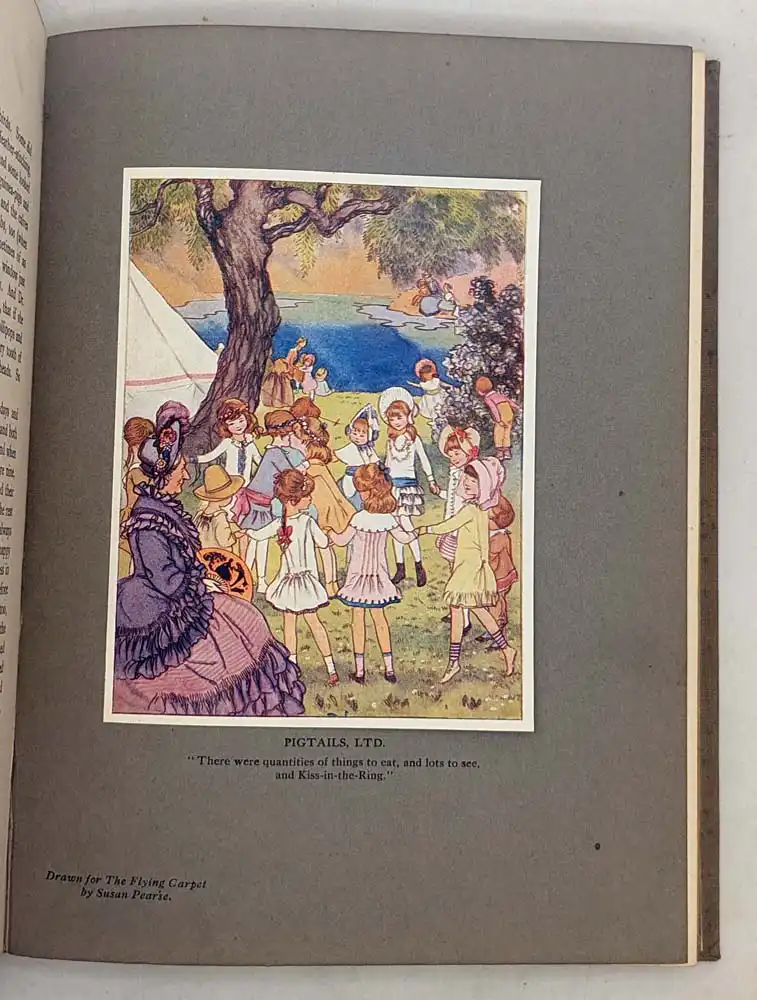
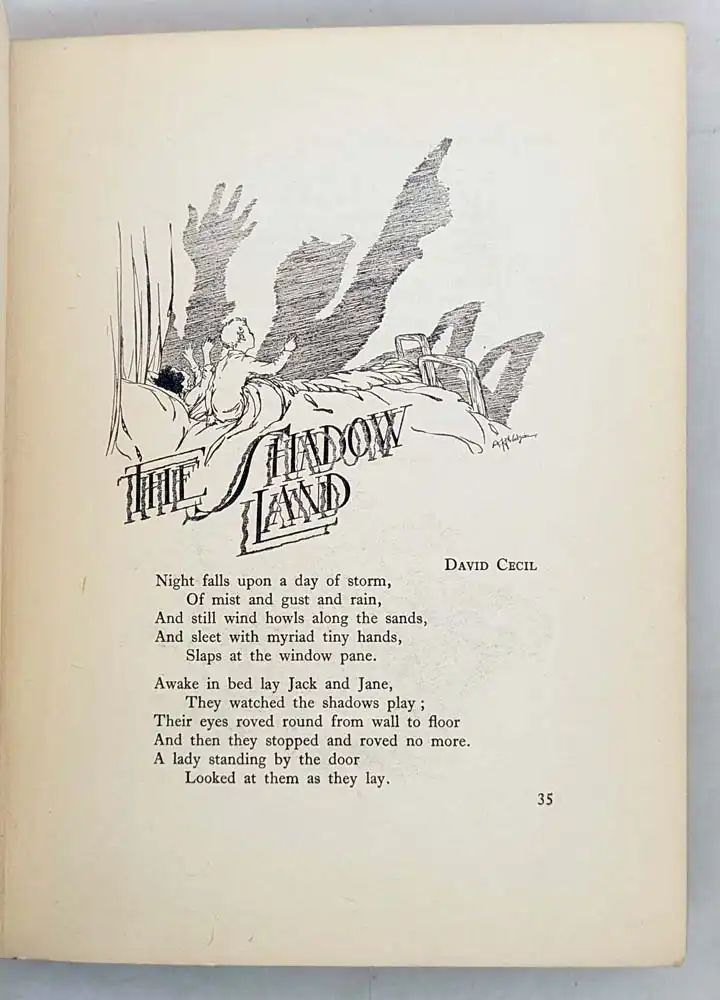
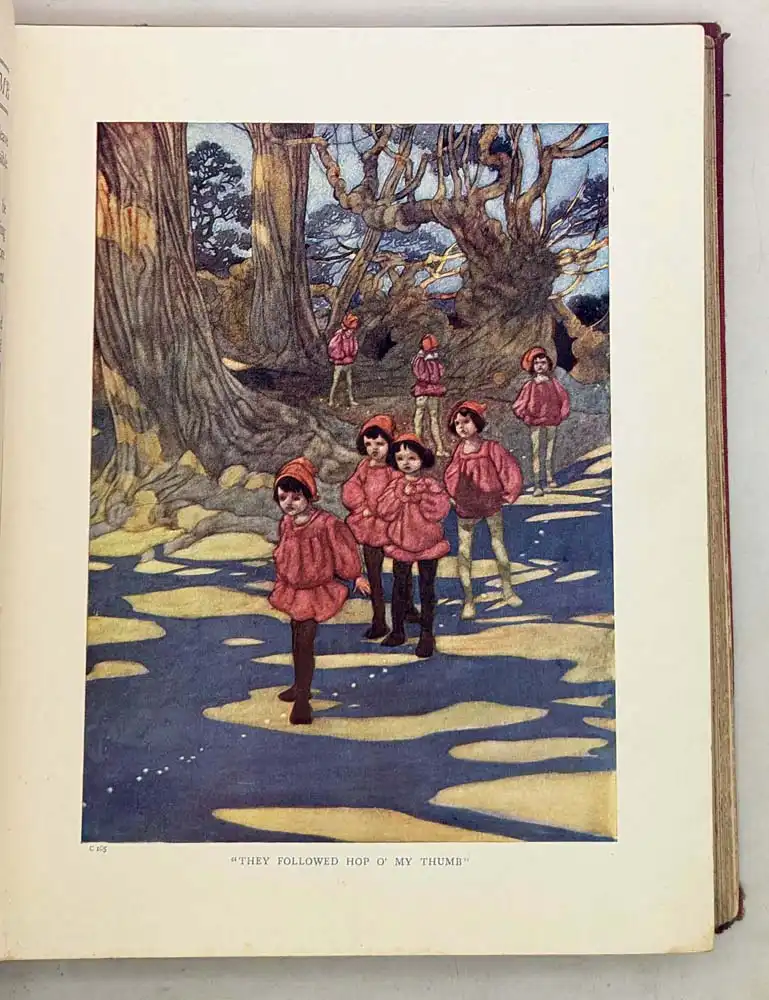
What elevates this volume beyond a mere story collection is its extraordinary visual richness. The pages are adorned with illustrations from a constellation of Golden Age artists, including Mabel Lucie Attwell’s cherubic children, Ernest H. Shepard’s tender line work, and Hugh Lofting’s whimsical creations. The artwork of fifteen distinguished illustrators dances alongside the narratives, capturing the era’s deep appreciation for childhood fantasy and literary beauty. Each drawing seems to invite the reader further into the dream. As a whole, The Flying Carpet serves as a treasured portal to a more imaginative time, a testament to the power of storytelling and the enduring charm of a well-crafted tale. It remains a lovely artifact of its period, championed by Asquith as both editor and literary hostess, and continues to offer readers a magical journey.