A Knight’s Tale: Howard Pyle’s Otto of the Silver Hand
There are authors who write stories, and then there are artists who build worlds. Howard Pyle did both, and in Otto of the Silver Hand, published in 1888, he created not only one of the most enduring children’s novels of the nineteenth century but also a work of illustration that would define the visual language of medieval romance for generations to come.
Howard Pyle (1853–1911) was a titan of American illustration. Based in Wilmington, Delaware, he was the founder of the Brandywine School, a teacher to such luminaries as N.C. Wyeth, Jessie Wilcox Smith and the man who established the visual conventions for how Americans imagined knights, pirates, and Robin Hood. His work was characterized by historical accuracy, dramatic composition, and a profound understanding of storytelling. When Pyle wrote and illustrated a book, he was not merely decorating text; he was creating a seamless fusion of word and image.
Otto of the Silver Hand is a medieval romance set in thirteenth-century Germany. It tells the story of Otto, the gentle son of a fierce robber baron, who is raised in a monastery and later caught in the violent feuds of the nobility. The novel is notable for its unflinching portrayal of the brutality of the Middle Ages, contrasted with its celebration of courage, kindness, and honor. It is a tale of redemption, a meditation on the costs of violence, and a deeply human story—all rendered with Pyle’s characteristic blend of adventure and moral seriousness.
The book was originally published by Charles Scribner’s Sons in an edition that showcased Pyle’s talents at their peak. The volume contains numerous illustrations, including full-page plates and smaller drawings woven throughout the text. Pyle’s style in these illustrations is detailed and robust, with a strong emphasis on historical authenticity. His knights wear accurate armor; his castles are rendered with architectural precision; his landscapes evoke the dense forests and rugged hills of medieval Germany.
What sets Pyle’s illustrations apart is their dramatic intensity. He was a master of composition, arranging figures and landscapes to heighten the emotional impact of each scene. The climactic moment when Otto’s hand is severed by his family’s enemies is rendered with restraint and power—the horror conveyed through shadow and posture rather than explicit gore. The illustrations depicting Otto’s gentle life in the monastery contrast warmth and serenity with the violence of the outside world, creating a visual tension that mirrors the novel’s central conflict.
Pyle’s characters are rendered with psychological depth. Otto himself is depicted as a figure of vulnerability and growing strength, his large eyes conveying both innocence and resilience. The robber barons and knights who populate the story are given distinct physical presences—some noble, some craven, all unmistakably human. Even the architectural details of castle and cloister become characters in their own right, reflecting the values and conflicts of those who inhabit them.
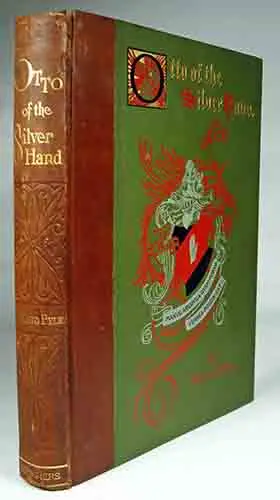
The original Scribner’s edition of Otto of the Silver Hand was a handsome production, bound in cloth with gilt stamping and featuring a decorative cover illustration. It was a book designed to be treasured, reflecting Pyle’s belief that books for young readers deserved the same artistic attention as those for adults. The edition was widely praised at the time of publication and has remained in print in various forms ever since.
For collectors, first editions of Otto of the Silver Hand are prized possessions. The combination of Pyle’s literary and artistic talents, the historical significance of the work, and its enduring popularity make it a cornerstone of any collection of illustrated books. Beyond its collectibility, however, the book endures because of what it represents: a moment when one of America’s greatest illustrators turned his full attention to a story of his own making, creating a work that is as moving today as it was over a century ago.
Howard Pyle’s Otto of the Silver Hand stands as a testament to the power of the illustrated book when author and artist are one. In its pages, a lost world comes to life—not merely as spectacle, but as a place where questions of courage, honor, and mercy are tested in the crucible of human experience. It is a knight’s tale in the truest sense: a story that rides out from the past to meet us still, ready to capture our imaginations once more.
For Fans of This Book
- The Merry Adventures of Robin Hood (1883) by Howard Pyle – Another Pyle classic, blending swashbuckling adventure with rich illustrations.
- Men of Iron (1891) by Howard Pyle – A thrilling medieval tale of knighthood and honor, also written and illustrated by Pyle.
- The Story of King Arthur and His Knights (1903) by Howard Pyle – A beautifully illustrated retelling of Arthurian legends in Pyle’s signature style.
Art Gallery: Howard Pyle -Otto of the Silver Hand 1888
![Howard Pyle - Otto of the Silver Hand [pyle-otto01] (art, illustrations)](https://www.nocloo.com/wp-content/plugins/justified-image-grid/timthumb.php?src=https%3A%2F%2Fwww.nocloo.com%2Fart%2Fpyle-otto%2Fpyle-otto01.jpg&h=280&q=90&f=.jpg)
![Howard Pyle - Otto of the Silver Hand [pyle-otto02] (art, illustrations)](https://www.nocloo.com/wp-content/plugins/justified-image-grid/timthumb.php?src=https%3A%2F%2Fwww.nocloo.com%2Fart%2Fpyle-otto%2Fpyle-otto02.jpg&h=280&q=90&f=.jpg)
![Howard Pyle - Otto of the Silver Hand [pyle-otto03] (art, illustrations)](https://www.nocloo.com/wp-content/plugins/justified-image-grid/timthumb.php?src=https%3A%2F%2Fwww.nocloo.com%2Fart%2Fpyle-otto%2Fpyle-otto03.jpg&h=280&q=90&f=.jpg)
![Howard Pyle - Otto of the Silver Hand [pyle-otto04] (art, illustrations)](https://www.nocloo.com/wp-content/plugins/justified-image-grid/timthumb.php?src=https%3A%2F%2Fwww.nocloo.com%2Fart%2Fpyle-otto%2Fpyle-otto04.jpg&h=280&q=90&f=.jpg)
![Howard Pyle - Otto of the Silver Hand [pyle-otto05] (art, illustrations)](https://www.nocloo.com/wp-content/plugins/justified-image-grid/timthumb.php?src=https%3A%2F%2Fwww.nocloo.com%2Fart%2Fpyle-otto%2Fpyle-otto05.jpg&h=280&q=90&f=.jpg)
![Howard Pyle - Otto of the Silver Hand [pyle-otto06] (art, illustrations)](https://www.nocloo.com/wp-content/plugins/justified-image-grid/timthumb.php?src=https%3A%2F%2Fwww.nocloo.com%2Fart%2Fpyle-otto%2Fpyle-otto06.jpg&h=280&q=90&f=.jpg)
![Howard Pyle - Otto of the Silver Hand [pyle-otto07] (art, illustrations)](https://www.nocloo.com/wp-content/plugins/justified-image-grid/timthumb.php?src=https%3A%2F%2Fwww.nocloo.com%2Fart%2Fpyle-otto%2Fpyle-otto07.jpg&h=280&q=90&f=.jpg)
![Howard Pyle - Otto of the Silver Hand [pyle-otto08] (art, illustrations)](https://www.nocloo.com/wp-content/plugins/justified-image-grid/timthumb.php?src=https%3A%2F%2Fwww.nocloo.com%2Fart%2Fpyle-otto%2Fpyle-otto08.jpg&h=280&q=90&f=.jpg)
![Howard Pyle - Otto of the Silver Hand [pyle-otto09] (art, illustrations)](https://www.nocloo.com/wp-content/plugins/justified-image-grid/timthumb.php?src=https%3A%2F%2Fwww.nocloo.com%2Fart%2Fpyle-otto%2Fpyle-otto09.jpg&h=280&q=90&f=.jpg)
![Howard Pyle - Otto of the Silver Hand [pyle-otto10] (art, illustrations)](https://www.nocloo.com/wp-content/plugins/justified-image-grid/timthumb.php?src=https%3A%2F%2Fwww.nocloo.com%2Fart%2Fpyle-otto%2Fpyle-otto10.jpg&h=280&q=90&f=.jpg)
![Howard Pyle - Otto of the Silver Hand [pyle-otto11] (art, illustrations)](https://www.nocloo.com/wp-content/plugins/justified-image-grid/timthumb.php?src=https%3A%2F%2Fwww.nocloo.com%2Fart%2Fpyle-otto%2Fpyle-otto11.jpg&h=280&q=90&f=.jpg)
![Howard Pyle - Otto of the Silver Hand [pyle-otto12] (art, illustrations)](https://www.nocloo.com/wp-content/plugins/justified-image-grid/timthumb.php?src=https%3A%2F%2Fwww.nocloo.com%2Fart%2Fpyle-otto%2Fpyle-otto12.jpg&h=280&q=90&f=.jpg)
![Howard Pyle - Otto of the Silver Hand [pyle-otto13] (art, illustrations)](https://www.nocloo.com/wp-content/plugins/justified-image-grid/timthumb.php?src=https%3A%2F%2Fwww.nocloo.com%2Fart%2Fpyle-otto%2Fpyle-otto13.jpg&h=280&q=90&f=.jpg)
![Howard Pyle - Otto of the Silver Hand [pyle-otto14] (art, illustrations)](https://www.nocloo.com/wp-content/plugins/justified-image-grid/timthumb.php?src=https%3A%2F%2Fwww.nocloo.com%2Fart%2Fpyle-otto%2Fpyle-otto14.jpg&h=280&q=90&f=.jpg)
![Howard Pyle - Otto of the Silver Hand [pyle-otto15] (art, illustrations)](https://www.nocloo.com/wp-content/plugins/justified-image-grid/timthumb.php?src=https%3A%2F%2Fwww.nocloo.com%2Fart%2Fpyle-otto%2Fpyle-otto15.jpg&h=280&q=90&f=.jpg)
![Howard Pyle - Otto of the Silver Hand [pyle-otto16] (art, illustrations)](https://www.nocloo.com/wp-content/plugins/justified-image-grid/timthumb.php?src=https%3A%2F%2Fwww.nocloo.com%2Fart%2Fpyle-otto%2Fpyle-otto16.jpg&h=280&q=90&f=.jpg)
![Howard Pyle - Otto of the Silver Hand [pyle-otto17] (art, illustrations)](https://www.nocloo.com/wp-content/plugins/justified-image-grid/timthumb.php?src=https%3A%2F%2Fwww.nocloo.com%2Fart%2Fpyle-otto%2Fpyle-otto17.jpg&h=280&q=90&f=.jpg)
![Howard Pyle - Otto of the Silver Hand [pyle-otto18] (art, illustrations)](https://www.nocloo.com/wp-content/plugins/justified-image-grid/timthumb.php?src=https%3A%2F%2Fwww.nocloo.com%2Fart%2Fpyle-otto%2Fpyle-otto18.jpg&h=280&q=90&f=.jpg)
![Howard Pyle - Otto of the Silver Hand [pyle-otto19] (art, illustrations)](https://www.nocloo.com/wp-content/plugins/justified-image-grid/timthumb.php?src=https%3A%2F%2Fwww.nocloo.com%2Fart%2Fpyle-otto%2Fpyle-otto19.jpg&h=280&q=90&f=.jpg)
![Howard Pyle - Otto of the Silver Hand [pyle-otto20] (art, illustrations)](https://www.nocloo.com/wp-content/plugins/justified-image-grid/timthumb.php?src=https%3A%2F%2Fwww.nocloo.com%2Fart%2Fpyle-otto%2Fpyle-otto20.jpg&h=280&q=90&f=.jpg)
![Howard Pyle - Otto of the Silver Hand [pyle-otto21] (art, illustrations)](https://www.nocloo.com/wp-content/plugins/justified-image-grid/timthumb.php?src=https%3A%2F%2Fwww.nocloo.com%2Fart%2Fpyle-otto%2Fpyle-otto21.jpg&h=280&q=90&f=.jpg)
![Howard Pyle - Otto of the Silver Hand [pyle-otto22] (art, illustrations)](https://www.nocloo.com/wp-content/plugins/justified-image-grid/timthumb.php?src=https%3A%2F%2Fwww.nocloo.com%2Fart%2Fpyle-otto%2Fpyle-otto22.jpg&h=280&q=90&f=.jpg)
![Howard Pyle - Otto of the Silver Hand [pyle-otto23] (art, illustrations)](https://www.nocloo.com/wp-content/plugins/justified-image-grid/timthumb.php?src=https%3A%2F%2Fwww.nocloo.com%2Fart%2Fpyle-otto%2Fpyle-otto23.jpg&h=280&q=90&f=.jpg)