Akihito Tsukushi: The Enigmatic Creator Behind Made in Abyss
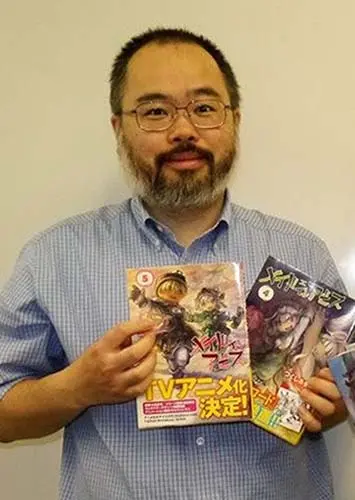
Akihito Tsukushi is the enigmatic creative force behind the celebrated manga and anime series, Made in Abyss. Operating under a pen name that intriguingly translates to “Next of the Moon,” Tsukushi has maintained a deliberate veil of personal privacy, allowing his intricate and haunting work to speak for him. Born in 1987, little is known of his early life or formal training, though his artistic journey began in the world of doujinshi (self-published works), a crucible for many manga artists that grants foundational freedom and direct fan engagement. This background is palpable in the dense, meticulous world-building and unflinching narrative ambition that would become his hallmark. Tsukushi’s primary influence, and the single greatest influence on Made in Abyss, is the work of Hayao Miyazaki and Studio Ghibli, particularly Castle in the Sky and Nausicaä of the Valley of the Wind. From Miyazaki, Tsukushi inherits a fascination with the sublime ruins of lost civilizations, the delicate balance between natural wonder and technological hubris, and the resilient curiosity of child protagonists exploring vast, dangerous worlds. However, Tsukushi’s genius lies in his synthesis of these Miyazakian aesthetics with a narrative sensibility that is distinctly his own—one that delves into body horror, existential dread, and moral ambiguity with a severity rarely seen in mainstream adventure fantasy.
His influence on the medium and on other creators is already significant, stemming almost entirely from the profound impact of Made in Abyss. The series, which began serialization in 2012, presents a deceptively charming surface—a beautiful, Ghibli-esque art style depicting cute, wide-eyed children—which it then systematically subverts with harrowing physical and psychological trials. This stark juxtaposition has become a defining characteristic of his influence. Tsukushi demonstrates how sublime world-building and genuine emotional warmth can coexist with, and even amplify, moments of extreme horror and philosophical weight. This approach has inspired a wave of creators to explore similar tonal contrasts, challenging the conventional boundaries of genres aimed at older teen and adult audiences. His intricate, multi-layered illustration of the Abyss itself, with its unique ecosystems, relics, and curses, sets a new benchmark for environmental storytelling in manga. Every biome, creature, and artifact is rendered with encyclopedic detail, encouraging readers to pore over each panel, a quality that has influenced both peers and successors to prioritize immersive, logically consistent settings that are active participants in the narrative.
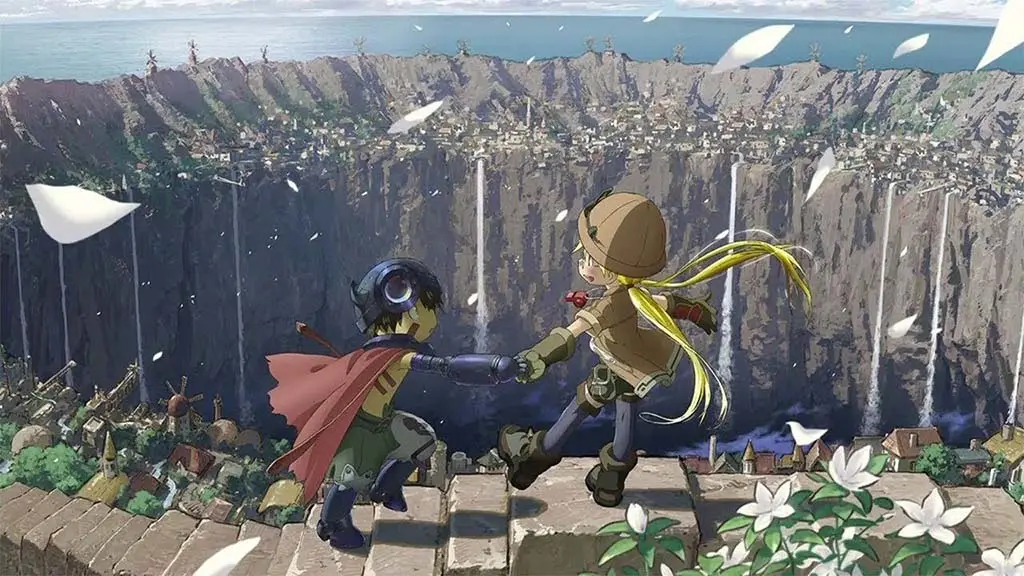
Tsukushi’s collaborative relationship with composer Kevin Penkin and the animation studio Kinema Citrus for the anime adaptation (2017) exemplifies a rare synergy where adaptation becomes amplification. Director Masayuki Kojima and Penkin did not merely translate Tsukushi’s vision; they deepened it. Penkin’s ethereal, haunting scores, created in close dialogue with Tsukushi’s concepts, add an aural dimension that has become inseparable from the work’s identity. The anime’s critical and commercial success catapulted the manga to international fame, proving that Tsukushi’s challenging, uncompromising story had a vast, receptive audience. This success has, in turn, empowered other manga artists with similarly dense, dark, and unconventional visions, showing that there is a substantial market for complex fantasy that does not shy away from mature themes.
Furthermore, Tsukushi’s work engages in a profound dialogue with philosophical and scientific concepts. The exploration of the Abyss is a literal and metaphorical descent, echoing Dante’s Inferno, mythological journeys to the underworld, and the real-world history of cave exploration and “cave fever.” His fascination with the limits of the human body and spirit, the ethics of scientific obsession, and the nature of suffering places him in a lineage of thinkers and creators who use speculative fiction to probe existential questions. Within the manga community, he has influenced discussions on how to handle trauma and innocence in narrative, pushing against sanitized storytelling. His character designs, particularly for non-human entities like Nanachi or the various Hollows, blend biological plausibility with nightmarish fantasy, impacting creature design in contemporary manga and video games. Akihito Tsukushi remains a reclusive figure, but through the breathtaking beauty and terrifying depth of the Abyss, he has established himself as one of the most original and influential world-builders of his generation. His legacy is a testament to the power of a singular, uncompromising vision—one that draws from the wells of animation history and literary depth to create something startlingly unique, inspiring both awe and dread in equal measure, and reshaping the landscape of dark fantasy for years to come.
Akihito Tsukushi — Bibliography
- From Star Strings (Hoshi no Tama) (2012)
- A short manga work that shows Tsukushi’s early interest in detailed world-building and melancholic fantasy themes.
- Made in Abyss (2012–present)
- Publisher: Takeshobo, Web Comic Gamma
- Tsukushi’s best-known work, a dark fantasy adventure following Riko and Reg as they descend into the mysterious Abyss. Noted for its contrast between cute character designs and extremely brutal subject matter.
- Collected in 13+ volumes (ongoing).
- Made in Abyss: Official Anthology (2017–present)
- Contributor / supervisor
- An anthology series featuring stories by various artists set in the Made in Abyss world.
- Made in Abyss: Anthology – Layer by Layer (2018)
- Contributor
- A themed anthology exploring different layers of the Abyss through short stories.