A Pre-Raphaelite Vision: Eleanor Vere Boyle’s Hans Christian Andersen’s Fairy Tales
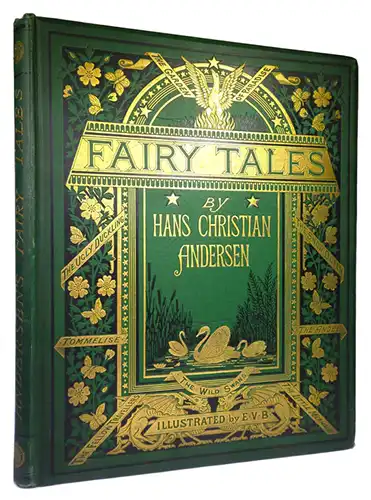
In the history of illustrated children’s literature, certain volumes stand as landmarks—not merely for their beauty, but for the standards they establish. Eleanor Vere Boyle’s 1872 edition of Hans Christian Andersen’s Fairy Tales is such a work. It holds the distinction of being the first illustrated edition of Andersen’s tales by a British artist, and it set a benchmark for all subsequent interpretations that followed.
Eleanor Vere Boyle (1825–1916) was a remarkable figure in Victorian art. Born in Scotland as Eleanor Gordon, she married the Honorable Richard Cavendish Boyle, son of the Earl of Cork, and became part of aristocratic circles while quietly pursuing a career as an artist. Because her social standing made public artistic pursuits unconventional for a woman of her class, she signed her work with her initials, “E.V.B.”—a signature that quickly became associated with some of the most distinctive illustrations of the era . Her work drew admiration from no less a figure than Dante Gabriel Rossetti, the founder of the Pre-Raphaelite Brotherhood, who praised her art as “remarkable by its design”.
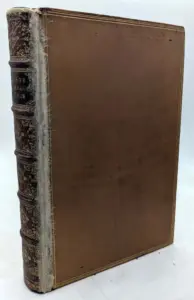
The 1872 edition, published by Sampson Low, Marston, Low and Searle in London, was a lavish production . It featured twelve full-page color plates, each printed by the Leighton Brothers using chromolithography, alongside numerous black-and-white illustrations woven throughout the text . The volume measured approximately 12 by 10 inches—a substantial quarto format that allowed Boyle’s illustrations to command the page . The translations were provided by H.L.D. Ward and Augusta Plesner, and the book was printed at the Chiswick Press by Whittingham and Wilkins.
What distinguishes Boyle’s approach to Andersen is her embrace of the stories’ darker, more melancholic currents. Andersen’s tales, even in their beauty, often carry undertones of suffering, longing, and mortality—qualities that resonated deeply with Boyle’s Pre-Raphaelite sensibilities . Her illustrations do not soften these elements; instead, they amplify them with a “slightly sinister” elegance that creates a rare coherence between text and image . This unity of word and illustration established a new standard for future Andersen editions.
The tales selected for this volume included some of Andersen’s most beloved—and most haunting—works. The Snow Queen, The Wild Swans, The Little Mermaid, The Ugly Duckling, Thumbelina, The Garden of Paradise, The Fellow Traveller, and The Angel all received Boyle’s attention. Her illustration for Thumbelina, depicting the tiny heroine asleep in her walnut-shell cradle as the toad approaches, captures both the vulnerability of the child and the quiet menace of the natural world . Her rendering of The Angel, a story written by Andersen in response to the death of a friend’s daughter, became an image of profound tenderness . These illustrations drew upon the influences that shaped Boyle’s work: the detailed precision of Albrecht Dürer, the emotional intensity of the Pre-Raphaelites, and the natural world she had loved since childhood.
The critical response to Boyle’s Andersen was enthusiastic. Reviewers recognized the significance of her achievement, and the book quickly became a collector’s treasure . It remains so today. First editions in good condition, with their twelve color plates intact and their pictorial bindings preserved, are increasingly scarce and highly prized . The Met’s collection holds a copy, a testament to the volume’s place in the history of illustrated books.
Eleanor Vere Boyle continued to create notable work throughout her long career—her 1875 edition of Beauty and the Beast, with its unforgettable walrus-like Beast, and her 1885 Ros Rosarum Ex Horto Poetarum are among her other achievements . But her 1872 Andersen’s Fairy Tales remains a landmark: the first British illustrated Andersen, a masterpiece of Pre-Raphaelite design, and a vision of the Danish storyteller’s world that has never lost its power to enchant. In Boyle’s illustrations, the Little Mermaid rises from the sea, the Snow Queen looks out from her frozen palace, and the angel gathers flowers for heaven—each rendered with a beauty that lingers in the mind, long after the book is closed.
Recommended for Collectors
- Beauty and the Beast (1875) illustrated by Eleanor Vere Boyle – Another of her fairy-tale masterpieces
- In Fairyland (1870), illustrated by Richard Doyle – An early and visually lavish fairy book from the Victorian era.
- Andersen’s Fairy Tales (1916) illustrated by Harry Clarke – For a darker, Art Nouveau-inspired contrast
- The Fairy Tales of Hans Christian Andersen (1889) illustrated by Vilhelm Pedersen – The first authorized Danish illustrations
Art Gallery: Eleanor Vere Boyle (E.V.B) – Hans Christian Andersen’s Fairy Tales 1872