Junji Ito: Master of Macabre Manga and His Enduring Influence
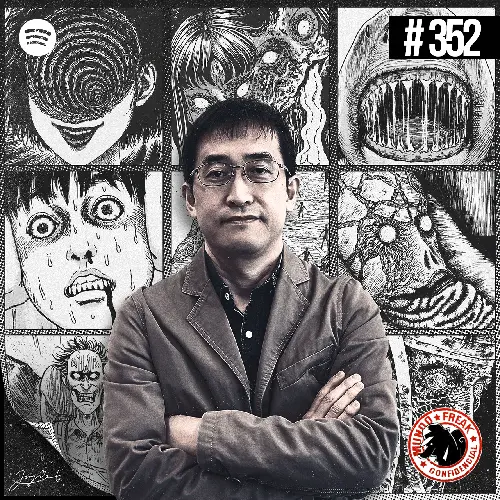
Junji Ito, born on July 31, 1963, in the remote town of Nakatsugawa, Gifu Prefecture, Japan, is a singular figure whose name has become synonymous with psychological and body horror in the manga world. Unlike many artists who pursue creative fields from a young age, Ito initially trained and worked as a dental technician. However, his childhood fascination with the horror genre, particularly the works of Kazuo Umezu and classic horror films, sowed the seeds for his future career. In 1987, he submitted a short story to Monthly Halloween, a shōjo horror manga magazine, winning an honorable mention and launching a trajectory that would redefine horror manga for generations.
Ito’s early influences are pivotal to understanding his unique style. He has frequently cited Kazuo Umezu, the “Godfather of Horror Manga,” as his primary inspiration. From Umezu, Ito learned the power of surreal, creeping dread and the violation of the mundane, lessons evident in his own work’s domestic settings turned monstrous. The filmic terror of H.P. Lovecraft also permeates Ito’s storytelling, with his narratives often exploring cosmic horror—the terrifying idea of vast, incomprehensible entities indifferent to humanity. This blend of influences coalesced into Ito’s signature aesthetic: meticulously detailed, clean line work depicting increasingly grotesque and surreal transformations, all set against ordinary Japanese life.
Ito’s oeuvre is vast, but several works stand as pillars of his legacy. Tomie (1987), his debut series, introduces an immortal femme fatale who drives her admirers to murderous madness, establishing Ito’s themes of obsession and cyclical horror. Uzumaki (1998-1999) is perhaps his magnum opus, a three-volume masterpiece where a small town is consumed by a supernatural obsession with spirals. Its relentless, concept-driven horror showcases Ito’s ability to wring terror from an abstract pattern. Gyo (2001-2002) merges body horror with apocalyptic sci-fi, featuring fish mechanical walking on stinking legs, while Junji Ito’s Cat Diary: Yon & Mu (2009) reveals a lighter side, humorously documenting his life as a cat owner in his unmistakably eerie style.
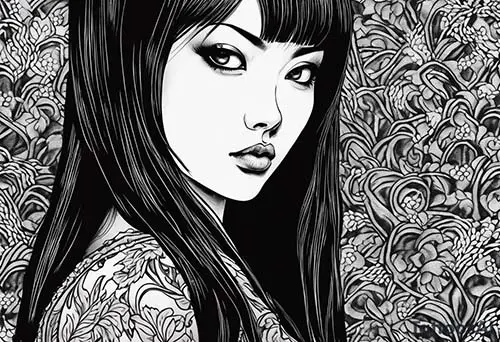
The influence of Junji Ito on the manga and broader horror landscape is profound and multifaceted. Within the manga industry, he has inspired a generation of artists to explore horror with greater artistic ambition and psychological depth. Shintaro Kago, known for his “fashionable paranoia” and surreal erotic horror, shares with Ito a willingness to push bodily transformation to absurd and terrifying extremes, though Kago’s work is often more satirical. Suehiro Maruo, another pivotal figure in ero-guro (erotic grotesque) manga, parallels Ito in his detailed, disturbing imagery, though Maruo’s themes are more historically and transgressively focused. A more direct artistic heir is Masaaki Nakayama, author of PTSD Radio and Fuan no Tane, whose work echoes Ito’s structure of short, unsettling vignettes building pervasive dread.
Ito’s impact resonates strongly with contemporary hitmakers. Kazue Kato, creator of Blue Exorcist, has cited Ito’s ability to create haunting imagery as an inspiration for her own demonic designs. Globally, his reach extends beyond manga. Western comic creators like James Harren and Marjorie Liu acknowledge his mastery of pacing and visceral shock. In film, directors such as Guillermo del Toro have expressed admiration, with del Toro noting Ito’s unique ability to “make the page feel stained.” This cross-media reverence has led to numerous, though often critically challenging, anime and live-action adaptations, with the 2023 anime anthology Junji Ito Maniac: Japanese Tales of the Macabre introducing his stories to a new global audience on Netflix.
Beyond specific creators, Ito’s true legacy is the elevation of horror manga as a serious and artistically rigorous medium. He demonstrated that horror could be literary, visually breathtaking, and philosophically unsettling, moving beyond simple jump scares to explore deep-seated fears of contagion, obsession, and the unraveling of reality itself. His precise, almost clinical art style makes the grotesque impossibly tangible, a technique that has become a benchmark for horror illustrators worldwide.
Despite his towering status, Ito remains a humble and dedicated craftsman, continually producing new short stories and collections. His work continues to bridge the gap between popular entertainment and art-house horror, proving that the most effective terror often lies not in the bloody specter, but in the slow, inexorable twist of the familiar into the alien. Junji Ito has not just written horror manga; he has, through his unique vision and profound influence, expanded the very boundaries of what the genre can be, securing his place as one of its most timeless and revered masters.
Junji Ito – Bibliography
- Tomie (1987–2000)
- Publisher: Shogakukan, Monthly Halloween / Big Comic Spirits
- A horror series about Tomie, a mysterious girl who drives people to obsession and murder, and regenerates endlessly. 2 volumes.
- Uzumaki (Spiral) (1998–1999)
- Publisher: Shogakukan, Big Comic Spirits
- A horror manga set in a town obsessed with spirals, blending body horror, cosmic dread, and surrealism. 3 volumes.
- Gyo (2001–2002)
- Publisher: Shogakukan, Big Comic Spirits
- A horror manga featuring walking fish with mechanical legs invading Okinawa, combining grotesque imagery with dark humor. 2 volumes.
- Fragments of Horror (Kaiki Shōjo) (2013)
- Publisher: Kodansha
- A collection of short horror stories, showcasing Ito’s signature style of surreal and psychological terror. 1 volume.
- Hellstar Remina (2005–2006)
- Publisher: Shogakukan, Big Comic Spirits
- A science-fiction horror manga about a sentient planet that consumes humanity. 1 volume.
- The Enigma of Amigara Fault (Amigara no Kōgei) (2002)
- Published in Gekkan Halloween
- A chilling short story about human-shaped holes in a mountainside that draw people to their doom. Frequently included in Ito’s short story collections.
- Sensor (2018)
- Publisher: Shogakukan
- A collection of horror short stories blending supernatural, body horror, and eerie social commentary.
- Junji Ito’s Cat Diary: Yon & Mu (2007–2009)
- Publisher: Asahi Sonorama
- A humorous autobiographical manga about Ito’s life with his cats, showing a lighter side of the artist. 1 volume.
- Other Short Story Collections
- Voices in the Dark (1996)
- Shiver: Junji Ito Selected Stories (2008)
- Fragments of Horror (2013)
- Smashed (2018)
These anthologies gather various one-shots and short horror tales from Ito’s career.