Koushun Takami: Mastermind of Battle Royale
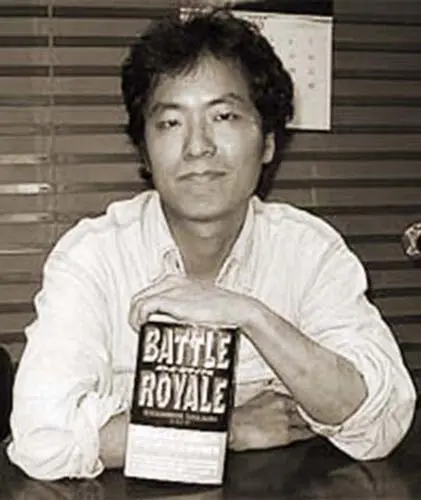
Koushun Takami, born in 1969 in the Hyōgo Prefecture of Japan, is a literary figure whose name has become indelibly linked with a single, seismic work: the controversial and globally influential novel Battle Royale. Despite a career spanning decades, Takami’s public persona remains enigmatic, defined by the explosive impact of his debut and his subsequent, more measured creative path. His biography is not one of prolific output, but of a profound cultural footprint forged through a unique blend of personal aspiration, societal critique, and raw narrative power.
Takami’s early life hinted at his dual interests: a passion for writing and a competitive spirit. An avid reader from a young age, he was particularly drawn to horror and suspense, devouring works by Stephen King and Yasutaka Tsutsui. Simultaneously, he was a dedicated runner, a discipline requiring endurance and focus—traits that would later manifest in the relentless pacing of his fiction. After graduating from Osaka University with a degree in literature, he embarked on a career in journalism, working for the Shikoku Shimbun newspaper. This experience in reporting provided him with a ground-level view of society and, perhaps, a certain cynicism regarding institutional structures, themes that would later form the bedrock of Battle Royale.
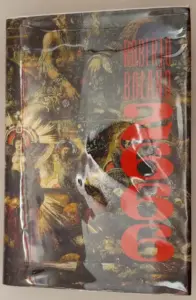
The genesis of Battle Royale was as arduous as the novel’s plot is brutal. Takami began writing it in 1996, driven by a desire to break into fiction and inspired by the escalating moral panics in 1990s Japan regarding juvenile delinquency. The concept—a dystopian government forces a randomly selected high school class to fight to the death on a deserted island—was a direct and extreme metaphor for the pressures of Japan’s rigid education system and the perceived breakdown of social trust. The manuscript, however, was met with immediate and severe rejection. It was deemed too violent, too controversial, and commercially untenable, rejected in the final round of the prestigious Japan Horror Story competition. For years, it languished, a testament to its unsettling power.
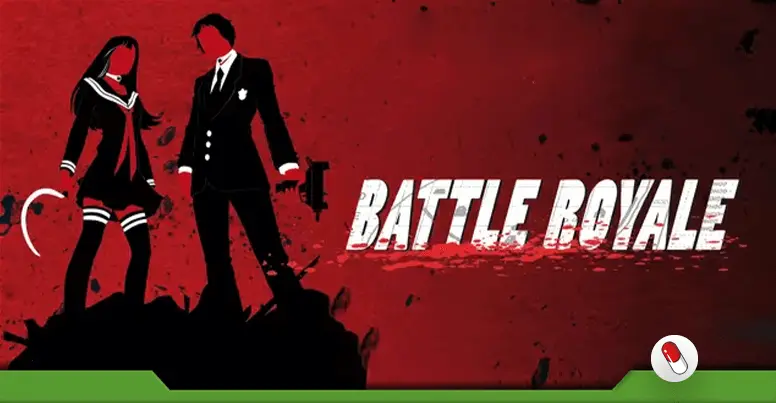
Its eventual publication in 1999 was a watershed moment. Released by Ohta Publishing, Battle Royale ignited a firestorm. It was condemned by politicians and educators, banned in some school districts, and criticized as a dangerous and amoral spectacle. Yet, this controversy fueled its ascent to bestseller status, particularly among young readers who saw in its bloody narrative not glorification, but a stark allegory for the “examination hell” and hyper-competitive society they navigated. The 2000 film adaptation by Kinji Fukasaku, a cult classic in its own right, catapulted the story to international infamy, drawing comparisons (often unfavorably from its creator’s perspective) to Suzanne Collins’s later The Hunger Games.
The overwhelming, often hostile, reception of Battle Royale cast a long shadow over Takami’s career. He became a reluctant celebrity, associated primarily with extreme violence. In response, he retreated from the public eye, granting few interviews and publishing sparingly. His subsequent works reveal a writer exploring different tones and genres while retaining his sharp edge. He co-wrote the Battle Royale manga adaptation (2000-2005) with Masayuki Taguchi, which expanded the novel’s backstory and characterizations. His second novel, Slum Online (2004, originally published online in 1999), is a stark departure: a contemplative, cyberpunk-infused story about identity and connection in the early days of online gaming, showcasing his versatility beyond visceral thriller tropes.
Perhaps the most significant and complex legacy is its influence on Yoshihiro Togashi’s Hunter x Hunter, specifically the “Chimera Ant” arc, and his earlier series Yu Yu Hakusho’s “Chapter Black” saga. Togashi masterfully incorporates Battle Royale-style tension, moral ambiguity, and the psychological dismantling of characters in confined, high-stakes scenarios. Even globally successful titles like Fortnite, with its last-player-standing format, trace a cultural lineage back to the archetype Takami popularized. His work provided a dark, mature template that contrasted sharply with the more straightforward tournament arcs common in shōnen manga, introducing a layer of political critique and visceral desperation.
Despite the staggering success of Battle Royale, Koushun Takami’s subsequent output has been minimal. He co-wrote a six-volume manga sequel, Battle Royale II: Blitz Royale, with illustrator Hitoshi Tomizawa, and published a short story collection, but he has largely retreated from the public eye. This has only added to his mystique. In many ways, Takami represents the archetype of the one-hit wonder, but what a hit it was. Battle Royale was more than a story; it was a cultural event that challenged taboos, critiqued authoritarianism and the pressures of Japan’s conformist education system, and tapped into primal fears about society sacrificing its youth. Koushun Takami, through his singular, shocking novel and its iconic adaptations, did not just write a narrative; he defined a genre and left an indelible, dark stain on the imagination of a generation of creators who continue to play his deadly game in new and evolving forms.
Koushun Takami – Bibliography
- Battle Royale (Batoru Rowaiaru) – 1999 (Japanese edition) / 2000 (English translation)
- Publisher: Ohta Publishing (Japan)
- Takami’s debut and most famous work, a dystopian novel set in an alternate Japan where a government program forces high school students to fight to the death. Noted for its intense social commentary, psychological depth, and controversial content. 15 volumes (Manga).
- Battle Royale II: Requiem (Screenplay) (2003)
- Publisher: Shueisha (Japan)
- Takami wrote the screenplay for the film sequel, expanding the Battle Royale universe. While not a novel, it’s a significant part of his published body of work.
- Short Stories and Essays (1990s–2000s)
- Takami has published a small number of essays and short fiction pieces in Japanese magazines and anthologies, often reflecting on society, media, and youth culture.