Maxfield Parrish’s Golden Vision: The Art That Redefined Childhood Nostalgia
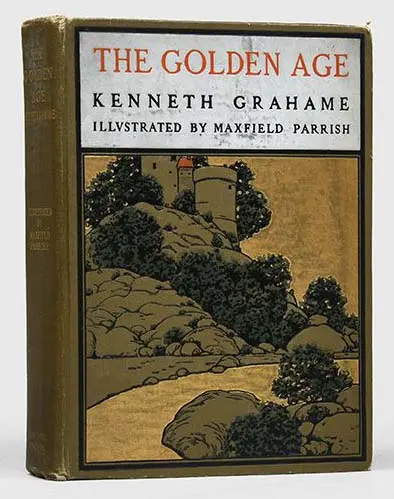
There are books that tell stories with words, and then there are books that transport you entirely—into a memory, a dream, a version of childhood that never quite existed but feels hauntingly familiar. Kenneth Grahame’s The Golden Age, illustrated by Maxfield Parrish, is the latter. Published as a collection of nostalgic essays and sketches about Victorian childhood, the book found its perfect visual counterpart in Parrish, an artist who painted not reality but the luminous echo of reality.
Kenneth Grahame, better known today for The Wind in the Willows, originally published The Golden Age in 1895. The book is a series of loosely connected vignettes recounting the lives of several children—orphaned, in effect, by distant, preoccupied adults—who inhabit a vast English country house. The grown-ups exist in a different dimension, concerned with bills, calls, and social obligations. The children, left largely to themselves, create a rich inner world of games, grievances, myths, and tiny rebellions. Grahame’s prose is witty, gently ironic, and suffused with a bittersweet longing for the lost kingdom of youth. He understands that children are not innocent little angels but complex, cunning, fiercely loyal creatures who inhabit a secret universe just beneath the notice of the adult world.
When the illustrated edition featuring Maxfield Parrish appeared in 1900, it elevated the book from a literary cult favorite to an object of visual wonder. Parrish, already gaining fame for his distinctive style, approached The Golden Age as a series of mood pieces rather than literal scene-by-scene illustrations. His images do not merely depict children playing; they capture the emotional landscape of childhood itself.
Parrish’s technique is immediately recognizable and utterly singular. His children, posed in classical contrapposto, look less like Edwardian English boys and girls and more like timeless figures from a Renaissance fresco. Their faces are often in profile, gazing outward toward something the viewer cannot see—toward an adventure, a regret, a moment just out of reach. This distance, this quiet melancholy, is the genius of Parrish’s interpretation. He understood that The Golden Age is not a happy book. It is a book about loss. It is the story of a paradise already vanished, seen only in rearview reflection.
To hold a copy of The Golden Age with Parrish’s plates is to hold a piece of alchemy. Grahame gave us the words for longing. Parrish gave us the color. Together, they created a book that feels less like reading and more like remembering a place you have never been but somehow know in your bones. It is a golden hour preserved between covers.
Recommended for collectors:
- Peter Pan in Kensington Gardens (1906), illustrated by Arthur Rackham – A fantasy classic with illustrations capturing the same blend of whimsy and melancholy.
- Dream Days (1902), by Kenneth Grahame, illustrated by Maxfield Parrish – A companion volume with similarly nostalgic stories and equally stunning artwork.
- The Arabian Nights (1909), illustrated by Maxfield Parrish – A richly imagined edition showcasing his luminous, exotic visuals.
Maxfield Parrish – The Golden Age 1900
![Maxfield Parrish - The Golden Age [parrish-golden01] (art, illustrations)](https://www.nocloo.com/wp-content/plugins/justified-image-grid/timthumb.php?src=https%3A%2F%2Fwww.nocloo.com%2Fart%2Fparrish-golden%2Fparrish-golden01.jpg&h=280&q=90&f=.jpg "Maxfield Parrish - Illustrations for The Golden Age 1900")
![Maxfield Parrish - The Golden Age [parrish-golden02] (art, illustrations)](https://www.nocloo.com/wp-content/plugins/justified-image-grid/timthumb.php?src=https%3A%2F%2Fwww.nocloo.com%2Fart%2Fparrish-golden%2Fparrish-golden02.jpg&h=280&q=90&f=.jpg "Maxfield Parrish - Illustrations for The Golden Age 1900")
![Maxfield Parrish - The Golden Age [parrish-golden03] (art, illustrations)](https://www.nocloo.com/wp-content/plugins/justified-image-grid/timthumb.php?src=https%3A%2F%2Fwww.nocloo.com%2Fart%2Fparrish-golden%2Fparrish-golden03.jpg&h=280&q=90&f=.jpg "Maxfield Parrish - Illustrations for The Golden Age 1900")
![Maxfield Parrish - The Golden Age [parrish-golden04] (art, illustrations)](https://www.nocloo.com/wp-content/plugins/justified-image-grid/timthumb.php?src=https%3A%2F%2Fwww.nocloo.com%2Fart%2Fparrish-golden%2Fparrish-golden04.jpg&h=280&q=90&f=.jpg "Maxfield Parrish - Illustrations for The Golden Age 1900")
![Maxfield Parrish - The Golden Age [parrish-golden05] (art, illustrations)](https://www.nocloo.com/wp-content/plugins/justified-image-grid/timthumb.php?src=https%3A%2F%2Fwww.nocloo.com%2Fart%2Fparrish-golden%2Fparrish-golden05.jpg&h=280&q=90&f=.jpg "Maxfield Parrish - Illustrations for The Golden Age 1900")
![Maxfield Parrish - The Golden Age [parrish-golden06] (art, illustrations)](https://www.nocloo.com/wp-content/plugins/justified-image-grid/timthumb.php?src=https%3A%2F%2Fwww.nocloo.com%2Fart%2Fparrish-golden%2Fparrish-golden06.jpg&h=280&q=90&f=.jpg "Maxfield Parrish - Illustrations for The Golden Age 1900")
![Maxfield Parrish - The Golden Age [parrish-golden07] (art, illustrations)](https://www.nocloo.com/wp-content/plugins/justified-image-grid/timthumb.php?src=https%3A%2F%2Fwww.nocloo.com%2Fart%2Fparrish-golden%2Fparrish-golden07.jpg&h=280&q=90&f=.jpg "Maxfield Parrish - Illustrations for The Golden Age 1900")
![Maxfield Parrish - The Golden Age [parrish-golden08] (art, illustrations)](https://www.nocloo.com/wp-content/plugins/justified-image-grid/timthumb.php?src=https%3A%2F%2Fwww.nocloo.com%2Fart%2Fparrish-golden%2Fparrish-golden08.jpg&h=280&q=90&f=.jpg "Maxfield Parrish - Illustrations for The Golden Age 1900")
![Maxfield Parrish - The Golden Age [parrish-golden09] (art, illustrations)](https://www.nocloo.com/wp-content/plugins/justified-image-grid/timthumb.php?src=https%3A%2F%2Fwww.nocloo.com%2Fart%2Fparrish-golden%2Fparrish-golden09.jpg&h=280&q=90&f=.jpg "Maxfield Parrish - Illustrations for The Golden Age 1900")
![Maxfield Parrish - The Golden Age [parrish-golden10] (art, illustrations)](https://www.nocloo.com/wp-content/plugins/justified-image-grid/timthumb.php?src=https%3A%2F%2Fwww.nocloo.com%2Fart%2Fparrish-golden%2Fparrish-golden10.jpg&h=280&q=90&f=.jpg "Maxfield Parrish - Illustrations for The Golden Age 1900")
![Maxfield Parrish - The Golden Age [parrish-golden11] (art, illustrations)](https://www.nocloo.com/wp-content/plugins/justified-image-grid/timthumb.php?src=https%3A%2F%2Fwww.nocloo.com%2Fart%2Fparrish-golden%2Fparrish-golden11.jpg&h=280&q=90&f=.jpg "Maxfield Parrish - Illustrations for The Golden Age 1900")
![Maxfield Parrish - The Golden Age [parrish-golden12] (art, illustrations)](https://www.nocloo.com/wp-content/plugins/justified-image-grid/timthumb.php?src=https%3A%2F%2Fwww.nocloo.com%2Fart%2Fparrish-golden%2Fparrish-golden12.jpg&h=280&q=90&f=.jpg "Maxfield Parrish - Illustrations for The Golden Age 1900")
![Maxfield Parrish - The Golden Age [parrish-golden13] (art, illustrations)](https://www.nocloo.com/wp-content/plugins/justified-image-grid/timthumb.php?src=https%3A%2F%2Fwww.nocloo.com%2Fart%2Fparrish-golden%2Fparrish-golden13.jpg&h=280&q=90&f=.jpg "Maxfield Parrish - Illustrations for The Golden Age 1900")
![Maxfield Parrish - The Golden Age [parrish-golden14] (art, illustrations)](https://www.nocloo.com/wp-content/plugins/justified-image-grid/timthumb.php?src=https%3A%2F%2Fwww.nocloo.com%2Fart%2Fparrish-golden%2Fparrish-golden14.jpg&h=280&q=90&f=.jpg "Maxfield Parrish - Illustrations for The Golden Age 1900")
![Maxfield Parrish - The Golden Age [parrish-golden15] (art, illustrations)](https://www.nocloo.com/wp-content/plugins/justified-image-grid/timthumb.php?src=https%3A%2F%2Fwww.nocloo.com%2Fart%2Fparrish-golden%2Fparrish-golden15.jpg&h=280&q=90&f=.jpg "Maxfield Parrish - Illustrations for The Golden Age 1900")
![Maxfield Parrish - The Golden Age [parrish-golden16] (art, illustrations)](https://www.nocloo.com/wp-content/plugins/justified-image-grid/timthumb.php?src=https%3A%2F%2Fwww.nocloo.com%2Fart%2Fparrish-golden%2Fparrish-golden16.jpg&h=280&q=90&f=.jpg "Maxfield Parrish - Illustrations for The Golden Age 1900")
![Maxfield Parrish - The Golden Age [parrish-golden17] (art, illustrations)](https://www.nocloo.com/wp-content/plugins/justified-image-grid/timthumb.php?src=https%3A%2F%2Fwww.nocloo.com%2Fart%2Fparrish-golden%2Fparrish-golden17.jpg&h=280&q=90&f=.jpg "Maxfield Parrish - Illustrations for The Golden Age 1900")
![Maxfield Parrish - The Golden Age [parrish-golden18] (art, illustrations)](https://www.nocloo.com/wp-content/plugins/justified-image-grid/timthumb.php?src=https%3A%2F%2Fwww.nocloo.com%2Fart%2Fparrish-golden%2Fparrish-golden18.jpg&h=280&q=90&f=.jpg "Maxfield Parrish - Illustrations for The Golden Age 1900")
![Maxfield Parrish - The Golden Age [parrish-golden19] (art, illustrations)](https://www.nocloo.com/wp-content/plugins/justified-image-grid/timthumb.php?src=https%3A%2F%2Fwww.nocloo.com%2Fart%2Fparrish-golden%2Fparrish-golden19.jpg&h=280&q=90&f=.jpg "Maxfield Parrish - Illustrations for The Golden Age 1900")