Nightow Yasuhiro: The Maverick Architect of Stylish Chaos
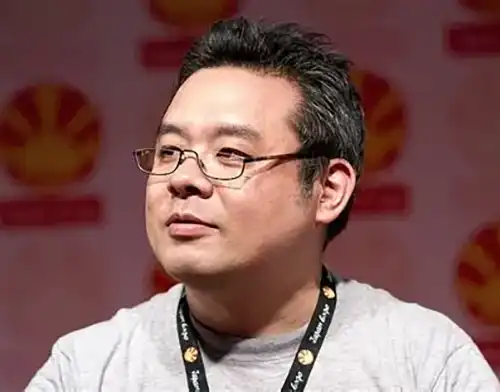
Born in 1967 in Yokohama, Japan, Yasuhiro Nightow emerged as one of the most visually distinctive and creatively uncompromising manga artists of his generation. His path to publication was unconventional; after studying at an art vocational school, he spent years developing his unique style through self-published doujinshi (fan works), notably of the popular franchise Final Fantasy. This period of independent creation, free from editorial constraints, was crucial. It allowed Nightow to refine his highly detailed, Western-comics-influenced aesthetic and his signature narrative approach—a frenetic, almost chaotic blend of over-the-top action, irreverent humor, and sudden, profound philosophical depth. This maverick spirit would become the defining characteristic of his professional career.
Nightow’s breakthrough, and the work that cemented his legacy, was the genre-defying Trigun, which began serialization in 1995. Set on a desert planet, the series presented one of manga’s most iconic and paradoxical heroes: Vash the Stampede, a pacifist gunslinger with a $$60 billion double-dollar bounty on his head, known as “The Humanoid Typhoon” for the destruction that seemingly follows him. Trigun masterfully deconstructed the wandering hero archetype, blending slapstick comedy, devastatingly brutal gunfights, and deep theological inquiries into the nature of peace, sin, and redemption. Nightow’s art was perfectly suited to this tonal whiplash: his pages could shift from loose, cartoonish character expressions to intricately rendered, kinetic action sequences filled with intricate machinery, billowing coats, and dramatic shadow work. The 1998 anime adaptation by Madhouse elevated the series to global cult status, particularly in the West, where its spaghetti-western-in-space premise and complex anti-hero resonated powerfully.
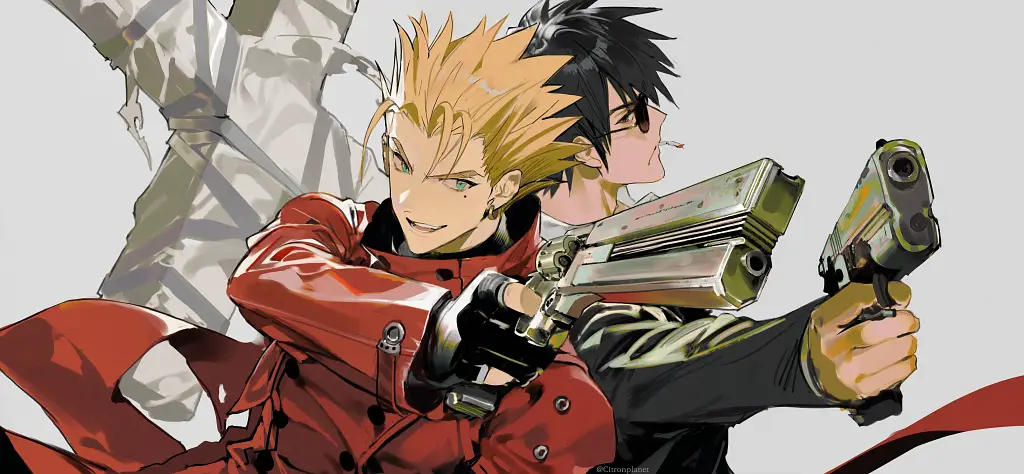
Following Trigun, Nightow created its even more stylistically dense and narratively ambitious sequel, Trigun Maximum. Here, his world-building expanded into full-blown cosmic opera, and his art reached new heights of baroque detail. However, the physical toll of his intricate style, combined with the demanding schedule of monthly publication, led to well-documented struggles with deadlines and burnout, a testament to the immense personal cost of his artistic vision. After concluding Trigun Maximum in 2007, Nightow took a different creative direction with Blood Blockade Battlefront (Kekkai Sensen), set in a supernatural version of New York City. This series showcased a more polished iteration of his style and leaned further into ensemble casts and episodic, urban fantasy storytelling, proving his versatility beyond his most famous creation.
The specific archetype of the profoundly powerful yet philosophically pacifist hero, whose true conflict is an internal battle against his own nature and past sins, is a trope that Trigun executed to perfection. This complex characterization resonates in protagonists like Kentaro Miura’s Guts (Berserk) in his struggle against rage, or even Kohei Horikoshi’s Izuku Midoriya (My Hero Academia) in his physical and moral struggle to wield overwhelming power responsibly. Furthermore, Nightow’s iconic, elaborate costume and weapon design—particularly the iconic red trench coat and oversized revolver—set a high bar for “cool factor” that influenced character design in both manga and video games, a field he would later directly contribute to with designs for the Samurai Spirits and Phantasy Star Online 2 series.
Nightow’s influence on others is significant, particularly in the realm of aesthetic and tonal innovation. He is a key figure in the early 2000s wave of manga that found massive popularity in the West, demonstrating that American comic book sensibilities—detailed linework, dramatic posing, and a fusion of sci-fi and fantasy—could be successfully hybridized with Japanese manga storytelling. His impact is visible in the work of artists like Oh! Great (Air Gear), who shares a passion for dynamic fashion and complex action choreography, and in the exaggerated, style-as-substance approach of creators like ONE and Yusuke Murata’s One-Punch Man. Furthermore, his success proved that a manga could thrive on a powerful, singular aesthetic identity and a willingness to juggle extreme tonal shifts, from the ridiculous to the sublime.
Beyond direct artistic lineage, Nightow’s legacy is most profoundly felt in the character of Vash the Stampede. Vash became a foundational archetype for the “powerful pacifist” in anime and manga, influencing a generation of characters who wield immense power but are defined by their reluctance to use it and the psychological burden it carries. This complex characterization helped pave the way for more morally ambiguous and psychologically nuanced shonen and seinen protagonists. Yasuhiro Nightow stands not as the most prolific or mainstream manga artist of his time, but as a crucial innovator. He is a stylist and a philosopher who built his worlds with a draftsman’s precision and a punk rock ethos, proving that the most compelling stories often exist in the chaotic, beautiful space between a heartfelt comedy and a profound tragedy, all rendered in stunning, unforgettable detail.
Yasuhiro Nightow – Bibliography
- Trigun (1995–1997)
- Originally published by Tokuma Shoten in Shōnen Captain; later continued by Shōnen Gahōsha
- Nightow’s breakout series, blending space western, action, and comedy with deeper philosophical themes. Introduced the iconic pacifist gunman Vash the Stampede. 2 volumes (original run).
- Trigun Maximum (1997–2007)
- Publisher: Shōnen Gahōsha, Young King Ours
- A darker, more expansive continuation of Trigun, fully developing the series’ mythology and moral conflicts. 14 volumes.
- Gungrave (2002–2004)
- Publisher: Shōnen Gahōsha, Young King Ours
- Manga adaptation and expansion of the video game, written by Nightow and illustrated by Madhouse staff. Focuses on loyalty, betrayal, and organized crime. 3 volumes.
- Kekkai Sensen (Blood Blockade Battlefront) (2009–2015)
- Publisher: Shueisha, Jump SQ. / Jump SQ.Crown*
- An urban fantasy action series set in a surreal version of New York City, combining chaotic battles with offbeat humor. 10 volumes.
- Kekkai Sensen: Back 2 Back (2015–2022)
- Publisher: Shueisha, Jump SQ. / Jump SQ.Rise*
- A sequel series expanding the world and cast of Kekkai Sensen. 10 volumes.
- S.Flight (short works) (1990s–2000s)
- A collection of early short manga showcasing Nightow’s evolving style and energetic panel layouts.