Takehiko Inoue: The Poet of Motion
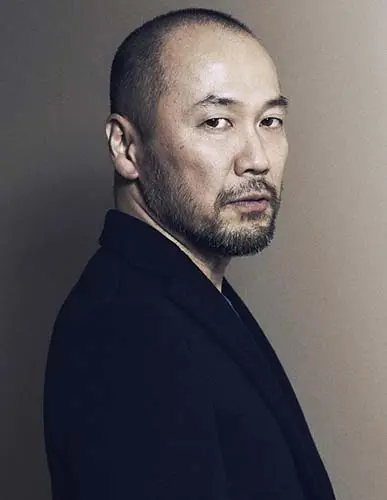
In the pantheon of manga legends, Takehiko Inoue stands apart not merely as a master storyteller, but as an artist who has dedicated his life to capturing the very essence of motion, humanity, and the silent poetry that exists between action and thought. Born on January 12, 1967, in the city of Kagoshima, Japan, Inoue’s journey is one of relentless artistic evolution, driven by a dual obsession with basketball and drawing that would eventually reshape the landscape of his medium.
Inoue’s childhood was steeped in the rhythms of sport and sketch. As a fervent basketball player in junior high and high school, he experienced the game’s visceral thrill—the sweat, the strategy, the split-second decisions, and the profound camaraderie. Simultaneously, he was a devotee of manga, particularly the work of Dragon Ball creator Akira Toriyama, whose dynamic artistry left an indelible mark. This fusion of athletic experience and artistic aspiration became the bedrock of his future. After graduating from Kumamoto University, he took the perilous leap into the professional world, first as an assistant to City Hunter creator Tsukasa Hojo. This apprenticeship was his crucible, honing his technical skills and work ethic under the pressure of weekly deadlines.
His debut series, Chameleon Jail (1988), was short-lived, but it served as a prelude to the seismic shift he was about to cause. In 1990, at just 23, Inoue unleashed Slam Dunk upon the world. Serialized in Weekly Shōnen Jump, it was far more than just a sports manga. Through the journey of the boisterous, red-haired delinquent Hanamichi Sakan who discovers a love for basketball, Inoue translated his intimate knowledge of the sport into a narrative of breathtaking kinetic energy. His panels didn’t just show players moving; they thrummed with the squeak of sneakers, the heavy breath of exhaustion, and the soaring arc of the ball. Slam Dunk became a cultural tsunami, selling over 170 million copies worldwide and single-handedly popularizing basketball across Asia. It proved that sports manga could be a vessel for deep character studies and universal themes of growth, failure, and redemption.
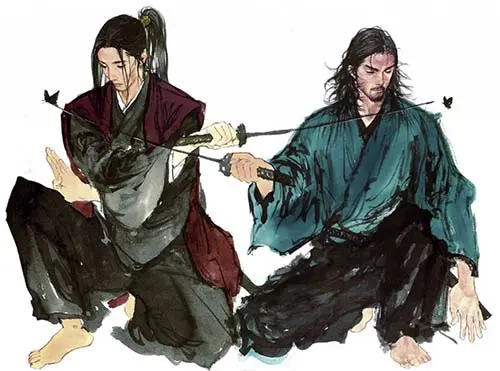
Yet, at the peak of this unprecedented success, Inoue chose not to rest. He embarked on a path of profound artistic introspection. His next major work, Vagabond (1998), was a stark departure. A meticulously researched, epic historical seinen manga, it chronicled the life of the legendary swordsman Miyamoto Musashi. Inoue traded the bright courts for the muddy roads of Edo-period Japan, and the teamwork of basketball for a solitary, grueling quest for meaning. With Vagabond, his art underwent a metamorphosis. Influenced by masters like Rembrandt and Van Gogh, his brushwork (he increasingly used a brush for inking) became breathtakingly expressive—swirling, violent, and often achingly serene. The fight scenes were less about victory and more about the philosophy of violence; the quiet moments were heavy with existential dread and fleeting beauty. Vagabond is a monumental meditation on what it means to be strong, to be alive, and to seek a path in a chaotic world.
Parallel to this, Inoue created Real (1999), perhaps his most emotionally raw work. Returning to basketball, Real focuses not on superstar athletes, but on three men whose lives are irrevocably changed by disability, illness, and circumstance. Confined to wheelchairs, they find purpose and a brutal, new physicality in wheelchair basketball. Real is a testament to Inoue’s profound humanism, exploring vulnerability, societal prejudice, and the redefinition of personal strength with unflinching honesty and meticulous research into disability and rehabilitation.
Takehiko Inoue is not just a creator of stories; he is a lifelong student. His pursuit of authenticity is legendary. For Slam Dunk, he attended NBA games and studied countless hours of footage. For Vagabond, he traveled to historical sites, practiced calligraphy and swordsmanship, and immersed himself in classical art. This dedication extends beyond manga. An accomplished watercolorist, he has held numerous solo art exhibitions. In a stunning full-circle moment, he was commissioned by the Japanese Basketball Association to design the team’s official uniforms for the 2020 Olympics, blending his two great passions on the world’s biggest athletic stage.
The common thread through Inoue’s diverse oeuvre is a profound respect for the human body in motion and the spirit within it. Whether it’s the explosive leap of a slam dunk, the calculated swing of a sword, or the powerful push of a wheelchair, he captures the physical act as an expression of the inner self. His characters are flawed, striving, and deeply real—they sweat, cry, despair, and find fleeting moments of transcendence.
Inoue’s influence on other mangaka is both vast and deeply respectful. He is often cited as a “mangaka’s mangaka,” admired for his unparalleled draftsmanship and narrative integrity. Eiichiro Oda, creator of One Piece, has frequently expressed his admiration, noting Inoue’s ability to make even static scenes feel dynamic and alive. The sports manga genre, in particular, bears his indelible mark. Haruichi Furudate’s Haikyu!!, with its focus on the nuanced psychology of team sports and the breathtaking depiction of volleyball’s flow, operates directly in the narrative and visual playground Inoue established. Similarly, Tadatoshi Fujimaki’s Kuroko’s Basketball follows Inoue’s model of giving each character a distinct, almost superhuman, basketball specialty, a concept pioneered with the specialists of Slam Dunk’s Shohoku team.
Beyond specific genres, Inoue’s greatest influence may be his elevation of the medium itself. He co-founded the digital manga magazine Jump Kai and has held multiple acclaimed art exhibitions, such as “The Last Manga Exhibition,” blending traditional painting with manga to challenge its classification as mere entertainment. His process—intense physical research, live model drawing, and a relentless pursuit of authentic expression—sets a standard for artistic dedication. For a generation of creators, from Yusuke Murata (Eyeshield 21, One-Punch Man) whose detailed athletic illustrations show a clear lineage, to newcomers across the globe, Inoue represents the pinnacle of what manga can achieve: a seamless fusion of heart-pounding action, deep humanism, and breathtaking art.
Takehiko Inoue’s career is a testament to relentless growth. From igniting a sports phenomenon with Slam Dunk to exploring the soul of a warrior in Vagabond and the resilience of the human spirit in Real, he has consistently used his unparalleled skill to explore what it means to struggle, to grow, and to be human. He is not just a creator of stories but an artist who has expanded the very language of manga, inspiring peers and successors to aim higher, dig deeper, and draw not just with ink, but with their entire being.
Takehiko Inoue – Bibliography
- Chameleon Jail (one-shot) (1988)
- Publisher: Shueisha
- An early work showcasing Inoue’s developing art style and narrative skills, exploring action and suspense themes.
- Slam Dunk (1990–1996)
- Publisher: Shueisha, Weekly Shōnen Jump
- A sports manga following high school basketball player Hanamichi Sakuragi and the Shohoku basketball team. Known for its dynamic action, humor, and realistic portrayal of basketball. 31 volumes.
- Buzzer Beater (1996–2000)
- Publisher: Shueisha, Monthly Shōnen Jump
- A sci-fi sports manga about basketball played by humans and aliens. Combines Inoue’s passion for sports with futuristic settings. 7 volumes.
- Vagabond (1998–present (hiatuses))
- Publisher: Shueisha, Morning
- A historical manga based on Eiji Yoshikawa’s novel Musashi, following the life of the legendary samurai Miyamoto Musashi. Known for its detailed artwork, philosophical themes, and realistic fight scenes. Collected in 37 volumes (as of 2021, ongoing).
- REAL (1999–present (hiatuses))
- Publisher: Shueisha, Weekly Young Jump
- A drama/sports manga focusing on wheelchair basketball and the lives of disabled athletes. Explores social issues, personal growth, and emotional struggles. 17 volumes (as of 2021, ongoing).
- Early One-Shots and Short Works
- Kaede Purple (1988)
- Kaijuu no Kodomo (1989)
- Funny Boy (1990)
These early works display Inoue’s developing style, blending drama, action, and humor.