Hiroaki Samura: The Enigmatic Master of Etching and Emotion
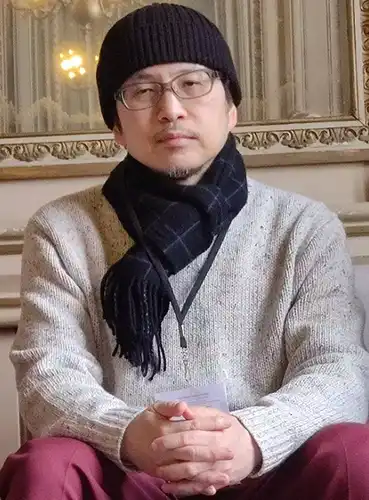
In the landscape of modern manga, few artists possess a signature as stark, challenging, and emotionally resonant as Hiroaki Samura. Born in 1970 in Chiba, Japan, Samura carved a unique path, defined not by following trends but by an obsessive personal vision that blended exquisite, etching-like artwork with narratives of profound brutality and psychological complexity. His magnum opus, the seminal series “Blade of the Immortal“ (Mugen no Jūnin), serialized from 1993 to 2012, stands as a monumental work that redefined the historical and dark fantasy genres, leaving an indelible mark on creators both within Japan and across the globe.
Samura’s artistic journey began not with a focus on narrative but on pure illustration. A graduate of an art college, he was deeply influenced by the intricate, cross-hatched styles of Western engravers like Albrecht Dürer and the dramatic chiaroscuro of Renaissance art. This foundation is immediately evident in his work; Samura’s pages are not traditionally “manga-esque” but resemble stunning woodblock prints or detailed pen-and-ink drawings. This classical, fine-art approach set him completely apart from his contemporaries. While he admired the gritty realism of Katsuhiro Otomo and the dynamic grotesquerie of Yoshikazu Yasuhiko, Samura’s influences were distinctly trans-cultural and historical, leading to a visual style that felt both timeless and startlingly original.
This unique aesthetic became the vehicle for “Blade of the Immortal,” a series that deconstructed the samurai genre with relentless precision. The story of Manji, a cursed immortal seeking redemption through killing one thousand evil men, and his companion Rin, a young woman on a quest for vengeance, provided a framework for Samura to explore profound themes: the cyclical nature of violence, the ambiguity of morality, the burden of the body, and the search for humanity in a brutal world. Unlike the often romanticized chanbara tales, Samura’s Edo-period Japan is visceral, ugly, and morally gray, where every slash of a sword carries weight and consequence. This philosophical and graphic ruthlessness drew clear lines of influence. Mangaka like Kengo Hanazawa, in his zombie apocalypse series I Am a Hero, credits Samura for demonstrating how to sustain deep psychological tension and depict violence with a tangible, horrifying physicality over very long narratives.
Samura’s influence extends beyond just tone and theme; it is deeply technical. His mastery of texture—rendering the grime of a beggar’s clothes, the cold sheen of metal, the grotesque beauty of a splattered wound—inspired a generation of artists to consider manga as a medium for detailed illustrative craft. This can be seen in the work of creators like Q Hayashida (Dorohedoro, Dai Dark), who, while more fantastical, shares Samura’s love for gritty texture, chaotic yet controlled page layouts, and characters with exaggerated, memorable physiognomies. Furthermore, the international success of Blade of the Immortal helped pave the way for darker, more adult-oriented manga to find a dedicated Western audience, influencing the stylistic choices of Western comic artists like Ben Templesmith, who similarly employs heavy texture and mood over clear-line artwork.
Despite being synonymous with dark historical fiction, Samura has repeatedly proven his versatility, a trait that further cements his artistic stature. His foray into contemporary psychological drama with “Die Wergelder” and “Emerald” showcases his same meticulous art applied to a modern thriller context, exploring themes of crime, desire, and trauma. His one-shot “Bradherley no Basha” is a harrowing dive into Gothic horror, demonstrating his ability to evoke dread through pacing and implication. This range shows a creator not confined by genre, but using his distinct tools to dissect different facets of the human condition. Younger mangaka observe this artistic integrity, seeing a model of a career built on pursuing personal artistic interests—from historical epic to modern noir to absurdist comedy in “Ohikkoshi”—rather than commercial formulas.
Hiroaki Samura remains an enigma: an artist of classical training who revolutionized a popular medium, a writer of extreme violence preoccupied with profound empathy. His legacy is not one of a school or a widespread style, but of a raised standard. He demonstrated that manga could be a vessel for art history references, philosophical inquiry, and uncompromising personal expression, all while delivering gripping narrative. For mangaka who seek to blend exquisite, considered artistry with raw, emotional storytelling, Samura’s body of work stands less as a direct template and more as a masterclass—a challenging, enduring proof of what the medium can achieve when an artist’s singular vision is etched onto the page with unwavering confidence and skill.
Hiroaki Samura – Bibliography
- Blade of the Immortal (Mugen no Jūnin) (1994–2012)
- Samura’s breakout and most famous work, this long-running samurai manga follows the cursed swordsman Manji and is known for its brutal violence, moral ambiguity, and experimental artwork.
- Blade of the Immortal: Bakumatsu Arc (2019–2023)
- A sequel series set decades after the original, reimagining the world of Blade of the Immortal during the turbulent Bakumatsu period.
- Ohikkoshi (Moving) (1998)
- A short, introspective manga centered on everyday life and emotional transitions, showing Samura’s quieter, more personal storytelling side.
- Short Program (1999–2007)
- A multi-volume collection of short stories. These range from slice-of-life to dark drama and are often cited as some of Samura’s most experimental and artistically free work.
- Ichi (2008)
- A manga adaptation related to the film Ichi, itself inspired by the Zatoichi tradition. Samura provides character designs and art with his signature gritty realism.
- Wave, Listen to Me! (Nami yo Kiite Kure) (2014–2023)
- A contemporary drama about a sharp-tongued woman who unexpectedly becomes a late-night radio host. Known for rapid-fire dialogue and strong character writing.
- Beageruta (2018)
- A lesser-known serialized work, blending dark humor with social commentary.
- Weathering With You (Tenki no Ko, manga adaptation) (2019)
- Art by Hiroaki Samura, based on the film story by Makoto Shinkai. Samura’s expressive style gives the romantic fantasy a darker, earthier tone.