A Forgotten Gem: Jessie M. King’s Enchanted World in Habitation Forcée
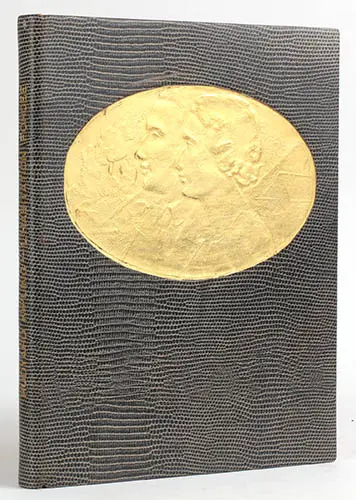
There are books that merely contain illustrations, and then there are books where illustration and text become one seamless work of art. Habitation Forcée, published in Paris in 1913, belongs decisively to the latter category. This slender volume pairs the symbolist poetry of Henri de Régnier with the visionary artistry of Jessie M. King, one of the most distinctive illustrators of the early twentieth century. For those who cherish the Golden Age of Illustration, it is a treasure waiting to be discovered.
Jessie Marion King was a central figure in the Glasgow Style, Scotland’s contribution to the broader Art Nouveau movement. Trained at the Glasgow School of Art, she emerged as one of the celebrated “Glasgow Girls,” a group of women artists whose work challenged conventions and redefined decorative art. King’s style is immediately recognizable: delicate pen-and-ink lines, elongated figures with dreamy expressions, and intricate patterns of stars, flowers, and swirling textures that seem to pulse with quiet life. She once declared, “I would not copy designs, but insisted on drawing out of my head,” and her illustrations possess a quality of pure imagination—a world drawn not from observation but from an inner realm of fairy tale and legend.
By 1913, King was living in Paris with her husband, the artist E.A. Taylor, having established an art school called the Sheiling Atelier. It was during this fertile period that Habitation Forcée came into being. Published by the prestigious Librairie de l’Art Indépendant, the book was issued as a limited edition, reflecting the bibliophilic tastes of an era when fine press books were cherished as objects of art. For King, it was an opportunity to engage with French symbolist poetry—a literary movement whose preoccupation with dreams, myth, and melancholy resonated deeply with her own artistic sensibilities.
The illustrations King created for Habitation Forcée are among the most exquisite of her career. Working primarily in pen and ink, often with delicate watercolor washes, she produced images that feel at once intimate and otherworldly. Her figures—slender women in flowing, medieval-inspired gowns—inhabit flattened, dreamlike spaces where perspective is suggested not by realism but by the graceful arrangement of pattern. Stars form halos around their heads, flowers bloom in stylized abundance, and every surface is alive with intricate, hand-drawn texture. A palette of muted golds, mossy greens, and soft rose creates an atmosphere of hushed, timeless enchantment.
What makes Habitation Forcée particularly fascinating is its position within King’s oeuvre. It belongs to her Paris years, a time when she was absorbing new influences—including the vibrant colors of Léon Bakst’s designs for the Ballets Russes—that would gradually shift her work toward a richer, more vivid palette. In this volume, one can see both the meticulous detail of her early Glasgow training and the seeds of the bolder color work that would define her later career in batik and ceramics. It is a book of transition, capturing an artist at a moment of creative evolution.
Today, Habitation Forcée remains a treasure for collectors and a revelation for anyone discovering Jessie M. King’s work for the first time. It stands as a testament to a moment when books were conceived as total works of art—when poetry and illustration, design and craftsmanship, converged to create something truly magical. In its pages, King’s enchanted world lives on, waiting to be rediscovered by those with eyes to see it.
For collectors of this edition, these related works may intrigue:
• Defence of Guenevere and Other Poems (1904) illustrated by King – an early’s sublime work
• The City of the Soul (1921) illustrated by Alastair – a contemporaneous decadent work
• The Vortex in A Diversity of Creatures (1917) – Kipling’s original English version
Other Jessie M. King illustrated works available in our gallery: The Defence of Guenevere, A House of Pomegranates, The High History of the Holy Graal, Seven Happy Days, Poems of Spenser.
I would recommend this excellent in-depth study by Professor Catherine Delyfer about the illustrator Jessie M. King and this particular book Habitation Forcée by Rudyard Kipling. It’s quite fascinating.
Art Gallery: Jessie M. King – Habitation Forcée 1921
![Jessie M. King - Habitation Forcee [jking-habitation01] (art, illustrations)](https://www.nocloo.com/wp-content/plugins/justified-image-grid/timthumb.php?src=https%3A%2F%2Fwww.nocloo.com%2Fart%2Fjmking-habitation%2Fjking-habitation01.jpg&h=280&q=90&f=.jpg)
![Jessie M. King - Habitation Forcee [jking-habitation02] (art, illustrations)](https://www.nocloo.com/wp-content/plugins/justified-image-grid/timthumb.php?src=https%3A%2F%2Fwww.nocloo.com%2Fart%2Fjmking-habitation%2Fjking-habitation02.jpg&h=280&q=90&f=.jpg)
![Jessie M. King - Habitation Forcee [jking-habitation03] (art, illustrations)](https://www.nocloo.com/wp-content/plugins/justified-image-grid/timthumb.php?src=https%3A%2F%2Fwww.nocloo.com%2Fart%2Fjmking-habitation%2Fjking-habitation03.jpg&h=280&q=90&f=.jpg)
![Jessie M. King - Habitation Forcee [jking-habitation04] (art, illustrations)](https://www.nocloo.com/wp-content/plugins/justified-image-grid/timthumb.php?src=https%3A%2F%2Fwww.nocloo.com%2Fart%2Fjmking-habitation%2Fjking-habitation04.jpg&h=280&q=90&f=.jpg)
![Jessie M. King - Habitation Forcee [jking-habitation05] (art, illustrations)](https://www.nocloo.com/wp-content/plugins/justified-image-grid/timthumb.php?src=https%3A%2F%2Fwww.nocloo.com%2Fart%2Fjmking-habitation%2Fjking-habitation05.jpg&h=280&q=90&f=.jpg)
![Jessie M. King - Habitation Forcee [jking-habitation06] (art, illustrations)](https://www.nocloo.com/wp-content/plugins/justified-image-grid/timthumb.php?src=https%3A%2F%2Fwww.nocloo.com%2Fart%2Fjmking-habitation%2Fjking-habitation06.jpg&h=280&q=90&f=.jpg)
![Jessie M. King - Habitation Forcee [jking-habitation07] (art, illustrations)](https://www.nocloo.com/wp-content/plugins/justified-image-grid/timthumb.php?src=https%3A%2F%2Fwww.nocloo.com%2Fart%2Fjmking-habitation%2Fjking-habitation07.jpg&h=280&q=90&f=.jpg)
![Jessie M. King - Habitation Forcee [jking-habitation08] (art, illustrations)](https://www.nocloo.com/wp-content/plugins/justified-image-grid/timthumb.php?src=https%3A%2F%2Fwww.nocloo.com%2Fart%2Fjmking-habitation%2Fjking-habitation08.jpg&h=280&q=90&f=.jpg)
![Jessie M. King - Habitation Forcee [jking-habitation09] (art, illustrations)](https://www.nocloo.com/wp-content/plugins/justified-image-grid/timthumb.php?src=https%3A%2F%2Fwww.nocloo.com%2Fart%2Fjmking-habitation%2Fjking-habitation09.jpg&h=280&q=90&f=.jpg)
![Jessie M. King - Habitation Forcee [jking-habitation10] (art, illustrations)](https://www.nocloo.com/wp-content/plugins/justified-image-grid/timthumb.php?src=https%3A%2F%2Fwww.nocloo.com%2Fart%2Fjmking-habitation%2Fjking-habitation10.jpg&h=280&q=90&f=.jpg)
![Jessie M. King - Habitation Forcee [jking-habitation11] (art, illustrations)](https://www.nocloo.com/wp-content/plugins/justified-image-grid/timthumb.php?src=https%3A%2F%2Fwww.nocloo.com%2Fart%2Fjmking-habitation%2Fjking-habitation11.jpg&h=280&q=90&f=.jpg)
![Jessie M. King - Habitation Forcee [jking-habitation12] (art, illustrations)](https://www.nocloo.com/wp-content/plugins/justified-image-grid/timthumb.php?src=https%3A%2F%2Fwww.nocloo.com%2Fart%2Fjmking-habitation%2Fjking-habitation12.jpg&h=280&q=90&f=.jpg)
![Jessie M. King - Habitation Forcee [jking-habitation13] (art, illustrations)](https://www.nocloo.com/wp-content/plugins/justified-image-grid/timthumb.php?src=https%3A%2F%2Fwww.nocloo.com%2Fart%2Fjmking-habitation%2Fjking-habitation13.jpg&h=280&q=90&f=.jpg)
![Jessie M. King - Habitation Forcee [jking-habitation14] (art, illustrations)](https://www.nocloo.com/wp-content/plugins/justified-image-grid/timthumb.php?src=https%3A%2F%2Fwww.nocloo.com%2Fart%2Fjmking-habitation%2Fjking-habitation14.jpg&h=280&q=90&f=.jpg)
![Jessie M. King - Habitation Forcee [jking-habitation15] (art, illustrations)](https://www.nocloo.com/wp-content/plugins/justified-image-grid/timthumb.php?src=https%3A%2F%2Fwww.nocloo.com%2Fart%2Fjmking-habitation%2Fjking-habitation15.jpg&h=280&q=90&f=.jpg)
![Jessie M. King - Habitation Forcee [jking-habitation16] (art, illustrations)](https://www.nocloo.com/wp-content/plugins/justified-image-grid/timthumb.php?src=https%3A%2F%2Fwww.nocloo.com%2Fart%2Fjmking-habitation%2Fjking-habitation16.jpg&h=280&q=90&f=.jpg)
![Jessie M. King - Habitation Forcee [jking-habitation17] (art, illustrations)](https://www.nocloo.com/wp-content/plugins/justified-image-grid/timthumb.php?src=https%3A%2F%2Fwww.nocloo.com%2Fart%2Fjmking-habitation%2Fjking-habitation17.jpg&h=280&q=90&f=.jpg)
![Jessie M. King - Habitation Forcee [jking-habitation18] (art, illustrations)](https://www.nocloo.com/wp-content/plugins/justified-image-grid/timthumb.php?src=https%3A%2F%2Fwww.nocloo.com%2Fart%2Fjmking-habitation%2Fjking-habitation18.jpg&h=280&q=90&f=.jpg)
![Jessie M. King - Habitation Forcee [jking-habitation19] (art, illustrations)](https://www.nocloo.com/wp-content/plugins/justified-image-grid/timthumb.php?src=https%3A%2F%2Fwww.nocloo.com%2Fart%2Fjmking-habitation%2Fjking-habitation19.jpg&h=280&q=90&f=.jpg)
![Jessie M. King - Habitation Forcee [jking-habitation20] (art, illustrations)](https://www.nocloo.com/wp-content/plugins/justified-image-grid/timthumb.php?src=https%3A%2F%2Fwww.nocloo.com%2Fart%2Fjmking-habitation%2Fjking-habitation20.jpg&h=280&q=90&f=.jpg)
![Jessie M. King - Habitation Forcee [jking-habitation21] (art, illustrations)](https://www.nocloo.com/wp-content/plugins/justified-image-grid/timthumb.php?src=https%3A%2F%2Fwww.nocloo.com%2Fart%2Fjmking-habitation%2Fjking-habitation21.jpg&h=280&q=90&f=.jpg)