A Grail of Enchantment: Jessie M. King’s The High History of the Holy Graal
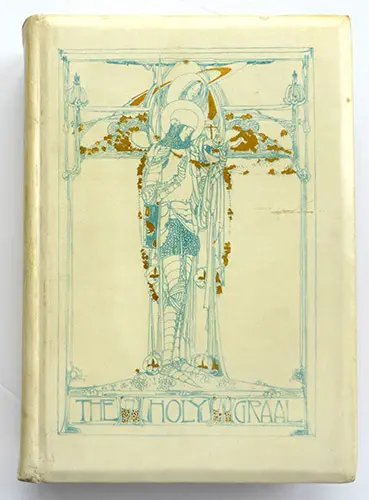
Limited Edition
In the vast and often masculine tradition of Arthurian illustration, the work of Jessie M. King stands as a luminous exception—a vision of Camelot filtered through the delicate, dreamlike sensibility of one of the Glasgow Style’s most distinctive artists. Her 1903 edition of The High History of the Holy Graal, translated by Sebastian Evans and published by J.M. Dent & Co. in London, represents a remarkable achievement: a book that brings the mystical world of Perceval and the quest for the Grail to life with an ethereal beauty all its own.
Jessie Marion King (1875–1949) was, at the turn of the century, emerging as a central figure in the Glasgow Style, Scotland’s contribution to the Art Nouveau movement. Trained at the Glasgow School of Art under the visionary director Francis Newbery, she had developed a style characterized by sinuous lines, intricate patterning, and a deep engagement with the world of legend and fairy tale. Her work for The High History of the Holy Graal would become one of the defining achievements of her early career.
The High History of the Holy Graal, also known as Perlesvaus, is one of the most enigmatic and mystical of the Arthurian romances. Composed in Old French in the early thirteenth century, it tells the story of Perceval’s quest for the Holy Grail—a narrative of spiritual striving, knightly adventure, and profound symbolism. Sebastian Evans’s 1898 translation made this medieval masterpiece accessible to English readers, and by 1903, Dent recognized that the text deserved an illustrated edition of exceptional beauty.
The 1903 edition was a handsome production, bound in blue cloth with gilt stamping and featuring King’s distinctive decorative designs on the cover and spine. Within, readers discovered a wealth of visual treasures: numerous full-page illustrations, both in color and black and white, along with decorative borders, initials, and marginal drawings that transformed every page into a unified work of art. King approached the book as a total design project, ensuring that her vision of the Grail quest would envelop the reader from the first page to the last. Issued a in trade and limited edition of 225 copies, bound in vellum.
What distinguishes King’s illustrations for The High History is their ethereal quality. Her palette is soft and luminous—pale golds, misty blues, gentle greens, and touches of rose—evoking the mystical atmosphere of the Grail quest. Her figures possess the elegant, elongated grace characteristic of her style, yet they also carry a spiritual weight that sets them apart from her fairy illustrations. Perceval is rendered as a figure of quiet dignity, his face often shadowed with the solemnity of his quest; the Grail itself appears bathed in a light that seems to emanate from within the page.
King’s decorative borders are among the most beautiful in her oeuvre. Stylized flowers, intricate knotwork, and figures from Arthurian legend weave around the text, creating a visual environment that feels both medieval and modern. She drew upon the traditions of Celtic manuscript illumination—the Book of Kells, the Lindisfarne Gospels—transforming them into a language that was entirely her own. The result is a book that feels like a treasure recovered from some lost medieval scriptorium, yet rendered with the freshness of Art Nouveau.
The critical response to King’s High History was enthusiastic. Reviewers praised her “delicate and fanciful” style and her ability to capture “the mystical beauty” of the Grail legend. The book established her reputation as one of the leading illustrators of her generation and led to commissions for works by Shakespeare, Hawthorne, and other literary masters.
Today, the 1903 edition is highly prized by collectors. First editions in good condition, with their blue cloth bindings intact and their plates clean, are increasingly scarce. For those fortunate enough to own a copy, the book offers a rare experience: a journey into the heart of Arthurian legend, guided by an artist who understood that the quest for the Grail was not merely a tale of adventure but a spiritual journey, a seeking after something glimpsed only in dreams.
In the pages of The High History of the Holy Graal, Jessie M. King created a world of enchantment—a Camelot rendered in soft colors and sinuous lines, a Grail that glows with otherworldly light, a Perceval who rides through forests of the soul as well as forests of the earth. It is a book that reminds us that the greatest art, like the greatest quests, is a journey toward the ineffable—a seeking after beauty that, once glimpsed, can never be forgotten.
Recommended for Collectors:
- The Defence of Guenevere (1904) by William Morris, illustrated by King – For more Arthurian elegance
- The Romance of King Arthur (1917), illustrated by Arthur Rackham – A richly illustrated retelling of Arthurian legends with Rackham’s distinctive fantasy style.
- Idylls of the King (1911) illustrated by Eleanor Fortescue-Brickdale – A Pre-Raphaelite counterpart
- The Book of Wonder (1912), by Lord Dunsany, illustrated by Sidney H. Sime – A fantastical collection of tales with dark, dreamlike illustrations.
Other Jessie M. King illustrated works available in our gallery: The Defence of Guenevere, A House of Pomegranates, The Mummy’s Bedtime Story Book, Seven Happy Days, Poems of Spenser, Habitation Forcee.
Art Gallery: Jessie M. King – The High History of the Holy Graal 1903
![Jessie M. King - High History of the Holy Graal [jessie-king-graal01] (art, illustrations)](https://www.nocloo.com/wp-content/plugins/justified-image-grid/timthumb.php?src=https%3A%2F%2Fwww.nocloo.com%2Fart%2Fjmking-graal%2Fjessie-king-graal01.jpg&h=280&q=90&f=.jpg "Jessie M. King - Illustrations for The High History of the Holy Graal 1903")
![Jessie M. King - High History of the Holy Graal [jessie-king-graal02] (art, illustrations)](https://www.nocloo.com/wp-content/plugins/justified-image-grid/timthumb.php?src=https%3A%2F%2Fwww.nocloo.com%2Fart%2Fjmking-graal%2Fjessie-king-graal02.jpg&h=280&q=90&f=.jpg "Jessie M. King - Illustrations for The High History of the Holy Graal 1903")
![Jessie M. King - High History of the Holy Graal [jessie-king-graal03] (art, illustrations)](https://www.nocloo.com/wp-content/plugins/justified-image-grid/timthumb.php?src=https%3A%2F%2Fwww.nocloo.com%2Fart%2Fjmking-graal%2Fjessie-king-graal03.jpg&h=280&q=90&f=.jpg "Jessie M. King - Illustrations for The High History of the Holy Graal 1903")
![Jessie M. King - High History of the Holy Graal [jessie-king-graal04] (art, illustrations)](https://www.nocloo.com/wp-content/plugins/justified-image-grid/timthumb.php?src=https%3A%2F%2Fwww.nocloo.com%2Fart%2Fjmking-graal%2Fjessie-king-graal04.jpg&h=280&q=90&f=.jpg "Jessie M. King - Illustrations for The High History of the Holy Graal 1903")
![Jessie M. King - High History of the Holy Graal [jessie-king-graal05] (art, illustrations)](https://www.nocloo.com/wp-content/plugins/justified-image-grid/timthumb.php?src=https%3A%2F%2Fwww.nocloo.com%2Fart%2Fjmking-graal%2Fjessie-king-graal05.jpg&h=280&q=90&f=.jpg "Jessie M. King - Illustrations for The High History of the Holy Graal 1903")
![Jessie M. King - High History of the Holy Graal [jessie-king-graal06] (art, illustrations)](https://www.nocloo.com/wp-content/plugins/justified-image-grid/timthumb.php?src=https%3A%2F%2Fwww.nocloo.com%2Fart%2Fjmking-graal%2Fjessie-king-graal06.jpg&h=280&q=90&f=.jpg "Jessie M. King - Illustrations for The High History of the Holy Graal 1903")
![Jessie M. King - High History of the Holy Graal [jessie-king-graal07] (art, illustrations)](https://www.nocloo.com/wp-content/plugins/justified-image-grid/timthumb.php?src=https%3A%2F%2Fwww.nocloo.com%2Fart%2Fjmking-graal%2Fjessie-king-graal07.jpg&h=280&q=90&f=.jpg "Jessie M. King - Illustrations for The High History of the Holy Graal 1903")
![Jessie M. King - High History of the Holy Graal [jessie-king-graal08] (art, illustrations)](https://www.nocloo.com/wp-content/plugins/justified-image-grid/timthumb.php?src=https%3A%2F%2Fwww.nocloo.com%2Fart%2Fjmking-graal%2Fjessie-king-graal08.jpg&h=280&q=90&f=.jpg "Jessie M. King - Illustrations for The High History of the Holy Graal 1903")
![Jessie M. King - High History of the Holy Graal [jessie-king-graal09] (art, illustrations)](https://www.nocloo.com/wp-content/plugins/justified-image-grid/timthumb.php?src=https%3A%2F%2Fwww.nocloo.com%2Fart%2Fjmking-graal%2Fjessie-king-graal09.jpg&h=280&q=90&f=.jpg "Jessie M. King - Illustrations for The High History of the Holy Graal 1903")
![Jessie M. King - High History of the Holy Graal [jessie-king-graal10] (art, illustrations)](https://www.nocloo.com/wp-content/plugins/justified-image-grid/timthumb.php?src=https%3A%2F%2Fwww.nocloo.com%2Fart%2Fjmking-graal%2Fjessie-king-graal10.jpg&h=280&q=90&f=.jpg "Jessie M. King - Illustrations for The High History of the Holy Graal 1903")
![Jessie M. King - High History of the Holy Graal [jessie-king-graal11] (art, illustrations)](https://www.nocloo.com/wp-content/plugins/justified-image-grid/timthumb.php?src=https%3A%2F%2Fwww.nocloo.com%2Fart%2Fjmking-graal%2Fjessie-king-graal11.jpg&h=280&q=90&f=.jpg "Jessie M. King - Illustrations for The High History of the Holy Graal 1903")
![Jessie M. King - High History of the Holy Graal [jessie-king-graal12] (art, illustrations)](https://www.nocloo.com/wp-content/plugins/justified-image-grid/timthumb.php?src=https%3A%2F%2Fwww.nocloo.com%2Fart%2Fjmking-graal%2Fjessie-king-graal12.jpg&h=280&q=90&f=.jpg "Jessie M. King - Illustrations for The High History of the Holy Graal 1903")
![Jessie M. King - High History of the Holy Graal [jessie-king-graal13] (art, illustrations)](https://www.nocloo.com/wp-content/plugins/justified-image-grid/timthumb.php?src=https%3A%2F%2Fwww.nocloo.com%2Fart%2Fjmking-graal%2Fjessie-king-graal13.jpg&h=280&q=90&f=.jpg "Jessie M. King - Illustrations for The High History of the Holy Graal 1903")
![Jessie M. King - High History of the Holy Graal [jessie-king-graal14] (art, illustrations)](https://www.nocloo.com/wp-content/plugins/justified-image-grid/timthumb.php?src=https%3A%2F%2Fwww.nocloo.com%2Fart%2Fjmking-graal%2Fjessie-king-graal14.jpg&h=280&q=90&f=.jpg "Jessie M. King - Illustrations for The High History of the Holy Graal 1903")
![Jessie M. King - High History of the Holy Graal [jessie-king-graal15] (art, illustrations)](https://www.nocloo.com/wp-content/plugins/justified-image-grid/timthumb.php?src=https%3A%2F%2Fwww.nocloo.com%2Fart%2Fjmking-graal%2Fjessie-king-graal15.jpg&h=280&q=90&f=.jpg "Jessie M. King - Illustrations for The High History of the Holy Graal 1903")
![Jessie M. King - High History of the Holy Graal [jessie-king-graal16] (art, illustrations)](https://www.nocloo.com/wp-content/plugins/justified-image-grid/timthumb.php?src=https%3A%2F%2Fwww.nocloo.com%2Fart%2Fjmking-graal%2Fjessie-king-graal16.jpg&h=280&q=90&f=.jpg "Jessie M. King - Illustrations for The High History of the Holy Graal 1903")
![Jessie M. King - High History of the Holy Graal [jessie-king-graal17] (art, illustrations)](https://www.nocloo.com/wp-content/plugins/justified-image-grid/timthumb.php?src=https%3A%2F%2Fwww.nocloo.com%2Fart%2Fjmking-graal%2Fjessie-king-graal17.jpg&h=280&q=90&f=.jpg "Jessie M. King - Illustrations for The High History of the Holy Graal 1903")
![Jessie M. King - High History of the Holy Graal [jessie-king-graal18] (art, illustrations)](https://www.nocloo.com/wp-content/plugins/justified-image-grid/timthumb.php?src=https%3A%2F%2Fwww.nocloo.com%2Fart%2Fjmking-graal%2Fjessie-king-graal18.jpg&h=280&q=90&f=.jpg "Jessie M. King - Illustrations for The High History of the Holy Graal 1903")
![Jessie M. King - High History of the Holy Graal [jessie-king-graal19] (art, illustrations)](https://www.nocloo.com/wp-content/plugins/justified-image-grid/timthumb.php?src=https%3A%2F%2Fwww.nocloo.com%2Fart%2Fjmking-graal%2Fjessie-king-graal19.jpg&h=280&q=90&f=.jpg "Jessie M. King - Illustrations for The High History of the Holy Graal 1903")
![Jessie M. King - High History of the Holy Graal [jessie-king-graal20] (art, illustrations)](https://www.nocloo.com/wp-content/plugins/justified-image-grid/timthumb.php?src=https%3A%2F%2Fwww.nocloo.com%2Fart%2Fjmking-graal%2Fjessie-king-graal20.jpg&h=280&q=90&f=.jpg "Jessie M. King - Illustrations for The High History of the Holy Graal 1903")
![Jessie M. King - High History of the Holy Graal [jessie-king-graal21] (art, illustrations)](https://www.nocloo.com/wp-content/plugins/justified-image-grid/timthumb.php?src=https%3A%2F%2Fwww.nocloo.com%2Fart%2Fjmking-graal%2Fjessie-king-graal21.jpg&h=280&q=90&f=.jpg "Jessie M. King - Illustrations for The High History of the Holy Graal 1903")
![Jessie M. King - High History of the Holy Graal [jessie-king-graal22] (art, illustrations)](https://www.nocloo.com/wp-content/plugins/justified-image-grid/timthumb.php?src=https%3A%2F%2Fwww.nocloo.com%2Fart%2Fjmking-graal%2Fjessie-king-graal22.jpg&h=280&q=90&f=.jpg "Jessie M. King - Illustrations for The High History of the Holy Graal 1903")
![Jessie M. King - High History of the Holy Graal [jessie-king-graal23] (art, illustrations)](https://www.nocloo.com/wp-content/plugins/justified-image-grid/timthumb.php?src=https%3A%2F%2Fwww.nocloo.com%2Fart%2Fjmking-graal%2Fjessie-king-graal23.jpg&h=280&q=90&f=.jpg "Jessie M. King - Illustrations for The High History of the Holy Graal 1903")
![Jessie M. King - High History of the Holy Graal [jessie-king-graal24] (art, illustrations)](https://www.nocloo.com/wp-content/plugins/justified-image-grid/timthumb.php?src=https%3A%2F%2Fwww.nocloo.com%2Fart%2Fjmking-graal%2Fjessie-king-graal24.jpg&h=280&q=90&f=.jpg "Jessie M. King - Illustrations for The High History of the Holy Graal 1903")