Old French Fairy Tales: Virginia Frances Sterrett’s Dreamlike Enchantment
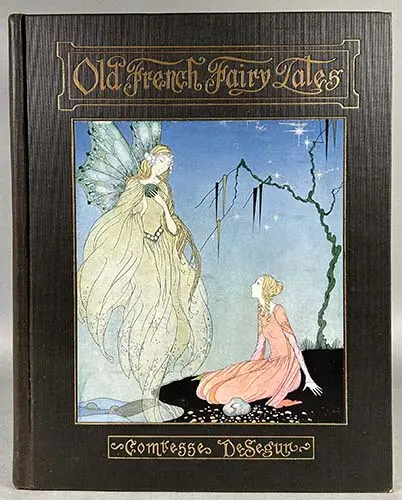
Some illustrated books arrive into the world with a kind of quiet miracle attached to them. Old French Fairy Tales, illustrated by Virginia Frances Sterrett, is one such volume. The stories themselves—a collection of classic French fairy tales written by Comtesse de Ségur in the nineteenth century—are charming, moral, and thoroughly delightful. But it is Sterrett’s illustrations that elevate this book from a simple story collection to an object of ethereal, almost heartbreaking beauty. To turn its pages is to wander through a dream painted in pastels, where princesses drift through forests of silver and gold, and every shadow seems to hold a secret.
The Comtesse de Ségur, born Sophie Rostopchine in St. Petersburg but later settled in France, wrote her fairy tales for her own grandchildren. Her stories are gentle and instructive, drawing on the deep well of French folklore while adding her own warmth and wit. In Old French Fairy Tales, readers encounter enchanted dolls, wicked fairies, virtuous peasant girls, and princes who must learn humility before they can claim their thrones. The tales are not as dark as those of the Brothers Grimm nor as melancholy as those of Hans Christian Andersen. They are kinder, softer, more forgiving—stories in which goodness is eventually rewarded and evil is quietly, politely defeated.
Virginia Frances Sterrett was only nineteen years old when she received the commission to illustrate this book. Born in Chicago in 1900, she had shown artistic talent from an early age, but her path was shadowed by illness. She suffered from tuberculosis, a disease that would plague her throughout her short life. Despite her youth and her frailty, she poured herself into the Old French Fairy Tales project with astonishing intensity. The resulting illustrations, completed while she was still in her early twenties, are remarkable for their maturity, their technical skill, and their dreamlike, otherworldly quality.
Sterrett’s style is instantly recognizable. She worked primarily in watercolor and gouache, building up layers of soft, translucent color. Her palette is dominated by pale lavenders, dusty pinks, mint greens, and silvery blues. Unlike the bold, black-outlined illustrations of her contemporary Ivan Bilibin, Sterrett’s lines are delicate, almost invisible. Her figures seem to emerge from a soft fog, their edges blurred as if seen through a veil of morning mist or remembered from a dream that is already fading.
Her compositions are elegant and asymmetrical. A princess might sit at the edge of the page, her gown flowing into the margins while a magical bird perches on a flowering branch above her head. A castle appears in the distance, tiny and glittering, half-hidden by stylized trees. Sterrett had a particular gift for drawing fabric—her characters’ dresses cascade in folds that seem liquid, weightless, impossibly graceful. She also loved decorative details: arabesques, floral borders, tiny stars scattered across the sky like sequins.
Tragically, Sterrett completed only three books before her death from tuberculosis in 1931 at the age of thirty-one. Old French Fairy Tales remains her masterpiece—a testament to what she accomplished in the face of relentless illness. To hold this book is to hold a fragile, beautiful thing: the vision of a young woman who painted the world as she wished it could be, full of soft colors and gentle magic. Her illustrations do not shout. They whisper. And their whisper has never faded.
Recommended for collectors and readers:
- Tanglewood Tales (1921), illustrated by Virginia Frances Sterrett – Greek myths reimagined with her delicate and mystical visual style.
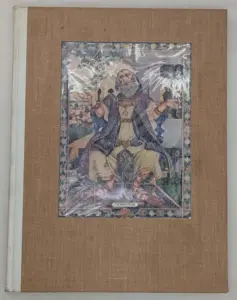
- The Arabian Nights (1928), illustrated by Virginia Frances Sterrett – A sumptuous and mature work filled with Eastern fantasy and elegance.
- East of the Sun and West of the Moon (1914), illustrated by Kay Nielsen – A Scandinavian fairy tale collection with magical Art Nouveau imagery.
Art Gallery: Sterrett, Virginia Frances – Old French Fairy Tales 1920
![Virginia Frances Sterrett - Old French Fairy Tales [sterrett-french01] (art, illustrations)](https://www.nocloo.com/wp-content/plugins/justified-image-grid/timthumb.php?src=https%3A%2F%2Fwww.nocloo.com%2Fart%2Fsterrett-french%2Fsterrett-french01.jpg&h=280&q=90&f=.jpg "Virginia Frances Sterrett - Illustrations for Old French Fairy Tales 1920")
![Virginia Frances Sterrett - Old French Fairy Tales [sterrett-french02] (art, illustrations)](https://www.nocloo.com/wp-content/plugins/justified-image-grid/timthumb.php?src=https%3A%2F%2Fwww.nocloo.com%2Fart%2Fsterrett-french%2Fsterrett-french02.jpg&h=280&q=90&f=.jpg "Virginia Frances Sterrett - Illustrations for Old French Fairy Tales 1920")
![Virginia Frances Sterrett - Old French Fairy Tales [sterrett-french03] (art, illustrations)](https://www.nocloo.com/wp-content/plugins/justified-image-grid/timthumb.php?src=https%3A%2F%2Fwww.nocloo.com%2Fart%2Fsterrett-french%2Fsterrett-french03.jpg&h=280&q=90&f=.jpg "Virginia Frances Sterrett - Illustrations for Old French Fairy Tales 1920")
![Virginia Frances Sterrett - Old French Fairy Tales [sterrett-french04] (art, illustrations)](https://www.nocloo.com/wp-content/plugins/justified-image-grid/timthumb.php?src=https%3A%2F%2Fwww.nocloo.com%2Fart%2Fsterrett-french%2Fsterrett-french04.jpg&h=280&q=90&f=.jpg "Virginia Frances Sterrett - Illustrations for Old French Fairy Tales 1920")
![Virginia Frances Sterrett - Old French Fairy Tales [sterrett-french05] (art, illustrations)](https://www.nocloo.com/wp-content/plugins/justified-image-grid/timthumb.php?src=https%3A%2F%2Fwww.nocloo.com%2Fart%2Fsterrett-french%2Fsterrett-french05.jpg&h=280&q=90&f=.jpg "Virginia Frances Sterrett - Illustrations for Old French Fairy Tales 1920")
![Virginia Frances Sterrett - Old French Fairy Tales [sterrett-french06] (art, illustrations)](https://www.nocloo.com/wp-content/plugins/justified-image-grid/timthumb.php?src=https%3A%2F%2Fwww.nocloo.com%2Fart%2Fsterrett-french%2Fsterrett-french06.jpg&h=280&q=90&f=.jpg "Virginia Frances Sterrett - Illustrations for Old French Fairy Tales 1920")
![Virginia Frances Sterrett - Old French Fairy Tales [sterrett-french07] (art, illustrations)](https://www.nocloo.com/wp-content/plugins/justified-image-grid/timthumb.php?src=https%3A%2F%2Fwww.nocloo.com%2Fart%2Fsterrett-french%2Fsterrett-french07.jpg&h=280&q=90&f=.jpg "Virginia Frances Sterrett - Illustrations for Old French Fairy Tales 1920")
![Virginia Frances Sterrett - Old French Fairy Tales [sterrett-french08] (art, illustrations)](https://www.nocloo.com/wp-content/plugins/justified-image-grid/timthumb.php?src=https%3A%2F%2Fwww.nocloo.com%2Fart%2Fsterrett-french%2Fsterrett-french08.jpg&h=280&q=90&f=.jpg "Virginia Frances Sterrett - Illustrations for Old French Fairy Tales 1920")