Goseki Kojima: The Shadow’s Master, Architect of Gekiga
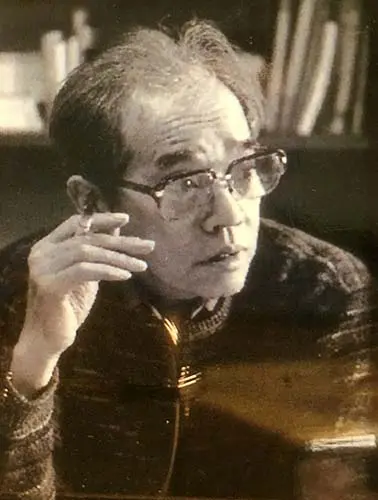
In the annals of manga, where writers often bask in the spotlight, the name Goseki Kojima stands as a testament to the transformative power of the artist’s hand. He was the visual architect of some of the medium’s most profound and visceral epics, a master whose ink-stained brush gave form to silence, sorrow, and the sublime violence of the samurai soul. To read his work is not merely to follow a story, but to inhabit a world—a world of driving rain, crunching snow, desperate glances, and the sudden, shocking blossom of crimson on rice paper.
Born Yoshihisa Kojima in 1928 in the city of Toyokawa, Aichi, his path was forged in hardship. His childhood was marked by poverty, and his formal education ended early. He found work first as a kamishibai (paper play) artist, a street storytelling medium where a narrator would use sequential illustrated boards to entertain crowds. This crucial apprenticeship taught him economy of image, narrative pacing, and the direct, powerful communication required to hold an audience. Later, he toiled in the film industry as a poster painter, further refining his sense of composition, drama, and the arresting visual hook. These were not detours, but the foundational training of a cinematic draftsman.
Goseki Kojima’s influence on other mangaka is profound, though it operates in a different stratum than more mainstream, accessible artists. He is the patron saint of atmospheric, adult-oriented gekiga (dramatic pictures). His impact is not seen in character design tropes but in an entire philosophy of visual storytelling that prioritizes environment, mood, and visceral impact. The most direct line of influence runs through his legendary partnership. Kazuo Koike’s Gekiga Sonjuku, a famed manga school, used Lone Wolf and Cub as a primary text. Through this, Kojima’s techniques directly shaped a generation of creators, including a young Rumiko Takahashi, who learned from the series’ rigorous pacing and cinematic staging.
More broadly, Kojima’s shadow looms large over creators who explore historical, gritty, or hyper-stylized realism. The work of Takehiko Inoue is deeply indebted to Kojima. Inoue’s Vagabond, a samurai epic about Miyamoto Musashi, is unthinkable without the precedent of Lone Wolf and Cub. Inoue adopts and evolves Kojima’s use of ink wash, his focus on the physical and psychological toll of combat, and his reverence for the natural world as a narrative and spiritual force. Similarly, the detailed, lived-in historical worlds of Naoki Urasawa (Pluto, Billy Bat) and the stark, weighty linework of Kentaro Miura (Berserk) carry the DNA of Kojima’s artistic approach. His influence even extends beyond Japan; American comic creators like Frank Miller, whose Ronin and Sin City owe a clear debt to Lone Wolf and Cub’s stark contrast and brutal ethos, have hailed Kojima as a master.
Their collaboration produced a library of masterworks that defined adult manga:
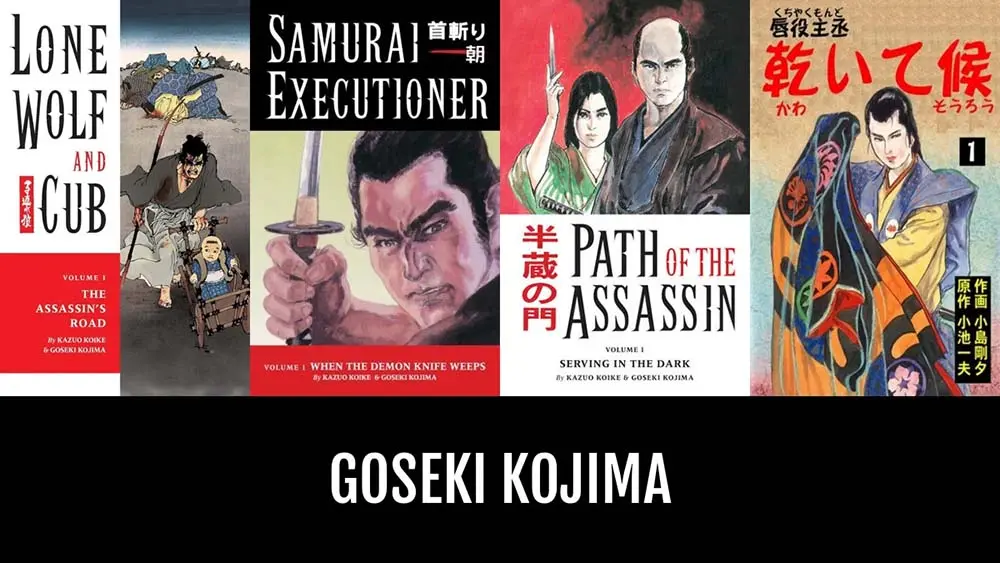
Lone Wolf and Cub (Kozure Ōkami, 1970-1976)
This is the magnum opus that cemented both creators’ legacies. Koike provided the dense historical and philosophical framework, but Kojima built its living, breathing world. His artistry defined the series’ soul. He mastered the iconic imagery: the solitary figure of Ogami Ittō pushing the baby cart down the meifumadō (the Buddhist highway to hell), rendered as a tiny, determined silhouette against vast, beautiful, and often merciless landscapes. But his true revolution was in the depiction of motion. Kojima’s violence was a stark, technical ballet. He pioneered tense, silent sequences built on close-ups—a tightening grip, a focused eye—that erupted in the now-legendary “Geyser of Blood,” a shocking, stylized eruption that became a visual haiku of sudden death. This was not mindless gore; it was aestheticized mortality, serving the story’s deep meditation on honor, vengeance, and the cost of the warrior’s path.
Samurai Executioner (Kubikiri Asa, 1972-1976)
Running concurrently, this series allowed Kojima to explore a darker, more psychological intimacy. As Yamada Asaemon, the official swordsman tasked with testing blades on condemned criminals, the narrative focused on the moment of death. Kojima’s art became intensely focused on faces—the resigned despair of the condemned, the solemn, burdened resolve of the executioner, and the chilling, clinical detail of the sword itself. His line work grew even more expressive, etching the profound moral shadows and existential weight of the series’ premise.
Path of the Assassin (Hanzō no Mon, 1978-1984)
Shifting to the historical figures Hattori Hanzō and Tokugawa Ieyasu in their youth, this series showcased Kojima’s versatility. The art retained its gritty realism but captured the dynamism of young warriors navigating a treacherous world of espionage and political intrigue. The action was fluid and acrobatic, yet always grounded in the tangible physicality that was his trademark.
Beyond the Koike-Kojima juggernaut, he also illustrated the sci-fi noir “Kāten Koru” (Carten Core) with writer Maiko Takeda, proving his style could adapt to futuristic dystopias with equal potency.
Goseki Kojima was not a writer-artist in the traditional manga sense, but the ultimate visual interpreter. He decided what the reader felt—the tension in a quiet room, the shock of impact, the solemn beauty of a decaying temple. He translated literary and historical concepts into immediate sensory experience. His influence is immeasurable, echoing in the cinematic comics of Frank Miller (whose Ronin and Sin City owe a clear debt), the atmospheric realism of modern seinen artists, and the framing of countless samurai films.
He passed away in 2000, but his work remains a towering achievement. Goseki Kojima elevated manga into a realm of stark, adult visual literature. He was the master of the eloquent silence, the architect of atmosphere, and the artist who proved that a brushstroke could carry the weight of a sword, a glance could hold a tragedy, and a single, rain-swept panel could contain an entire philosophy. In the world of gekiga, he was, and remains, the definitive shadow—the one that gave darkness its form and profound beauty.
Goseki Kojima – Bibliography
Manga Series
- Dojinki (1967)
- Publisher: Nihon Bungeisha
- A historical ninja adventure that marked Kojima’s transition from the rental book (kashi-bon) market to major magazine serialization. 1 volume
- Lone Wolf and Cub (Kozure Ōkami) (1970–1976)
- Publisher: Futabasha
- His most famous work. It follows Ogami Ittō, the Shogun’s disgraced executioner, as he wanders Edo-period Japan as an assassin-for-hire with his young son Daigorō to seek revenge against the Yagyū clan. 28 volumes.
- Samurai Executioner (Kubikiri Asa) (1972–1976)
- Publisher: Futabasha
- Set in the same universe as Lone Wolf and Cub, focusing on Yamada Asaemon, the Shogun’s sword-tester. It explores the dark lives of those sentenced to death. 10 volumes.
- Kei no Seishun (Kei, Chronicle of a Youth) (1978–1980)
- Publisher: Futabasha
- A “seishun” (youth) drama set in the Edo period, exploring the trials of a young man navigating the strict social codes of the era. 10 volumes.
- Path of the Assassin (Hanzō no Mon) (1978–1984)
- Publisher: Koike Shoin
- A historical epic following the life of ninja Hattori Hanzō and his service to Tokugawa Ieyasu during the unification of Japan. 15 volumes.
- Kawaite Sōrō (The Thirsty Man) (1981–1982)
- Publisher: Futabasha
- A psychological political thriller involving the illegitimate children of the Shogun and power struggles within the Tokugawa inner circle. 8 volumes.
- Son Goku: Hero of the Silk Road (1984)
- Publisher: Koike Shoin
- A gritty, violent gekiga reimagining of the classic Chinese legend Journey to the West. 6 volumes.
- Kai no Tora: Takeda Shingen (1987)
- Publisher: Nihon Bungeisha
- A rigorous historical biography of the famous warlord Takeda Shingen, detailing his military genius during the Sengoku period. 4 volumes.
- Haru ga Kita (Spring Has Come) (1990)
- Publisher: Futabasha
- A collection of stories focusing on the lives of commoners and lower-ranking samurai, emphasizing the emotional depth of daily life. 10 volumes,
- Miyamoto Musashi (1995)
- Publisher: Shogakukan
- A focused biographical look at Japan’s most famous swordsman, based on scripts by Mamoru Sasaki. 1 volume.
One-shots and Graphic Novel Adaptations
- Onmitsu Kuroyoden (1957)
- Publisher: Hinomaru Bunko
- Kojima’s debut work in the rental book market, focusing on secret agents and ninja themes.
- Warawaasobi (1986)
- Publisher: Koike Shoin
- An art-centric collection of short pieces showcasing Kojima’s mastery of traditional ink-wash techniques (suibokuga).
- Shincho Koki (1996)
- Publisher: Shueisha
- An illustrated biography of Oda Nobunaga, part of a series intended to adapt Japanese historical classics into manga.
- Throne of Blood (Kumonosujō) (1998)
- Publisher: LEED Publishing
- A direct manga adaptation of Akira Kurosawa’s film, transposing Shakespeare’s Macbeth to feudal Japan.
- Tsubaki Sanjūrō (1998)
- Publisher: LEED Publishing
- An adaptation of the classic Kurosawa film about a cynical, highly skilled ronin who assists a group of naive young samurai.
- Kojima Goseki Chūshingura (1998)
- Publisher: Futabasha
- Kojima’s personal take on the legendary “47 Ronin” incident of loyalty and revenge.