A Forgotten Collaboration: Reginald & Horace Knowles’ Legends from Fairyland
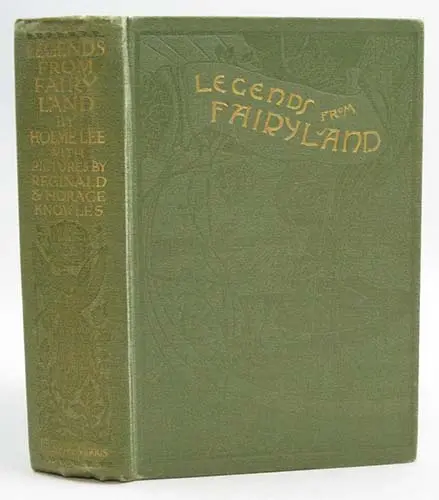
In the annals of early twentieth-century illustration, certain collaborative pairs produced work that transcends the sum of their individual talents. The brothers Reginald and Horace Knowles were such a pair, and their 1907 volume Legends from Fairyland stands as a luminous testament to their shared vision—a book that captures the spirit of the fairy-tale revival at the height of the Edwardian era.
The Knowles brothers came from an artistic family rooted in London’s East End. Reginald Lionel Knowles (1879–1950) was the elder, a book designer, illustrator, and graphic artist who also worked in wallpaper and stained glass design . Horace John Knowles (1884–1954), the younger, would go on to a distinguished career as both author and illustrator, remembered today for his later masterpiece Peeps into Fairyland (1924) as well as for his biblical illustrations . In their early collaborations, they found a natural partnership—one that would produce some of the most exquisite illustrated books of their generation.
Legends from Fairyland was written by Holme Lee, the pseudonym of the Victorian novelist Harriet Parr (1828–1900) . The full title—Narrating the History of Prince Glee & Princess Trill, the Cruel Persecutions & Condign Punishment of Aunt Spite, the Adventures of the Great Tuflongbo & the Story of the Blackcap in the Giant’s Well—suggests the rich, whimsical nature of the tales within . Published in London by Chatto & Windus and in Philadelphia by J.B. Lippincott, the first edition appeared in 1908, though some sources date the collaboration to 1907 . The volume was a handsome production: bound in maroon pictorial cloth stamped in gilt, with illustrated endpapers and an illustrated title page that set the stage for the enchantment to follow.
The division of labor between the brothers was carefully managed. While both received equal credit, it is understood that Reginald was responsible for most of the color illustrations and the detailed monotone images, often signing his work with his initials “RLK” . Horace contributed as well, and the two collaborated closely on the book’s overall design . Their style drew upon multiple influences—Art Nouveau’s sinuous lines, Victorian fantasy’s romanticism, and Gothic Revival imagery’s architectural grandeur—creating a visual language that was distinctly their own.
The illustrations for Legends from Fairyland reflect this synthesis. The dual-tone frontis, likely Reginald’s work, possess a jewel-like richness: deep reds, soft golds, and luminous greens that evoke the fairy realm. The figures—princes, princesses, fairies, and the wonderfully named Tuflongbo—are rendered with an elegant, elongated grace characteristic of the period, yet there is also a warmth to them, a sense of character that brings the stories to life. The black-and-white illustrations, scattered throughout the text, demonstrate the brothers’ mastery of line, creating textures and patterns that reward sustained attention.
The book appeared at a fertile moment for fairy-tale illustration. The Golden Age was in full flower, with artists like Arthur Rackham and Edmund Dulac producing their most celebrated works. The Knowles brothers’ Legends from Fairyland held its own in this company, establishing their reputation and leading to further collaborations, including Norse Fairy Tales (1910) and Old World Love-Stories (1913). In Norse Fairy Tales, the division of labor was explicitly noted: “The one on the page 367 is by Horace J. Knowles, and all the other unsigned pictures are by Reginald L. Knowles, who also made the cover design and the coloured illustrations”.
Today, first editions of Legends from Fairyland are scarce and prized by collectors. The book’s fragile binding and the delicate nature of its plates mean that surviving copies in fine condition are increasingly rare . For those fortunate enough to own one, the volume offers a window into a particular moment in book illustration—when two brothers, working in harmony, created a world of fairy enchantment that continues to captivate more than a century later.
In the pages of Legends from Fairyland, Prince Glee and Princess Trill still dance, Aunt Spite meets her condign punishment, and the great Tuflongbo strides through a landscape of wonder. Reginald and Horace Knowles gave these characters form and color, and in doing so, they created a book that stands as a jewel of the Edwardian fairy-tale revival—a collaboration that deserves to be remembered.
Recommended for Collectors:
- The Rose Fairy Book (1910) by Henry Altemus, illustrated by Margaret Tarrant – For similar ethereal fairy imagery
- The Enchanted Forest (1921) by Ida Rentoul Outhwaite – An Australian counterpart to British fairy art
- Peter Pan in Kensington Gardens (1906) illustrated by Arthur Rackham – A more famous take on fairyland
Art Gallery: Reginal & Horace Knowles – Legends from Fairyland 1907
![Reginald & Horace Knowles - Legends from Fairyland [knowles-fairyland01] (art, illustrations)](https://www.nocloo.com/wp-content/plugins/justified-image-grid/timthumb.php?src=https%3A%2F%2Fwww.nocloo.com%2Fart%2Fknowles-fairyland%2Fknowles-fairyland01.jpg&h=280&q=90&f=.jpg)
![Reginald & Horace Knowles - Legends from Fairyland [knowles-fairyland02] (art, illustrations)](https://www.nocloo.com/wp-content/plugins/justified-image-grid/timthumb.php?src=https%3A%2F%2Fwww.nocloo.com%2Fart%2Fknowles-fairyland%2Fknowles-fairyland02.jpg&h=280&q=90&f=.jpg)
![Reginald & Horace Knowles - Legends from Fairyland [knowles-fairyland03] (art, illustrations)](https://www.nocloo.com/wp-content/plugins/justified-image-grid/timthumb.php?src=https%3A%2F%2Fwww.nocloo.com%2Fart%2Fknowles-fairyland%2Fknowles-fairyland03.jpg&h=280&q=90&f=.jpg)
![Reginald & Horace Knowles - Legends from Fairyland [knowles-fairyland04] (art, illustrations)](https://www.nocloo.com/wp-content/plugins/justified-image-grid/timthumb.php?src=https%3A%2F%2Fwww.nocloo.com%2Fart%2Fknowles-fairyland%2Fknowles-fairyland04.jpg&h=280&q=90&f=.jpg)
![Reginald & Horace Knowles - Legends from Fairyland [knowles-fairyland05] (art, illustrations)](https://www.nocloo.com/wp-content/plugins/justified-image-grid/timthumb.php?src=https%3A%2F%2Fwww.nocloo.com%2Fart%2Fknowles-fairyland%2Fknowles-fairyland05.jpg&h=280&q=90&f=.jpg)
![Reginald & Horace Knowles - Legends from Fairyland [knowles-fairyland06] (art, illustrations)](https://www.nocloo.com/wp-content/plugins/justified-image-grid/timthumb.php?src=https%3A%2F%2Fwww.nocloo.com%2Fart%2Fknowles-fairyland%2Fknowles-fairyland06.jpg&h=280&q=90&f=.jpg)
![Reginald & Horace Knowles - Legends from Fairyland [knowles-fairyland07] (art, illustrations)](https://www.nocloo.com/wp-content/plugins/justified-image-grid/timthumb.php?src=https%3A%2F%2Fwww.nocloo.com%2Fart%2Fknowles-fairyland%2Fknowles-fairyland07.jpg&h=280&q=90&f=.jpg)
![Reginald & Horace Knowles - Legends from Fairyland [knowles-fairyland08] (art, illustrations)](https://www.nocloo.com/wp-content/plugins/justified-image-grid/timthumb.php?src=https%3A%2F%2Fwww.nocloo.com%2Fart%2Fknowles-fairyland%2Fknowles-fairyland08.jpg&h=280&q=90&f=.jpg)
![Reginald & Horace Knowles - Legends from Fairyland [knowles-fairyland09] (art, illustrations)](https://www.nocloo.com/wp-content/plugins/justified-image-grid/timthumb.php?src=https%3A%2F%2Fwww.nocloo.com%2Fart%2Fknowles-fairyland%2Fknowles-fairyland09.jpg&h=280&q=90&f=.jpg)
![Reginald & Horace Knowles - Legends from Fairyland [knowles-fairyland10] (art, illustrations)](https://www.nocloo.com/wp-content/plugins/justified-image-grid/timthumb.php?src=https%3A%2F%2Fwww.nocloo.com%2Fart%2Fknowles-fairyland%2Fknowles-fairyland10.jpg&h=280&q=90&f=.jpg)
![Reginald & Horace Knowles - Legends from Fairyland [knowles-fairyland11] (art, illustrations)](https://www.nocloo.com/wp-content/plugins/justified-image-grid/timthumb.php?src=https%3A%2F%2Fwww.nocloo.com%2Fart%2Fknowles-fairyland%2Fknowles-fairyland11.jpg&h=280&q=90&f=.jpg)
![Reginald & Horace Knowles - Legends from Fairyland [knowles-fairyland12] (art, illustrations)](https://www.nocloo.com/wp-content/plugins/justified-image-grid/timthumb.php?src=https%3A%2F%2Fwww.nocloo.com%2Fart%2Fknowles-fairyland%2Fknowles-fairyland12.jpg&h=280&q=90&f=.jpg)
![Reginald & Horace Knowles - Legends from Fairyland [knowles-fairyland13] (art, illustrations)](https://www.nocloo.com/wp-content/plugins/justified-image-grid/timthumb.php?src=https%3A%2F%2Fwww.nocloo.com%2Fart%2Fknowles-fairyland%2Fknowles-fairyland13.jpg&h=280&q=90&f=.jpg)
![Reginald & Horace Knowles - Legends from Fairyland [knowles-fairyland14] (art, illustrations)](https://www.nocloo.com/wp-content/plugins/justified-image-grid/timthumb.php?src=https%3A%2F%2Fwww.nocloo.com%2Fart%2Fknowles-fairyland%2Fknowles-fairyland14.jpg&h=280&q=90&f=.jpg)
![Reginald & Horace Knowles - Legends from Fairyland [knowles-fairyland15] (art, illustrations)](https://www.nocloo.com/wp-content/plugins/justified-image-grid/timthumb.php?src=https%3A%2F%2Fwww.nocloo.com%2Fart%2Fknowles-fairyland%2Fknowles-fairyland15.jpg&h=280&q=90&f=.jpg)
![Reginald & Horace Knowles - Legends from Fairyland [knowles-fairyland16] (art, illustrations)](https://www.nocloo.com/wp-content/plugins/justified-image-grid/timthumb.php?src=https%3A%2F%2Fwww.nocloo.com%2Fart%2Fknowles-fairyland%2Fknowles-fairyland16.jpg&h=280&q=90&f=.jpg)
![Reginald & Horace Knowles - Legends from Fairyland [knowles-fairyland17] (art, illustrations)](https://www.nocloo.com/wp-content/plugins/justified-image-grid/timthumb.php?src=https%3A%2F%2Fwww.nocloo.com%2Fart%2Fknowles-fairyland%2Fknowles-fairyland17.jpg&h=280&q=90&f=.jpg)
![Reginald & Horace Knowles - Legends from Fairyland [knowles-fairyland18] (art, illustrations)](https://www.nocloo.com/wp-content/plugins/justified-image-grid/timthumb.php?src=https%3A%2F%2Fwww.nocloo.com%2Fart%2Fknowles-fairyland%2Fknowles-fairyland18.jpg&h=280&q=90&f=.jpg)