Into the Abyss: Harry Clarke’s Tales of Mystery and Imagination
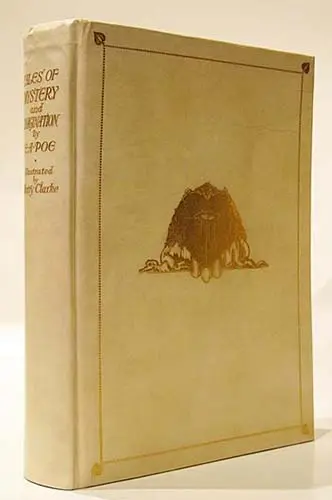
Limited Edition
There are illustrated books that delight, and then there are those that haunt. Harry Clarke’s 1919 edition of Edgar Allan Poe’s Tales of Mystery and Imagination belongs to the latter category with an intensity few other volumes can claim. It is a work of macabre brilliance—a meeting of two minds separated by a century, both obsessed with the shadowed corners of the human psyche, both possessed of a genius that could render darkness into art.
Harry Clarke (1889–1931) was an Irish artist whose brief, incandescent career left an indelible mark on the illustrated book. Trained at the Dublin Metropolitan School of Art, he was deeply influenced by the Arts and Crafts movement, the Symbolist painters, and the intricate line work of Aubrey Beardsley. Yet his style was entirely his own—obsessive, ornate, and unafraid to venture into realms of grotesque beauty that other illustrators shied away from. The Poe commission, his first major book project, would establish his reputation and produce some of the most extraordinary illustrations of the Golden Age.
The 1919 edition was published by George G. Harrap & Co. in London. It was a lavish production, issued in both trade and limited, signed editions. The volume contained thirty black-and-white illustrations and numerous decorative initials, tailpieces, and marginal drawings. The binding was in green cloth with gilt stamping, a somber canvas that perfectly set the stage for the horrors within. It was later re-issued with an additional 8 color and one black-and-white plates.
What distinguishes Clarke’s Poe is the sheer intensity of his vision. His palette is dominated by deep purples, sickly greens, blood reds, and shadows so dense they seem to swallow the light. His technique combines watercolor with pen and ink, the delicate precision of his line contrasting with the rich, atmospheric washes of color. The result is work that feels simultaneously jewel-like and profoundly unsettling.
The illustrations for “The Fall of the House of Usher” capture the story’s atmosphere of decay and dread—the crack in the mansion’s facade, the spectral figure of Madeline Usher rising from her tomb, rendered with a precision that makes the horror all the more visceral. “The Masque of the Red Death” receives an especially memorable treatment: the seven colored rooms, the ebony clock, the figure of the Red Death itself stalking through the masquerade—all rendered with a richness that heightens the story’s allegorical power.
Clarke’s figures possess an elongated, almost puppet-like quality, their faces often rendered with a Beardsley-esque precision that verges on the grotesque. Yet there is also a strange beauty in his work, a recognition that horror and loveliness are often intertwined. The women in his illustrations—the pale, ethereal figures of Ligeia and Morella—possess an otherworldly beauty that makes their fates all the more tragic.
The black-and-white illustrations are equally remarkable. Clarke’s line work is extraordinarily fine, creating textures and patterns that reward sustained attention. His decorative borders, initials, and marginal drawings weave throughout the text, transforming each page into a cohesive visual experience. The influence of Irish manuscript illumination is evident in these details—a connection to the medieval Book of Kells that Clarke would have studied in Dublin.
The critical response to Clarke’s Poe was immediate and enthusiastic. Reviewers praised his “weird and wonderful” imagination and his ability to capture “the very spirit of Poe’s genius.” The book sold well and quickly became a collector’s treasure. It established Clarke’s reputation and led to commissions for Faust, and other classics.
Today, Harry Clarke’s Tales of Mystery and Imagination stands as one of the great achievements of the illustrated book tradition. First editions are increasingly scarce and highly prized by collectors. For those fortunate enough to own a copy, the book offers an experience that is both beautiful and disturbing—a journey into the heart of darkness, illuminated by an artist who understood that true mystery lies not in what we see, but in the shadows that cling to the edges of vision.
In Clarke’s illustrations, Poe’s visions become visible: the beating heart beneath the floorboards, the black cat emerging from the wall, the pit and the pendulum in their terrible precision. It is a world of nightmares rendered with the care of a jeweler—a reminder that the most enduring art is often that which dares to look into the abyss and, in doing so, find something strangely, terribly beautiful.
Recommended for Collectors
- Andersen’s Fairy Tales (1916) illustrated by Clarke – For his equally chilling take on fairy tales
- The Raven (1884) illustrated by Gustave Dore – A stark, earlier visual interpretation of Poe
- The Vinegar Works (1963) by Edward Gorey – For a modern heir to Clarke’s gothic whimsy
Other books illustrated by the great Harry Clarke are also available for perusal in our gallery: Faust, The Fairy Tales of Charles Perrault, Selected Poems of Charles Swinburne, Andersen’s Fairy Tales, Year’s at the Spring.
Art Gallery: Harry Clarke – Edgar A. Poe’s Tales of Mystery & Imagination 1919
![Harry Clarke - Poe's Tales of Mystery and Imagination [clarke-mystery01] (art, illustrations)](https://www.nocloo.com/wp-content/plugins/justified-image-grid/timthumb.php?src=https%3A%2F%2Fwww.nocloo.com%2Fart%2Fclarke-mystery%2Fclarke-mystery01.jpg&h=280&q=90&f=.jpg)
![Harry Clarke - Poe's Tales of Mystery and Imagination [clarke-mystery02] (art, illustrations)](https://www.nocloo.com/wp-content/plugins/justified-image-grid/timthumb.php?src=https%3A%2F%2Fwww.nocloo.com%2Fart%2Fclarke-mystery%2Fclarke-mystery02.jpg&h=280&q=90&f=.jpg)
![Harry Clarke - Poe's Tales of Mystery and Imagination [clarke-mystery03] (art, illustrations)](https://www.nocloo.com/wp-content/plugins/justified-image-grid/timthumb.php?src=https%3A%2F%2Fwww.nocloo.com%2Fart%2Fclarke-mystery%2Fclarke-mystery03.jpg&h=280&q=90&f=.jpg)
![Harry Clarke - Poe's Tales of Mystery and Imagination [clarke-mystery04] (art, illustrations)](https://www.nocloo.com/wp-content/plugins/justified-image-grid/timthumb.php?src=https%3A%2F%2Fwww.nocloo.com%2Fart%2Fclarke-mystery%2Fclarke-mystery04.jpg&h=280&q=90&f=.jpg)
![Harry Clarke - Poe's Tales of Mystery and Imagination [clarke-mystery05] (art, illustrations)](https://www.nocloo.com/wp-content/plugins/justified-image-grid/timthumb.php?src=https%3A%2F%2Fwww.nocloo.com%2Fart%2Fclarke-mystery%2Fclarke-mystery05.jpg&h=280&q=90&f=.jpg)
![Harry Clarke - Poe's Tales of Mystery and Imagination [clarke-mystery06] (art, illustrations)](https://www.nocloo.com/wp-content/plugins/justified-image-grid/timthumb.php?src=https%3A%2F%2Fwww.nocloo.com%2Fart%2Fclarke-mystery%2Fclarke-mystery06.jpg&h=280&q=90&f=.jpg)
![Harry Clarke - Poe's Tales of Mystery and Imagination [clarke-mystery07] (art, illustrations)](https://www.nocloo.com/wp-content/plugins/justified-image-grid/timthumb.php?src=https%3A%2F%2Fwww.nocloo.com%2Fart%2Fclarke-mystery%2Fclarke-mystery07.jpg&h=280&q=90&f=.jpg)
![Harry Clarke - Poe's Tales of Mystery and Imagination [clarke-mystery08] (art, illustrations)](https://www.nocloo.com/wp-content/plugins/justified-image-grid/timthumb.php?src=https%3A%2F%2Fwww.nocloo.com%2Fart%2Fclarke-mystery%2Fclarke-mystery08.jpg&h=280&q=90&f=.jpg)
![Harry Clarke - Poe's Tales of Mystery and Imagination [clarke-mystery09] (art, illustrations)](https://www.nocloo.com/wp-content/plugins/justified-image-grid/timthumb.php?src=https%3A%2F%2Fwww.nocloo.com%2Fart%2Fclarke-mystery%2Fclarke-mystery09.jpg&h=280&q=90&f=.jpg)
![Harry Clarke - Poe's Tales of Mystery and Imagination [clarke-mystery10] (art, illustrations)](https://www.nocloo.com/wp-content/plugins/justified-image-grid/timthumb.php?src=https%3A%2F%2Fwww.nocloo.com%2Fart%2Fclarke-mystery%2Fclarke-mystery10.jpg&h=280&q=90&f=.jpg)
![Harry Clarke - Poe's Tales of Mystery and Imagination [clarke-mystery11] (art, illustrations)](https://www.nocloo.com/wp-content/plugins/justified-image-grid/timthumb.php?src=https%3A%2F%2Fwww.nocloo.com%2Fart%2Fclarke-mystery%2Fclarke-mystery11.jpg&h=280&q=90&f=.jpg)
![Harry Clarke - Poe's Tales of Mystery and Imagination [clarke-mystery12] (art, illustrations)](https://www.nocloo.com/wp-content/plugins/justified-image-grid/timthumb.php?src=https%3A%2F%2Fwww.nocloo.com%2Fart%2Fclarke-mystery%2Fclarke-mystery12.jpg&h=280&q=90&f=.jpg)
![Harry Clarke - Poe's Tales of Mystery and Imagination [clarke-mystery13] (art, illustrations)](https://www.nocloo.com/wp-content/plugins/justified-image-grid/timthumb.php?src=https%3A%2F%2Fwww.nocloo.com%2Fart%2Fclarke-mystery%2Fclarke-mystery13.jpg&h=280&q=90&f=.jpg)
![Harry Clarke - Poe's Tales of Mystery and Imagination [clarke-mystery14] (art, illustrations)](https://www.nocloo.com/wp-content/plugins/justified-image-grid/timthumb.php?src=https%3A%2F%2Fwww.nocloo.com%2Fart%2Fclarke-mystery%2Fclarke-mystery14.jpg&h=280&q=90&f=.jpg)
![Harry Clarke - Poe's Tales of Mystery and Imagination [clarke-mystery15] (art, illustrations)](https://www.nocloo.com/wp-content/plugins/justified-image-grid/timthumb.php?src=https%3A%2F%2Fwww.nocloo.com%2Fart%2Fclarke-mystery%2Fclarke-mystery15.jpg&h=280&q=90&f=.jpg)
![Harry Clarke - Poe's Tales of Mystery and Imagination [clarke-mystery16] (art, illustrations)](https://www.nocloo.com/wp-content/plugins/justified-image-grid/timthumb.php?src=https%3A%2F%2Fwww.nocloo.com%2Fart%2Fclarke-mystery%2Fclarke-mystery16.jpg&h=280&q=90&f=.jpg)
![Harry Clarke - Poe's Tales of Mystery and Imagination [clarke-mystery17] (art, illustrations)](https://www.nocloo.com/wp-content/plugins/justified-image-grid/timthumb.php?src=https%3A%2F%2Fwww.nocloo.com%2Fart%2Fclarke-mystery%2Fclarke-mystery17.jpg&h=280&q=90&f=.jpg)
![Harry Clarke - Poe's Tales of Mystery and Imagination [clarke-mystery18] (art, illustrations)](https://www.nocloo.com/wp-content/plugins/justified-image-grid/timthumb.php?src=https%3A%2F%2Fwww.nocloo.com%2Fart%2Fclarke-mystery%2Fclarke-mystery18.jpg&h=280&q=90&f=.jpg)
![Harry Clarke - Poe's Tales of Mystery and Imagination [clarke-mystery19] (art, illustrations)](https://www.nocloo.com/wp-content/plugins/justified-image-grid/timthumb.php?src=https%3A%2F%2Fwww.nocloo.com%2Fart%2Fclarke-mystery%2Fclarke-mystery19.jpg&h=280&q=90&f=.jpg)
![Harry Clarke - Poe's Tales of Mystery and Imagination [clarke-mystery20] (art, illustrations)](https://www.nocloo.com/wp-content/plugins/justified-image-grid/timthumb.php?src=https%3A%2F%2Fwww.nocloo.com%2Fart%2Fclarke-mystery%2Fclarke-mystery20.jpg&h=280&q=90&f=.jpg)
![Harry Clarke - Poe's Tales of Mystery and Imagination [clarke-mystery21] (art, illustrations)](https://www.nocloo.com/wp-content/plugins/justified-image-grid/timthumb.php?src=https%3A%2F%2Fwww.nocloo.com%2Fart%2Fclarke-mystery%2Fclarke-mystery21.jpg&h=280&q=90&f=.jpg)
![Harry Clarke - Poe's Tales of Mystery and Imagination [clarke-mystery22] (art, illustrations)](https://www.nocloo.com/wp-content/plugins/justified-image-grid/timthumb.php?src=https%3A%2F%2Fwww.nocloo.com%2Fart%2Fclarke-mystery%2Fclarke-mystery22.jpg&h=280&q=90&f=.jpg)
![Harry Clarke - Poe's Tales of Mystery and Imagination [clarke-mystery23] (art, illustrations)](https://www.nocloo.com/wp-content/plugins/justified-image-grid/timthumb.php?src=https%3A%2F%2Fwww.nocloo.com%2Fart%2Fclarke-mystery%2Fclarke-mystery23.jpg&h=280&q=90&f=.jpg)
![Harry Clarke - Poe's Tales of Mystery and Imagination [clarke-mystery24] (art, illustrations)](https://www.nocloo.com/wp-content/plugins/justified-image-grid/timthumb.php?src=https%3A%2F%2Fwww.nocloo.com%2Fart%2Fclarke-mystery%2Fclarke-mystery24.jpg&h=280&q=90&f=.jpg)