Mervyn Peake: The Collector’s Guide to First Editions, Rare and Collectible Books
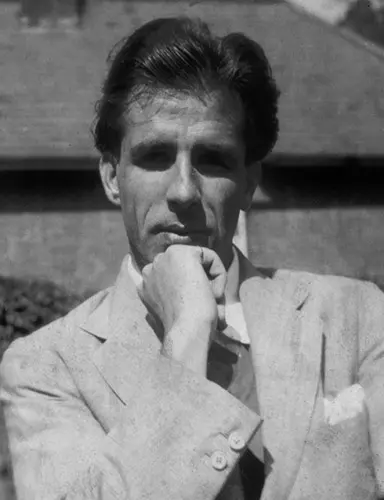
Mervyn Peake was born in 1911 in Kuling, China, the son of British medical missionaries. This extraordinary childhood, surrounded by the vast, decaying walls of the compound and the vivid pageantry of an ancient culture, imprinted upon him a lifelong fascination with architecture, ritual, and the grotesque. The family returned to England when he was eleven, and Peake’s singular talent for drawing led him to the Royal Academy Schools. However, he chafed against its formalities, finding his true voice as an illustrator, a vocation that would remain inextricably linked to his writing. His early career was spent as an artist, producing acclaimed illustrations for classics like The Hunting of the Snark (for which he was reportedly paid only £5) and Alice in Wonderland, Samuel Taylor Coleridge’s The Rime of the Ancient Mariner, the Brothers Grimm’s Household Tales, All This and Bevin Too by Quentin Crisp and Robert Louis Stevenson’s Strange Case of Dr. Jekyll and Mr. Hyde, as well as producing many original poems, drawings, and paintings.
The Artist’s Eye: Early Life and the Crucible of War (1911-1945)
The Second World War was the defining catastrophe of Peake’s life and art. He enlisted in the Royal Artillery but was eventually assigned as a war artist. It was his subsequent posting to Germany in 1945, however, that left an indelible scar. Commissioned to draw the survivors of the Nazi concentration camps, he was confronted with the absolute extremes of human suffering and depravity. The experience shattered his nerves and deepened the dark, psychological currents already present in his work. Yet, it was during the war that he began writing his masterpiece, Titus Groan (1946). The novel was a product of this turmoil, a conscious creation of a vast, self-contained world—Gormenghast Castle—as a refuge from and a reflection of the insanity consuming Europe.
The Architecture of Melancholy: The Gormenghast Novels (1946-1959)
The publication of Titus Groan announced a unique and uncompromising vision to the literary world. The book, and its sequel Gormenghast (1950), are virtually unclassifiable. They are not fantasy in the Tolkienian sense, lacking any magic or supernatural creatures. Instead, Gormenghast is a colossal, crumbling castle-city, a world governed entirely by meaningless, age-old rituals. The narrative follows the birth and early life of Titus, the 77th Earl of Groan, and his struggle against the suffocating weight of tradition, embodied by the sinister, ambitious kitchen boy, Steerpike.
Peake’s genius lay in his fusion of the visual and the literary. The castle itself is the central character, described with the precise, obsessive detail of a draughtsman. His prose is lush, poetic, and grotesque, bringing to life a cast of characters who are less people and more walking archetypes of melancholy, madness, and obsession: the vampiric Fuchsia, the twin aunts Cora and Clarice, the vast, wordless cook Swelter. The books are a profound exploration of isolation, the conflict between individual desire and institutional inertia, and the slow decay of meaning. A third volume, Titus Alone (1959), written as Peake’s health was failing, sends Titus into a bizarre, anachronistic modern world, completing a tragic and surreal bildungsroman. Though initially receiving a muted critical response, the trilogy gradually gained a fervent cult following, recognized for its breathtaking originality.
A Multifaceted Talent in Shadow: Later Work and Illness
Peake was a prolific artist beyond Gormenghast. He was a celebrated playwright, poet, and a brilliant, if commercially unsuccessful, novelist in his own right with works like Mr. Pye (1953), a comic fable about a man who grows wings and then horns. He continued to produce some of the 20th century’s most distinctive book illustrations. However, his later years were dominated by a tragic decline. In the late 1950s, he began to exhibit symptoms of what was eventually diagnosed as a degenerative brain disease, likely Parkinson’s disease compounded by the after-effects of encephalitis.
His condition deteriorated rapidly, cutting short his artistic prime. He struggled to write and draw, and a final novel, Titus Awakes, remained a fragment. The last decade of his life was spent in increasing incapacitation, a cruel fate for a man whose work was defined by its immense creative energy and meticulous control. He died in 1968, his major work unfinished and his reputation still niche.
The Cult of the Castle: Peake’s Enduring Influence and Legacy
Mervyn Peake’s influence has been a slow, persistent burn rather than a sudden conflagration. For years, he was a “writer’s writer,” revered by a select group of contemporaries including C.S. Lewis and Graham Greene. His legacy is that of a singular, uncategorizable artist who created a genre of one: the Gormenghast genre.
His primary influence is profound and can be seen in two key areas. First, his impact on the fantasy genre is immense, though he stood entirely apart from its mainstream. While Tolkien created a mythology of clear moral choices, Peake created a world of psychological depth, gothic atmosphere, and baroque architecture. His work directly paved the way for the “New Weird” and the dark, character-driven fantasies of authors like Michael Moorcock, China Miéville, and Neil Gaiman. Miéville has frequently cited Peake as a major inspiration, and Gaiman’s The Graveyard Book carries clear echoes of a child growing up in a strange, ritual-bound community.
Second, his legacy as an illustrator-writer is unparalleled. He demonstrated how text and image could be fused into a single, powerful vision. This approach has influenced graphic novelists and filmmakers. The most direct homage is the BBC’s ambitious 2000 television adaptation of Gormenghast, which brought his grotesque and beautiful world to a wider audience.
Peake’s legacy is the castle itself. Gormenghast stands in literature as a monument to the imagination, a place of breathtaking scale, suffocating ritual, and profound melancholy. He remains a touchstone for those who seek a fantasy that is psychologically complex, linguistically rich, and unafraid of the dark, strange corners of the human soul. For creating a world so complete and so utterly unique, Mervyn Peake’s place as a master of the grotesque and the sublime is secure.
Mervyn Peake – First Editions Identification Guide
A Complete Bibliography of Mervyn Peake: Novels, Rare Books & First Editions
| Year | Title | Publisher | First edition/Printing Identification Points |
|---|---|---|---|
| 1976 | BOY IN DARKNESS | [Exeter]: Wheaton, [1976] | Wrappers. This edition 1976 on © page. First separate printing. Collected earlier in the anthology Sometime, Never. |
| 1950 | GORMENGHAST | London: Eyre & Spottiswoode, MCML | First published in 1950 on © page. |
| 1948 | LETTERS FROM A LOST UNCLE | London: Published by Eyre and Spottiswoode Ltd., 1948 | First edition so stated on page [2]. |
| 1953 | MR. PYE | Melbourne:: London :: Toronto: William Heinemann Ltd, [1953] | First published 1953 on © page. |
| 1946 | TITUS GROAN | [London]: Eyre & Spottiswoode, MCMXLVI | This book first published MCMXLVI on © page. |
| 1939 | CAPTAIN SLAUGHTERBOARD DROPS ANCHOR | [London: Country Life, 1939] | Boards with cloth shelf back. No statement of printing. Note: Publisher's imprint appears at base of front cover. No © page. |
| 1959 | TITUS ALONE | London: Eyre & Spottiswoode, 1959 | First published 1959 on © page. ALSO: London: Eyre & Spottiswoode, [1970]. This edition, reset and illustrated, first published 1970 ... on © page. Revised and enlarged text. Note: Restores deletions in the 1959 edition. Follows Peake's manuscript with illegible text interpreted by Langdon Jones. |
Mervyn Peake – First Printing Dust Jackets Identification Guide
Gallery of First state Dust Jackets of Peake’s works.


Reference:
- L. W. Currey, Science Fiction and Fantasy Authors: A Bibliography of First Printings of Their Fiction and Selected Nonfiction.