Robert A. Heinlein: The Dean of Science Fiction
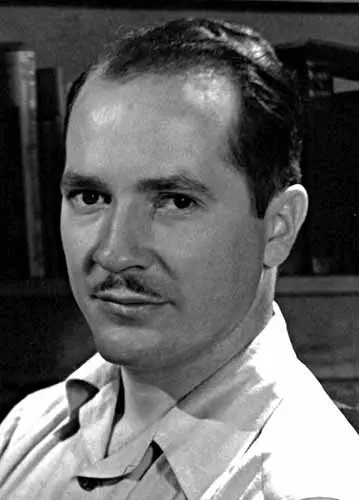
Robert Anson Heinlein (1907-1988) stands as one of science fiction’s most important and controversial figures. Called the “Dean of Science Fiction,” his works shaped the genre’s development while provoking constant debate about politics, society, and human nature. A former naval officer turned master storyteller, Heinlein’s career spanned nearly fifty years and produced classics like Starship Troopers, Stranger in a Strange Land, and The Moon Is a Harsh Mistress.
Early Life and Naval Career (1907-1934)
Born July 7, 1907 in Butler, Missouri, Heinlein grew up in Kansas City during America’s Progressive Era. An avid reader, he devoured works by H.G. Wells, Jules Verne, and Edgar Rice Burroughs – early influences that sparked his lifelong fascination with space travel and future societies. He attended the U.S. Naval Academy, graduating in 1929 and serving aboard ships like the USS Lexington before tuberculosis forced his medical discharge in 1934. This military experience profoundly shaped his later writing, particularly his understanding of leadership and his vision of space as humanity’s next frontier.
Breaking Into Science Fiction (1939-1941)
After unsuccessful attempts at politics and various jobs during the Depression, Heinlein turned to writing. His first story, “Life-Line,” sold to Astounding Science Fiction in 1939, launching his career during science fiction’s Golden Age. Editor John W. Campbell Jr. became a crucial mentor, encouraging Heinlein’s blend of hard science and social speculation. Heinlein quickly established himself with innovative stories featuring competent protagonists and plausible future technologies.
The Future History Era (1940s-1950s)
Heinlein’s most significant early contribution was his Future History series – a timeline charting humanity’s expansion into space through stories like “The Man Who Sold the Moon” and “The Green Hills of Earth.” These works introduced concepts like space colonization and lunar politics that would become SF staples. During WWII, he worked with Isaac Asimov and L. Sprague de Camp at the Philadelphia Naval Yard, forming friendships that shaped all three writers’ postwar work.
Juvenile Novels and Mainstream Success (1947-1958)
From 1947-1958, Heinlein wrote twelve “juvenile” novels for Scribner’s, including Space Cadet and Have Space Suit—Will Travel. Though aimed at young readers, these books treated complex scientific and ethical concepts seriously, influencing generations of future scientists and writers. His 1951 The Puppet Masters pioneered the body snatcher trope, while Double Star (1956) won his first Hugo Award.
Controversial Masterpieces (1959-1973)
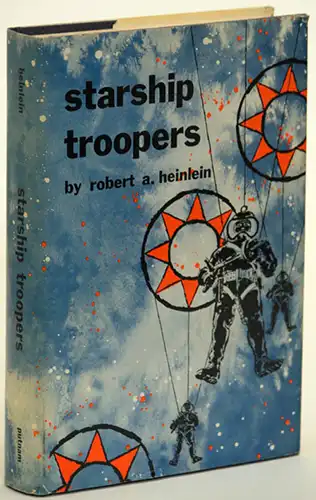
Heinlein’s later work grew increasingly philosophical and provocative. Starship Troopers (1959) presented a militaristic society where citizenship required service, sparking debates about civic duty that continue today. Stranger in a Strange Land (1961) became a counterculture bible with its themes of free love and radical individualism, introducing the word “grok” to the language. The Moon Is a Harsh Mistress (1966) explored libertarian revolution through a lunar colony’s rebellion, winning Heinlein his third Hugo Award.
Later Years (1973-1988)
In his final decades, Heinlein’s work became more autobiographical and experimental. Time Enough for Love (1973) followed his immortal character Lazarus Long through centuries of adventures, while Friday (1982) examined prejudice through an artificial person’s experiences. Though sometimes criticized for lengthy philosophical digressions, these works maintained his trademark imagination and challenging ideas. Heinlein died in 1988, leaving an unfinished novel later published as For Us, The Living.
Influences and Impact
Heinlein’s writing reflected influences ranging from H.G. Wells’ scientific romances to Mark Twain‘s wit and Robert Ingersoll’s rationalism. In turn, he shaped countless authors: Philip K. Dick adopted his psychological depth, Joe Haldeman responded to his militarism in The Forever War, and modern writers like John Scalzi continue his tradition of combining action with big ideas. Beyond literature, Heinlein inspired scientists like Carl Sagan, while his concepts of space colonization and human enhancement remain central to futurist thought.
Personal Life and Beliefs
Married three times (most significantly to Virginia “Ginny” Heinlein, his collaborator and editor from 1948 until his death), Heinlein’s political views evolved from New Deal liberalism to libertarianism. His advocacy for personal freedom and space exploration made him both revered and controversial. Though sometimes accused of promoting militarism or sexism, his best works remain remarkably nuanced, featuring strong female characters and thoughtful social commentary.
Legacy
Heinlein’s legacy endures through his bold imagination and willingness to tackle difficult questions. More than just a science fiction writer, he was a futurist who challenged readers to consider humanity’s potential – both glorious and troubling. His stories of space travel, societal evolution, and individual freedom continue to inspire new generations, ensuring his place as one of the genre’s true giants. As he once wrote: “The supreme irony of life is that hardly anyone gets out of it alive” – but through his work, Heinlein’s ideas remain vibrantly alive, still provoking thought and debate decades after his passing.
Robert A. Heinlein – First edition identification Guide
Guide to identifying Heinlein’s First Edition Books. Shows works prior to 1978.
| Year | Title | Publisher | First edition/printing identification points |
|---|---|---|---|
| 1953 | ASSIGNMENT IN ETERNITY | Reading, Pennsylvania: Fantasy Press, [1953] | Three bindings, priority as listed:
|
| 1973 | THE BEST OF ROBERT HEINLEIN | London: Sidgwick & Jackson, [1973] | Boards. First published in Great Britain in 1973 on © page. Reprint collection. Note: Reprinted as a one-volume paperback by Sphere Books Limited in 1975. In 1977 the collection was divided into two paperback volumes and issued by Sphere as THE BEST OF ROBERT HEINLEIN 1939-1942 and THE BEST OF ROBERT HEINLEIN 1947-1959. The latter contains a bibliography revised through 1976. |
| 1951 | BETWEEN PLANETS | New York: Charles Scribner's Sons, 1951 | First printing has A and Scribner seal on © page. |
| 1948 | BEYOND THIS HORIZON | Reading, Pennsylvania: Fantasy Press, 1948 | Two issues, no priority: (A) 500 copies with numbered leaf signed by Heinlein inserted; (B) Trade issue. First edition so stated on © page. |
| 1957 | CITIZEN OF THE GALAXY | New York: Charles Scribner's Sons, [1957] | First printing has A and code 7.57 v on © page. |
| 1951 | THE DAY AFTER TOMORROW | [New York]: The New American Library, [1951] | Wrappers. First printing, September, 1951 on © page. N.A.L. Signet Books 882 (25c). Reissue of SIXTH COLUMN. |
| 1957 | THE DOOR INTO SUMMER | Garden City: Doubleday & Company, Inc., 1957 | First edition so stated on © page. |
| 1956 | DOUBLE STAR | Garden City: Doubleday & Company, Inc., 1956 | Boards. First edition so stated on © page. |
| 1964 | FARNHAM'S FREEHOLD | New York: G. P. Putnam's Sons, [1964] | No statement of printing on © page. |
| 1963 | GLORY ROAD | New York: G. P. Putnam's Sons, [1963] | No statement of printing on © page. |
| 1951 | THE GREEN HILLS OF EARTH | Chicago: Shasta Publishers ,[1951] | Boards with cloth shelf back. First edition so stated on © page. |
| 1958 | HAVE SPACE SUIT-WILL TRAVEL | New York: Charles Scribner's Sons, [1958] | First printing has code A.9-58 [MJ] on © page. |
| 1966 | A HEINLEIN TRIAD | London: Victor Gollancz Ltd, 1966 | Boards. No statement of printing on © page. Reprint. Collects THE PUPPET MASTERS and WALDO AND MAGIC. INC. Issued earlier in the U.S. as THREE BY HEINLEIN. |
| 1970 | I WILL FEAR NO EVIL | New York: G. P. Putnam's Sons, [1970] | No statement of printing on © page. |
| 1950 | LOST LEGACY | London: Brown, Watson Ltd, [1950] | Wrappers. No statement of printing on © page. Digit Books D386 (2/-). Reprints two Stories from ASSIGNMENT IN ETERNITY. |
| 1959 | THE MENACE FROM EARTH | Hicksville, New York: The Gnome Press, Inc., [1959] | First edition so stated on © page. |
| 1955 | METHUSELAH'S CHILDREN | Hicksville, N.Y.: Gnome Press, [195S] | Two bindings, probable priority as listed:
Notes: (1) According to Owings and Chalker in The Index to the Science-Fantasy Publishers, there were 1500 copies of the first printing and a second printing in 1959 of 1000 copies. So far no copies of the second printing have been identified. (2) All dust jackets observed print the publisher's address "80 East 11th St., New York 3" at base of rear panel. George Locke in Science Fiction First Editions (London: Ferret Fantasy, 1978), p.87, reports a variant jacket with "80 East 11th St., " and "3" removed. |
| 1966 | THE MOON IS A HARSH MISTRESS | New York: G.P. Putnam's Sons, [1966] | No statement of printing on © page. |
| 1963 | ORPHANS OF THE SKY | London: Victor Gollancz Ltd, 1963 | Boards . No statement of printing on © page. |
| 1967 | THE PAST THROUGH TOMORROW | New York: G. P. Putnam's Sons, [1967] | No statement of printing on © page. Reprint collection. Note: Omnibus collection of the novels and stories comprising the "Future History" series reprinted from earlier books. ALSO: [London]: New English Library, [1977]. Boards. Two volumes. First published in Great Britain . . . in 1977 on © pages. Abridged reprint. Drops METHUSELAH'S CHILDREN. |
| 1965 | PODKAYNE OF MARS | New York:G. P. Putnam's Sons, [1965] | No statement of printing on © page. |
| 1949 | RED PLANET | New York: Charles Scribner's Sons, 1949 | First printing has A and Scribner seal on © page. |
| 1953 | REVOLT IN 2100 | Chicago: Shasta Publishers, [1953] | Boards with cloth shelf back. First edition so stated on © page. |
| 1966 | A ROBERT HEINLEIN OMNIBUS | London: Sidgwick & Jackson, [1966] | Boards. No statement of printing on © page. Reprint. Collects BEYOND THIS HORIZON, THE MAN WHO SOLD THE MOON, and THE GREEN HILLS OF EARTH. |
| 1958 | THE ROBERT HEINLEIN OMNIBUS | London: The SF Book Club by arrangement with Sidgwick and Jackson, 1958 | Boards. This Science Fiction Book Club edition was produced in 1958 for sale to its members only on © page. Reprint. Collects THE MAN WHO SOLD THE MOON and THE GREEN HILLS OF EARTH. |
| 1947 | ROCKETSHIP GALILEO | New York: Charles Scribner's Sons, [1947} | First printing has A and Scribner seal on © page. |
| 1952 | THE ROLLING STONES | New York: Charles Scribner's Sons, [1952] | First printing has A and Scribner seal on © page. Reissued in Great Britain as SPACE FAMILY STONE. 6 x H. New York: Pyramid Books;, [1961]. First printing, August 1961 on © page. Pyramid G642 (35c). Reprint of THE UNPLEASANT PROFESSION OF JONATHAN HOAG:. |
| 1949 | SIXTH COLUMN | New York: Gnome Press, [1949} | First edition so stated on © page. Reissued as THE DAY AFTER TOMORROW. |
| 1948 | SPACE CADET | New York: Charles Scribner's Sons, 1948 | First printing has A and Scribner seal on © page. |
| 1969 | SPACE FAMILY STONE | London; Victor Gollancz Ltd, 1969 | Boards. No statement of printing on © page. Issued earlier in the U.S. as THE ROLLING STONES. |
| 1954 | THE STAR BEAST | New York: Charles Scribner's Sons, [1954] | First printing has A and Scribner seal on © page. |
| 1953 | STARMAN JONES | New York: Charles Scribner's Sons, [1953] | First printing has A and Scribner seal on © page. |
| 1959 | STARSHIP TROOPERS | New York: G. P. Putnam's Sons, [1959] | No statement of printing on © page. |
| 1967 | STRANGER IN A STRANGE LAND | New York: G. P. Putnam's Sons , [1967] | No statement of printing on © page. Code C22 on page 408. |
| 1965 | THREE BY HEINLEIN | Garden City: Doubleday & Company, Inc., 1965 | No statement of printing on © page. Code G39 at base of page 426. Reprint. Collects THE PUPPET MASTERS and WALDO AND MAGIC, INC. Issued later in Great Britain ai A HEINLEIN TRIAD. |
| 1973 | TIME ENOUGH FOR LOVE... | New York: G. P. Putnam's Sons, [1973] | No statement of printing on © page. |
| 1956 | TIME FOR THE STARS | New York: Charles Scribner's Sons, [1956] | First printing has code A-8.56 [v] on © page |
| 1955 | TUNNEL IN THE SKY | New York: Charles Scribner's Sons, [1955] | First printing has A on © page. |
| 1951 | UNIVERSE | New York: Published by Dell Publishing Company. Inc.. [1951] | Wrappers. No statement of printing on © page. Dell Book 36 (10c)- Adventure on the Gigantic Spaceship at head of title. |
| 1959 | THE UNPLEASANT PROFESSION OF JONATHAN HOAG | Hicksville, New York: The Gnome Press, Inc., [1959] | First edition so stated on © page. |
| 1950 | WALDO AND MAGIC, INC | Garden City: Doubleday & Company, Inc.. 1950 | First edition so stated on © page. Reissued as WALDO: GENIUS IN ORBIT. |
| 1958 | WALDO: GENIUS IN ORBIT | New York: Avon Publications, Inc.. [1958] | Wrappers. No statement of printing on © page. Avon T-261 (35c). Reissue of WALDO AND MAGIC. INC. |
| 1966 | THE WORLDS OF ROBERT A. HEINLEIN | New York: Ace Books, Inc., [1966] | Wrappers. No statement of printing on © page. Ace Book F-375 (40c). |
| 1950 | FARMER IN THE SKY | New York: Charles Scribner's Sons, 1950 | First printing has A and Scribner seal on © page. |
| 1950 | THE MAN WHO SOLD THE MOON | Chicago: Shasta Publishers, [1950] | Boards with cloth shelf back. First edition so stated on © page. ALSO: [New York]: Published by The New American Library, [1951]. Wrappers. First printing, March, 1951 on © page.N.A.L. Signet Books 847 ($0.25). Abridged edition. |
| 1951 | THE PUPPET MASTERS | Garden City: Doubleday & Company, Inc., 1951 | First edition so stated on © page. |
Robert A. Heinlein – First Edition Dust Jacket Identification Guide
Guide to identifying First Printing Dust Jackets.


Reference:
- L. W. Currey, Science Fiction and Fantasy Authors: A Bibliography of First Printings of Their Fiction and Selected Nonfiction